


Adquiera una imagen digital de alta resolución y optimizada, muy superior a la vista previa en línea.
Cada archivo es preparado meticulosamente por nuestros especialistas internos mediante el uso de herramientas avanzadas y un experto retoque manual. Nos aseguramos de que cada imagen posea una claridad excepcional, una precisión cromática impecable y un detalle minucioso.
El archivo final se entrega por correo electrónico en un plazo de 72 horas, optimizado para su uso inmediato en entornos profesionales, editoriales y de impresión. Esta es la misma calidad en la que confían los estudios de diseño, las editoriales y las galerías de primer nivel.
Descarga un archivo de alta resolución para exhibición personal, impresión y proyectos creativos. ( Comprar impresión Comprar pintura hecha a mano)
Al elegir WahooArt.com, no solo está adquiriendo una imagen; está recibiendo una obra de arte digital mejorada profesionalmente, elaborada con precisión y respaldada por una garantía de satisfacción. Esto es todo lo que incluye su pedido, automáticamente:

Recibirá su archivo de imagen digital en alta resolución por correo electrónico en un plazo de 72 horas tras realizar su pedido, listo para su uso inmediato.

Su obra de arte se optimiza profesionalmente mediante herramientas avanzadas de IA y edición manual, garantizando el máximo detalle, claridad y precisión cromática.

¿Has borrado o perdido tu archivo por error? No te preocupes: te lo volveremos a enviar en cualquier momento, sin coste adicional.

Disfrute de su obra de arte al instante sin aduanas, aranceles ni gastos de envío; las descargas digitales siempre están libres de impuestos.

Garantizamos que su imagen digital refleje los colores originales con la mayor fidelidad posible, mediante el uso de herramientas profesionales y gestión del color.

Si no está satisfecho con su imagen digital, la revisaremos o le reembolsaremos el 100% en un plazo de 100 días, sin preguntas.

¿No está satisfecho? Obtenga un reembolso completo dentro de los 100 días posteriores a la recepción de su archivo digital, sin preguntas.

Compra 3 imágenes, ahorra 10% - Compra 5, ahorra 15% - Compra 10+, ahorra 20%. Ideal para proyectos creativos, galerías y agencias.
Hubert Robert's "Les Chanteurs Ambulants" (The Wandering Musicians) isn’t merely a depiction of a street scene; it’s an invitation to step back in time, a carefully constructed illusion that masterfully blends observation with the romanticism of the late 18th century. Painted around 1790, this artwork transports us to an imagined Roman setting – a place where antiquity and everyday life intertwine, creating a poignant tableau of beauty, decay, and the enduring power of human connection. Robert, a name intrinsically linked with the evocative allure of ruins and the art of ‘capriccio,’ possessed a unique ability to capture not just the appearance of a landscape but its emotional resonance. His work transcends simple documentation; it’s an exploration of memory, history, and the artist's own imaginative vision.
The composition itself is a testament to Robert’s skill. The monumental stone building on the left immediately establishes a strong vertical axis, anchoring the scene while simultaneously drawing the eye upwards towards the arched window – a portal through which we glimpse a musician lost in his performance. Below, a diverse group of figures gathers, their postures suggesting rapt attention and quiet enjoyment. The background, deliberately hazy and layered with hints of distant ruins and verdant foliage, creates a sense of depth that extends far beyond the immediate scene. This strategic division – building/window, audience, background – isn’t arbitrary; it's a deliberate orchestration designed to guide the viewer’s eye and immerse them in Robert’s carefully crafted world.
The color palette of “Les Chanteurs Ambulants” is deliberately muted, dominated by earthy browns, tans, and subtle greens. This isn't a vibrant celebration of color; rather, it speaks to the passage of time, suggesting an aged and weathered world. The occasional flash of red in the clothing of some figures – perhaps a cloak or scarf – provides a delicate contrast, adding a touch of warmth without disrupting the overall sense of melancholy. Robert’s masterful use of light is equally subtle, creating a diffused glow that seems to emanate from the left side of the composition, illuminating the building and its inhabitants while leaving the background shrouded in gentle shadow. This soft lighting contributes significantly to the artwork's dreamlike quality.
Robert’s technique is characterized by a remarkable attention to detail combined with a loose, expressive brushwork. He employed a layering method – thin washes of paint applied over an underpainting – which creates a soft, blended effect that enhances the sense of atmosphere. While linear perspective is skillfully utilized to establish depth and create a believable spatial arrangement, atmospheric perspective—the subtle blurring and desaturation of distant elements—further reinforces this illusion. Notice how the details on the building diminish as they recede into the background, while the foliage in the distance appears softer and less defined. The visible brushstrokes themselves contribute to the artwork’s aged appearance, suggesting a surface worn by time and experience.
“Les Chanteurs Ambulants” is rich with symbolic meaning. The presence of classical architecture and ruins immediately evokes themes of history, time, and the inevitable decay of civilizations. Robert wasn’t simply depicting a picturesque scene; he was engaging with the Romantic fascination with the past – a desire to recapture lost glories and contemplate the fleeting nature of human endeavors. The wandering musicians themselves can be interpreted as symbols of art's enduring power—a reminder that beauty, entertainment, and connection can transcend temporal boundaries. The overall mood is one of quiet contemplation, tinged with a sense of nostalgia for a bygone era. It’s a poignant meditation on the relationship between memory, artistry, and the human spirit.
WahooArt offers meticulously crafted hand-painted reproductions of Hubert Robert’s “Les Chanteurs Ambulants,” allowing you to experience the beauty and emotional depth of this captivating artwork in your own space. Each reproduction is created using traditional techniques and high-quality materials, ensuring a faithful representation of Robert's original vision. Whether you are an art collector, interior designer, or simply someone seeking a touch of timeless elegance, a WahooArt reproduction of “Les Chanteurs Ambulants” will bring a sense of history, romance, and artistic inspiration to your home.

Hubert Robert fue un pintor francés celebrado por sus evocadores paisajes y pinturas de *capricho*—representaciones pintorescas semi-ficticias de ruinas en Italia y Francia. Se le considera una figura clave que une los períodos Rococó y Neoclásico, anticipando aspectos del Romanticismo con su fascinación por la decadencia, la historia y las reconstrucciones imaginativas.
Nicolas Robert, el padre de Hubert, sirvió a François-Joseph de Choiseul, Marqués de Stainville. Robert recibió una educación jesuita en el Collège de Navarre en 1751. Luego estudió escultura con Michel-Ange Slodtz, quien lo animó a dedicarse a la pintura. Esta formación temprana le inculcó una sólida base en diseño y perspectiva, elementos cruciales que definirían más tarde su estilo artístico.
Su tiempo en Roma moldeó profundamente su visión artística. La yuxtaposición de las antiguas ruinas romanas con la vida contemporánea despertó su interés por representar la decadencia junto a la vitalidad, un tema recurrente a lo largo de su carrera.
El éxito parisino de Robert se debió a su capacidad para capturar tanto la grandeza de la antigüedad clásica como la vitalidad de la vida contemporánea. Sus obras resonaron en el público fascinado por la historia, la arqueología y lo pintoresco.
El legado de Hubert Robert radica en su capacidad única para combinar la precisión histórica con la visión imaginativa. Pionero de un género de pintura que celebra tanto la belleza de la decadencia como el poder perdurable de la creatividad humana. Su obra continúa inspirando a artistas y cautivando al público, consolidando su lugar como una figura significativa en el arte del siglo XVIII.
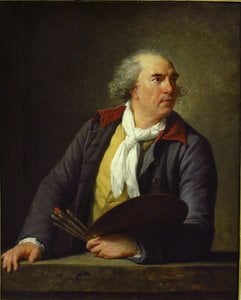
1733 - 1808 , Francia

 Ver en contexto
 Enviar
 Compartir
 Detalles

 Descargar
 Similares
 Radiografía
 Presentación de diapositivas


 Ver más


