Impresiones giclée o en lienzo de calidad de museo con producción rápida y opciones de acabado flexibles. ( Comprar pintura hecha a mano Cambiar a imagen digital)
Elija entre nuestros tamaños predefinidos que respetan las proporciones originales de la obra.

Introduzca el ancho y el alto que necesite para adaptarse a su marco o pared. Una impresión solo puede recortarse, nunca hacerse más grande que la imagen original, por lo que un tamaño con una forma distinta perderá parte de la obra. Le enviaremos una maqueta digital para su aprobación antes de realizar cualquier impresión. La imagen que se muestra en esta página no refleja el recorte real; solo la maqueta lo hace.
Envío a todo el mundo () en 2 semanas en lugar de las 4/5 semanas estándar. (8 noviembre)
Ratapoil
Dimensiones de la reproducción
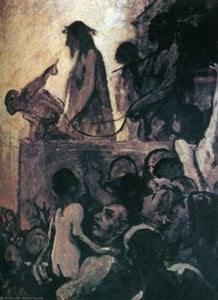
The photograph captures a pivotal moment – a frozen dance of energy and emotion rendered in the enduring medium of bronze. This exquisite reproduction offers an intimate encounter with "Ratapoil," a sculpture by the visionary artist Honoré Daumier, born in Marseille in 1808 and tragically lost in 1879. More than just a depiction of a figure, it’s a window into the social anxieties and artistic fervor that defined mid-19th century France, a period meticulously documented through Daumier's keen eye for detail and his unflinching portrayal of human experience.
Honoré Daumier was a revolutionary figure in the world of art, challenging conventional notions of beauty and truth. His work wasn't confined to idealized forms; instead, he sought to capture the raw essence of everyday life, often focusing on the marginalized and oppressed. “Ratapoil,” as evidenced by its connection to Daumier’s painting of the same name, embodies this commitment. The sculpture depicts a woman in a dynamic pose, likely engaged in dance or performance – an act that speaks volumes about freedom, expression, and perhaps even defiance within the constraints of societal expectations. Daumier's training under Alexandre Lenoir instilled in him a deep understanding of classical techniques, particularly the dramatic use of light and shadow—a hallmark of Rubens’ work—which he masterfully employs here to heighten the emotional impact of the piece.
The outstretched arms and flowing drapery of “Ratapoil” are not merely decorative elements; they are imbued with symbolic meaning. They suggest a yearning for freedom, an embrace of movement, or perhaps even a theatrical performance—a deliberate act of self-expression in a world often governed by rigid rules. The sculpture’s stark white background further amplifies these emotions, creating a powerful contrast that draws the viewer's eye directly to the figure's dynamic pose and expressive gestures. The work resonates with a timeless quality, evoking both classical beauty and Daumier’s characteristic realism – a potent combination that continues to captivate audiences today.
"Ratapoil" se define por una paleta de Neutrals con predominio del White (#f0f2f1).
Los colores de "Ratapoil" presentan una luminancia de Luminous.
La obra original "Ratapoil" de Honoré Daumier es una pieza de Bronze con unas dimensiones de 1 x 19 cm. La técnica y el tamaño describen la obra original.


1808 - 1879 , Francia

Descubra la elegancia eterna de las esculturas de bronce. Explore obras maestras que definen el lujo y la sofisticación para espacios exclusivos. Expertos en curaduría de arte clásico y reproducciones premium con garantía de autenticidad y excelencia técnica.

Descubra cómo evaluar la autenticidad y el valor de las esculturas en bronce. Aprenda a identificar piezas maestras hoy mismo.

Descubra la técnica de la cera perdida y el valor del bronce para coleccionistas. Explore la maestría de la escultura eterna aquí.
 Enviar
 Compartir
 Detalles
 Guía
Guía

 Descargar
 Similares
 Presentación de diapositivas
 Preguntas y respuestas
 Estadísticas


 Ver más






































 La opción de vidrio solo está disponible en tamaños inferiores a 110 cm.