Vista previa Vista previa en RA Cambiar a formato impreso Ver versión en imagen digital Compartir
Ver detalles Guía Añadir a favoritos Descargar Ver artículos similares Radiografía Presentación de diapositivas Estadísticas

Cupboard (interior)

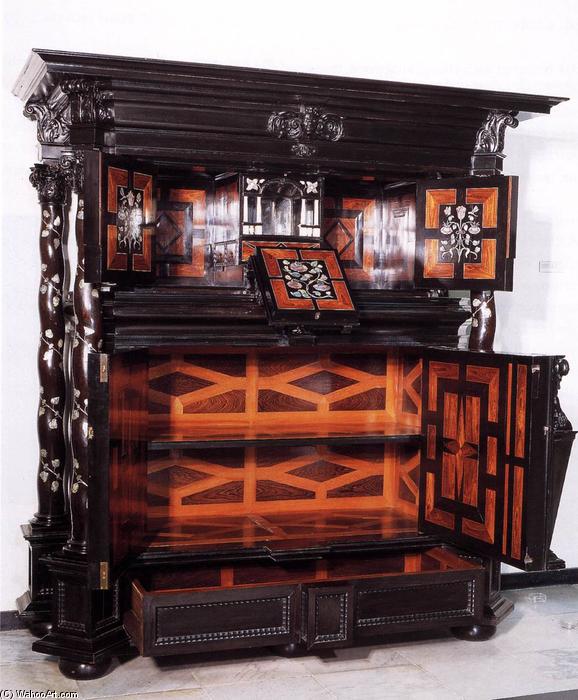
Marvel at Herman Doomer's 'Cupboard (Interior)' – a stunning 17th-century masterpiece showcasing intricate ebony, mother-of-pearl, and vibrant wood details from the Rijksmuseum. A true Dutch golden age treasure!

Un destacado artesano de la Edad de Oro holandesa, conocido por sus exquisitos muebles de chapa de ébano y el célebre Armario (Interior); descubre el intrincado arte que definió una era de opulenta artesanía.

Reproducción al óleo hecha a mano

Óleo sobre lienzo pintado a mano en el tamaño y marco de su elección, realizado por encargo por nuestros artistas. ( Cambiar a formato impreso Ver versión en imagen digital)

Corner sample of the P118B picture frame: poliestireno moldeado, 5 cm wide and 3 cm thick
P118B 10
Corner sample of the P118H picture frame: poliestireno moldeado, 5 cm wide and 3 cm thick
P118H 10
Corner sample of the P118W picture frame: poliestireno moldeado, 5 cm wide and 3 cm thick
P118W 10
Corner sample of the P438Z picture frame: poliestireno moldeado, 5.5 cm wide and 3.5 cm thick
P438Z 10
Corner sample of the P508JH picture frame: poliestireno moldeado, 7 cm wide and 3.5 cm thick
P508JH 12
Corner sample of the P508YH picture frame: poliestireno moldeado, 7 cm wide and 3.5 cm thick
P508YH 12
Corner sample of the P805H picture frame: poliestireno moldeado, 5 cm wide and 3.5 cm thick
P805H 10
Corner sample of the P805Z picture frame: poliestireno moldeado, 5 cm wide and 3.5 cm thick
P805Z 10
Corner sample of the P919BZ picture frame: poliestireno moldeado, 7 cm wide and 3.5 cm thick
P919BZ 10
Corner sample of the P919G picture frame: poliestireno moldeado, 7 cm wide and 3.5 cm thick
P919G 10
Corner sample of the P919XJ picture frame: poliestireno moldeado, 7 cm wide and 3.5 cm thick
P919XJ 10
Corner sample of the P959ZH picture frame: poliestireno moldeado, 5 cm wide and 3 cm thick
P959ZH 10
Corner sample of the P968JZ picture frame: poliestireno moldeado, 6 cm wide and 4 cm thick
P968JZ 12
Corner sample of the W106C picture frame: madera maciza, 5 cm wide and 3 cm thick
W106C 8
Corner sample of the W218G picture frame: madera maciza, 5 cm wide and 3 cm thick
W218G 10
Corner sample of the W218JH picture frame: madera maciza, 5 cm wide and 3 cm thick
W218JH 8
Corner sample of the W218Y picture frame: madera maciza, 5 cm wide and 3 cm thick
W218Y 10
Corner sample of the W307PJ picture frame: madera maciza, 6 cm wide and 3 cm thick
W307PJ 10
Corner sample of the W316G picture frame: madera maciza, 6 cm wide and 3 cm thick
W316G 10
Corner sample of the W316PJ picture frame: madera maciza, 6 cm wide and 3 cm thick
W316PJ 8
Corner sample of the W316Y picture frame: madera maciza, 6 cm wide and 3 cm thick
W316Y 10
Corner sample of the W398PJ picture frame: madera maciza, 5 cm wide and 3 cm thick
W398PJ 8
Corner sample of the W4111J picture frame: madera maciza, 6.5 cm wide and 3.5 cm thick
W4111J 10
Corner sample of the W500HY picture frame: madera maciza, 7 cm wide and 5 cm thick
W500HY 15
Corner sample of the W500JH picture frame: madera maciza, 7 cm wide and 5 cm thick
W500JH 15
Corner sample of the W692G picture frame: madera maciza, 8 cm wide and 4 cm thick
W692G 12
Corner sample of the W849H picture frame: madera maciza, 5 cm wide and 3 cm thick
W849H 8
Corner sample of the W940BG picture frame: madera maciza, 7.5 cm wide and 4.5 cm thick
W940BG 15
Corner sample of the W953PJ picture frame: madera maciza, 6 cm wide and 3.5 cm thick
W953PJ 8

Estándar
personalizado
CM
INCH

Elija entre nuestros tamaños predefinidos que respetan las proporciones originales de la obra.

ancho
altura

Escriba el ancho y el alto que necesite para adaptarse a su marco o a su pared. Al ser una obra pintada a mano, para un tamaño con una forma distinta, el artista puede pintar un poco más alrededor de la imagen o recortar un poco; usted elige. Le enviaremos una maqueta digital para su aprobación antes de comenzar la pintura. La imagen que se muestra en esta página no refleja el resultado real; solo la maqueta lo hace.

Ejemplos de lo que se puede personalizar: Reemplace el rostro con una foto del cliente; Agregue una mascota (por ejemplo, cambie un gato por un perro); Incluya un mensaje oculto en el fondo; Cambie el paisaje o los elementos del fondo.
Tras realizar el pedido, el equipo de WahooArt.com enviará un correo electrónico al cliente para solicitar instrucciones y proporcionarle una vista previa del boceto.

Envío a todo el mundo () en 3-4 semanas en lugar de las 5 semanas estándar. (22 octubre). Sin comprometer la calidad.

Envío exprés gratuito a todo el mundo
Lienzo de lino de alta calidad
Seguro de envío completo
Garantía de reembolso de impuestos aduaneros
Garantía de fidelidad cromática exacta
Política de devolución de 100 días (solo por defectos)
Garantía de devolución del 100% del dinero
Oferta por volumen

Precio total

€ 238

Cupboard (interior)

Técnica de reproducción

Tamaño de la reproducción

-

Precio total

€ 238

Datos clave

  • Dimensions: 218x196x84cm
  • Year: 1640
  • Influences: Rembrandt
  • Location: Rijksmuseum, Amsterdam
  • Medium: Oak & Ebony

A Glimpse into Dutch Opulence: The Cupboard (Interior) by Herman Doomer

Herman Doomer’s “Cupboard (Interior),” a remarkable piece housed within the hallowed halls of the Rijksmuseum in Amsterdam, is more than just a display case; it's a meticulously crafted window into 17th-century Dutch artistry and the lavish tastes of its wealthy patrons. Completed around 1640, this cupboard offers a breathtaking immersion into a world of intricate detail, vibrant color, and masterful craftsmanship – a testament to Doomer’s exceptional skill as a cabinetmaker and his profound understanding of materials and design.

The piece immediately captivates with its scale—measuring an impressive 218 x 196 cm. Constructed primarily from oak veneered with ebony, kingwood, and rosewood, the cupboard’s exterior speaks to a sophisticated appreciation for exotic woods, reflecting the burgeoning trade routes that connected Europe with distant lands. However, it is the interior that truly commands attention. The use of contrasting materials—the dark, rich tones of ebony juxtaposed against the warmer hues of rosewood and the shimmering accents of mother-of-pearl—creates a dramatic visual interplay, drawing the eye deeper into its depths.

A Symphony of Materials: Technique and Craftsmanship

Doomer’s mastery lies not only in his selection of materials but also in the techniques he employed to transform them. The intricate marquetry, painstakingly inlaid with mother-of-pearl and ivory, is a marvel of precision. Each tiny piece is carefully positioned to create delicate floral patterns and geometric designs—a testament to the artist's patience and skill. The use of baleen, a material derived from whalebone, adds another layer of textural complexity, demonstrating Doomer’s innovative approach to ornamentation. The cabinetmaker skillfully combined these materials, creating a harmonious blend of textures and colors that elevates the piece beyond mere functionality.

Furthermore, the cupboard's construction reveals a deep understanding of woodworking principles. The use of dovetail joints—a hallmark of fine craftsmanship—ensures structural integrity while allowing for seamless assembly. The subtle curves and flowing lines of the design contribute to its overall elegance and grace, reflecting the prevailing aesthetic sensibilities of the period.

Symbolism and Context: A Reflection of Status

To fully appreciate “Cupboard (Interior),” it’s crucial to understand the historical context in which it was created. The Dutch Golden Age—the 17th century—witnessed an unprecedented flourishing of art, commerce, and culture. Wealthy merchants and aristocrats sought to demonstrate their status through opulent furnishings like this cupboard, a symbol of prosperity and refined taste. The use of exotic woods and precious materials underscored the owner’s connections to global trade networks and his ability to afford luxury goods.

The cabinet itself served as more than just storage; it was a statement piece—a focal point within a grand interior, designed to impress guests and reflect the homeowner's position in society. The intricate details and lavish ornamentation were intended to evoke admiration and convey a sense of wealth and sophistication.

A Legacy Enduring: Doomer’s Influence

Herman Doomer’s work profoundly influenced the development of Dutch furniture making, establishing him as one of the era's most celebrated cabinetmakers. His innovative use of materials, combined with his impeccable craftsmanship and artistic vision, set a new standard for quality and design. The portrait by Rembrandt, painted around the same time, further cemented Doomer’s place in art history, capturing not only the artist’s likeness but also the essence of his character and creative spirit.

Today, “Cupboard (Interior)” stands as a remarkable example of 17th-century Dutch artistry—a captivating blend of technical skill, aesthetic beauty, and historical significance. It offers a rare glimpse into the world of wealthy merchants and aristocrats, revealing their aspirations, tastes, and values.

Preguntas y respuestas

¿Cómo se relacionan entre sí los colores de "Cupboard (interior)"?

"Cupboard (interior)" de Herman Doomer presenta una armonía de color Balanced Harmony.

¿Es "Cupboard (interior)" de Herman Doomer una pintura, un dibujo o un grabado?

"Cupboard (interior)" es una pieza de WallArt.

¿Qué forma y dimensiones tiene "Cupboard (interior)" de Herman Doomer?

"Cupboard (interior)" de Herman Doomer tiene las proporciones de una obra en Portrait de 218 x 196 cm.


Biografía del artista

El artesano de la Edad de Oro

Si bien la historia suele reservar sus reflectores más luminosos para los pintores que capturaron la luz de la Edad de Oro holandesa, la historia de Herman Doomer ofrece una mirada profunda a las manos expertas que enmarcaron y construyeron esa misma era. Nacido en Anrath, cerca de Venlo, Doomer no fue un artista visual en el sentido tradicional, sino más bien un maestro artesano cuya vida estuvo definida por la belleza táctil del ébano y la madera. Como exitoso fabricante de muebles y marcos, su trabajo proporcionó la estructura física para la floreciente cultura de la Ámsterdam del siglo XVII. Dirigió un próspero negocio especializado en muebles con chapa de ébano e intrincados marcos, recorriendo las bulliciosas calles de Kalverstraat, Gasantehuismolensteeg y Hartenstraat con la confianza de un hombre situado en el corazón de un centro de comercio global.

Maestría y Conexión

El legado de Herman Doomer está inextricablemente ligado a los gigantes artísticos de su tiempo. Su dominio de materiales como el ébano y la ballena coloreada le permitió contribuir a la opulencia estética de la República Holandesa, creando piezas que reflejaban la riqueza y el gusto de una nueva clase media. Su red profesional estaba profundamente integrada en los círculos más altos de la comunidad creativa de Ámsterdam; se sabe que colaboró con figuras como Pieter Quast y Johannes Lutma. Quizás lo más significativo fue su papel como proveedor de marcos, lo que lo situó en contacto directo con Rembrandt van Rijn. Esta conexión dio lugar a uno de los retratos más perdurables de la época, donde Rembrandt capturó a Doomer no simplemente como un sujeto, sino como un profesional digno, inmortalizando la fuerza silenciosa del artesano que se encuentra detrás del lienzo.

Un legado material perdurable

Aunque su nombre no se encuentre en las firmas de los lienzos, la influencia de Doomer persiste a través de los objetos físicos y duraderos que creó. Su obra, como el extraordinario Cupboard (Interior) que se conserva en el Rijksmuseum, sirve como una ventana a los gustos suntuosos y a la meticulosa maestría de aquel periodo. Estas piezas eran más que mera utilidad; eran encarnaciones de la innovación y la destreza holandesa. A través de su oficio especializado, Doomer ayudó a moldear el entorno visual del siglo XVII, dejando tras de sí una historia material que continúa hablando de una era definida por la prosperidad, el detalle intrincado y una devoción inigualable por la belleza de la alta artesanía.
Herman Doomer

Herman Doomer

1595 - 1650 , Italia

Datos clave

  • Fecha De Fallecimiento: 1650
  • Fecha De Nacimiento: 1595
  • Lugar De Nacimiento: Anrath, Alemania
  • Movimiento O Estilo Artístico: Edad de Oro holandesa
  • Nacionalidad: Holandesa
  • Nombre Completo: Herman Doomer
  • Obras Notables:
    • Alacena (Interior)
    • Mesa de gabinete