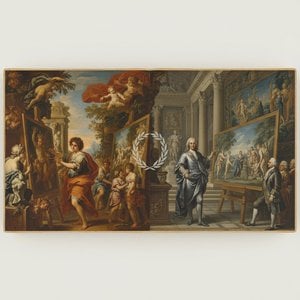
El Arquitecto del Estilo Luis XIV
André-Charles Boulle (1642 – 1732) se erige como un titán entre los ebanistas franceses, siendo su nombre sinónimo de una artesanía opulenta y la encarnación misma de la grandeza de Luis XIV. Más que un simple fabricante de muebles, Boulle fue un innovador que transformó fundamentalmente el gusto europeo, estableciendo un estilo distintivo —la marquetería «Boulle»— que cautivó tanto a la realeza como a la aristocracia durante las décadas venideras. Su legado continúa inspirando a los artesanos de hoy, consolidando su lugar como una de las figuras más influyentes en las artes decorativas del siglo XVII.
Nacido en París alrededor de 1642, descendía de una familia profundamente arraigada en la tradición artesanal; su padre, Jean Boulle, era él mismo un respetado ebanista. Este vínculo familiar le proporcionó una base invaluable en el oficio, inculcándole no solo la destreza técnica, sino también un profundo aprecio por el detalle meticuloso y la visión artística. Si bien los detalles biográficos de sus primeros años permanecen envueltos en las brumas del tiempo, su formación sin duda lo preparó para los extraordinarios logros que le seguirían, permitiéndole alcanzar la prestigiosa posición de ébéniste du roi.
La Revolución de la Marquetería
El genio de Boulle residía principalmente en su maestría de la marquetería, una técnica que consistía en incrustar materiales decorativos como carey, latón, peltre y marfil en chapas de ébano o nogal. A diferencia de los métodos anteriores, que dependían de técnicas de tallado más simples, Boulle perfeccionación un proceso revolucionario que alcanzó niveles de intrincación y realismo sin precedentes. Martilleaba meticulosamente finas láminas de metal —principalmente latón— sobre la superficie de la chapa de madera, creando un efecto de relieve que imitaba texturas naturales como el follaje y la piedra.
Esta labor minuciosa exigía una precisión y una paciencia excepcionales, dando como resultado piezas de mobiliario que poseían una belleza asombrosa y una complejidad técnica sublime. Su obra se caracterizaba a menudo por:
- Intrincadas incrustaciones de latón: El uso de fina orfebrería para crear patrones brillantes que capturaban la luz.
- Elegancia del carey: La incorporación de materiales orgánicos y translúcidos para añadir profundidad y calidez.
- Simbolismo real: Diseños que reflejaban el poder, el prestigio y la autoridad absoluta de la monarquía francesa.
Un Legado de Opulencia e Innovación
El impacto de la obra de Boulle se extendió mucho más allá de las fronteras de Francia, influyendo en las artes decorativas de continentes enteros. Su capacidad para combinar el diseño neoclásico con los florecimientos emergentes del periodo Rococó permitió que sus piezas mantuvieran su relevancia a través de los cambios en las mareas estéticas. Ya se tratara de un Barômetre en ébène et bronze doré que reflejaba la curiosidad científica de la época, o de un opulento Cabinet de 1675 que exhibía la grandeza real, cada pieza servía como testimonio de su habilidad inigualable.
Incluso en las obras más pequeñas y delicadas, como las esferas de sus relojes de 1715, se puede observar el detalle impresionante del oro dorado y los querubines que definieron su era. Su dominio del bronce dorado y de los patrones complejos creó un lenguaje visual de lujo que sigue siendo el referente de la alta ebanistería. Hoy, cuando contemplamos las intrincadas capas de latón y ébano, no estamos simplemente mirando muebles, sino presenciando el espíritu perdurable de un artista que transformó la madera y el metal en poesía eterna.
Preguntas y respuestas
¿Cómo puedo encontrar obras de André-Charles Boulle en una paleta específica?
Las obras de André-Charles Boulle pueden explorarse por paleta de colores en la página de Por paletas de colores del artista.
¿Qué colores utilizaba con más frecuencia André-Charles Boulle?
El perfil cromático de la obra de André-Charles Boulle se muestra en la página Genoma de la Paleta del artista.
¿Dónde puedo ver las obras de André-Charles Boulle en orden cronológico?
La página de Cronología de obras del artista presenta las obras de André-Charles Boulle ordenadas por fecha, año tras año.