Asesoría de arte gratuita

x
Comprar impresión Comprar impresiónComprar imagen en alta resolución Comprar imagen en alta resolución EnviarEnviar
DetallesDetalles Añadir a favoritos Añadir a favoritos DescargarDescargar SimilaresSimilares Rayos XRayos X Presentación de diapositivasPresentación de diapositivas

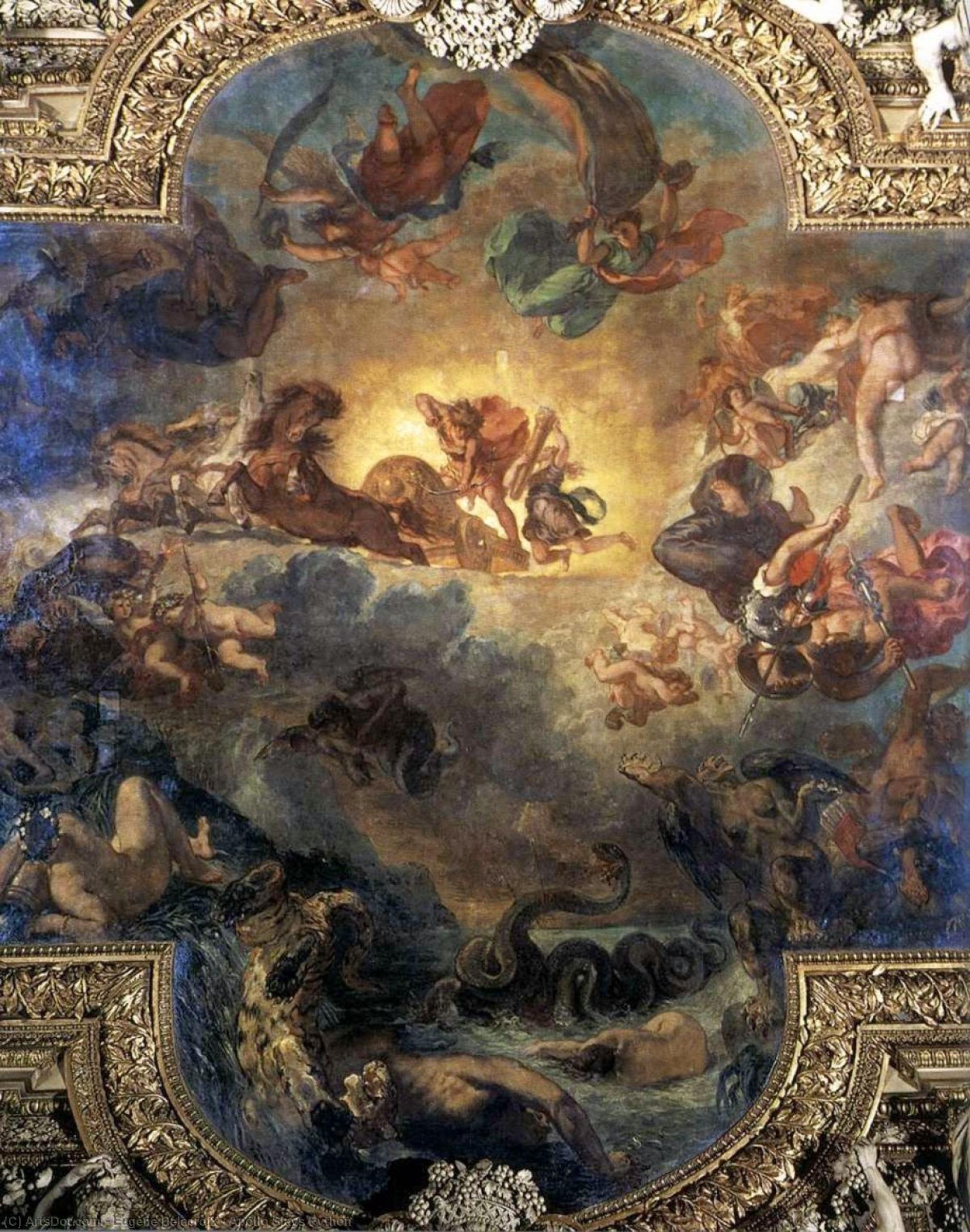
Apólolo Mata a Python

El cuadro «Apólolo Mata a Python» de Eugène Delacroix, obra maestra del Romanticismo francés, captura la lucha épica entre el dios griego y su enemigo serpiente. Descubre detalles impresionantes y la influencia en artistas como Van Gogh.

¿Quieres conocer a Eugène Delacroix? Este pintor francés revolucionó el Romanticismo con obras maestras como 'Libertad Llevando a la Gente'. Descubre su pasión por colores vibrantes y escenas épicas! #Delacroix #Romanticismo #ArteFrancés

Reproducción al óleo hecha a mano

Óleo sobre lienzo pintado a mano en el tamaño y marco de su elección, realizado por encargo por nuestros artistas.

P118B $10
P118H $10
P118W $10
P438Z $10
P508JH $12
P508YH $12
P805H $10
P805Z $10
P919BZ $10
P919G $10
P919XJ $10
P959ZH $10
P968JZ $12
W106C $8
W218G $10
W218JH $8
W218Y $10
W307PJ $10
W316G $10
W316PJ $8
W316Y $10
W398PJ $8
W4111J $10
W500HY $15
W500JH $15
W692G $12
W849H $8
W940BG $15
W953PJ $8

Standard
custom
CM
INCH

Elija entre nuestros tamaños predefinidos que respetan las proporciones originales de la obra.

ancho
altura

Puede ingresar sus propias dimensiones para adaptarse a un marco o espacio específico. Si el tamaño seleccionado no coincide con las proporciones de la imagen original, recortaremos la obra o extenderemos la pintura con elementos adicionales pintados a mano. Se le enviará una maqueta digital para su aprobación antes de comenzar la producción.
Tenga en cuenta que la vista previa en pantalla no refleja el recorte o la extensión reales. Solo la maqueta mostrará con precisión la composición final.
Si bien existen tamaños personalizados, recomendamos seleccionar una dimensión de la lista predefinida para preservar las proporciones originales.

Ejemplos de lo que se puede personalizar: Reemplace el rostro con una foto del cliente; Agregue una mascota (por ejemplo, cambie un gato por un perro); Incluya un mensaje oculto en el fondo; Cambie el paisaje o los elementos del fondo.
Tras realizar el pedido, el equipo de WahooArt.com enviará un correo electrónico al cliente para solicitar instrucciones y proporcionarle una vista previa del boceto.

Entrega mundial () en 3-4 semanas en lugar de las 5 semanas estándar. (2 julio). Sin compromisos con la calidad.

why_choose_icon
Envío exprés gratuito a todo el mundo
why_choose_icon
Lienzo de lino de alta calidad
why_choose_icon
Seguro de envío total
why_choose_icon
Garantía de reembolso de impuestos aduaneros
why_choose_icon
Garantía de fidelidad de color
why_choose_icon
Política de devolución de 60 días (solo por defectos)
why_choose_icon
Garantía de devolución del 100% del dinero
why_choose_icon
Descuento por pedido múltiple

Precio total

-

reproduction

Apólolo Mata a Python

Técnica de reproducción

Tamaño de la reproducción

-

Precio total final

-

Datos clave

  • Dimensions: 800 x 750 cm
  • Movement: Romanticism
  • Location: Musée du Louvre
  • Artistic style: Expressive realism
  • Influences:
    • Rubens
    • Titian
  • Year: 1850
  • Title: Apollo Slays Python

Test de arte

Solo hay una respuesta correcta para cada pregunta.

Pregunta 1:
What mythological tale does Eugène Delacroix’s Apollo Slays Python depict?
Pregunta 2:
Where is Apollo Slays Python housed?
Pregunta 3:
What artistic movement is Eugène Delacroix primarily associated with?
Pregunta 4:
Which artist greatly influenced Delacroix's style and approach to painting?
Pregunta 5:
What is a prominent feature of the painting’s color palette?

Descripción de la obra

Apollo Slays Python

Eugène Delacroix’s Apollo Slays Python stands as a cornerstone of Romantic art—a visceral embodiment of emotion and imagination that continues to captivate audiences today. Created in 1850, this monumental mural measuring 800 x 750 cm resides within the hallowed halls of the Musée du Louvre in Paris, France, cementing its place amongst artistic treasures. More than just a depiction of mythic grandeur, it’s a profound meditation on heroism, struggle, and divine retribution—a testament to Delacroix's unparalleled ability to translate narrative into visual drama.

The Composition and Storyline

The painting recounts the legendary tale of Apollo, the Greek god of light and healing, confronting Python, a serpent embodying primordial darkness that threatened Delphi’s prophetic oracle. Delacroix meticulously crafted a scene brimming with dynamism and complexity. At its core is a heroic figure—a man astride a horse—dominating the visual space, radiating authority and determination. Surrounding him are supporting characters engaged in various postures, contributing to the narrative's unfolding drama. The inclusion of horses, birds, snakes, and a dog isn’t merely decorative; it serves as symbolic representation of forces battling for supremacy – light versus darkness, order versus chaos. Delacroix skillfully employs a palette that oscillates between luminous whites and yellows—representing Apollo’s radiant glory—and deep reds and purples—signifying Python's menacing presence and the bloodshed of battle.

Artistic Significance

Apollo Slays Python is undeniably a product of the Romantic movement—a reaction against Neoclassical formalism and an embrace of subjective experience. Delacroix, alongside Théodore Géricault, championed individualism and emotional intensity as paramount artistic goals. His technique—characterized by loose brushstrokes and vibrant color harmonies—was revolutionary for its time, anticipating Impressionism’s focus on capturing fleeting moments of light and atmosphere. The mural's monumental scale further underscores Delacroix’s ambition to convey a powerful narrative through visual grandeur.

Other Notable Works by Delacroix

Delacroix’s artistic legacy extends far beyond Apollo Slays Python. Consider his breathtaking watercolor Bouquet of Flowers (1837)—a masterful demonstration of tonal subtlety and delicate color blending—or his introspective self-portrait Self-Portrait with Cap (1839), offering a glimpse into the artist’s psychological landscape. And don't miss Apollo Slays Python (detail)—a close-up study revealing the meticulous layering of paint and the artist’s masterful manipulation of light and shadow.

For those eager to delve deeper into Delacroix's oeuvre, a visit to the Musée Eugène Delacroix is indispensable—a sanctuary dedicated to preserving his life’s work and artistic vision.

Obras similares


Biografía del artista

Eugène Delacroix: The Soul of Romanticism

Ferdinand Victor Eugène Delacroix (Charenton-Saint-Maurice, April 26, 1798 – Paris, August 13, 1863) was a French painter and lithographer who stands as the undisputed cornerstone of the French Romantic school. From his initial artistic endeavors, he established himself as a visionary whose work resonated deeply with the spirit of its time—a period marked by fervent emotion, dramatic narratives, and an unwavering fascination for the sublime.

Early Life and Influences

Born into a family steeped in artistic tradition – his father, Charles Delacroix, was a diplomat serving as Minister of Foreign Affairs under Louis XVIII – Eugène received a privileged upbringing that nurtured his innate talent. His mother, Victoire Oeben, descended from a lineage of ébénistes (furniture makers), fostering an appreciation for craftsmanship and meticulous detail within him. These formative experiences instilled in Delacroix a profound understanding of artistic heritage and shaped his lifelong pursuit of expressive art. Delacroix’s artistic sensibilities were decisively molded by the masterpieces of Rubens and painters hailing from the Venetian Renaissance. Unlike the prevailing academic conventions of his era, he prioritized color and movement over precise delineation and idealized form—a stylistic choice that would become synonymous with Romanticism itself. He sought inspiration in the grandeur of Rubens' monumental canvases and the luminous palettes characteristic of Venetian artists like Titian and Tintoretto, recognizing their ability to convey emotion and dynamism.

The Flowering of Romantic Expression

Delacroix’s artistic maturity blossomed during a period of intense social upheaval—the July Revolution of 1830—which catapulted him into the spotlight as a champion of liberal ideals. This pivotal moment galvanized his creative spirit, propelling him to embark on ambitious projects that reflected the turbulent realities of his time. His most celebrated work, “Liberty Leading the People,” embodies this ethos perfectly: a monumental depiction of the uprising’s fervor and heroism—a testament to Delacroix's unwavering commitment to portraying human experience with visceral intensity.

Notable Works and Artistic Legacy

Delacroix’s oeuvre encompasses an astonishing array of subjects—historical dramas, mythological scenes, portraits, and landscapes—each infused with a distinctive Romantic aesthetic. Among his most iconic creations stand “La Muerte de Sardanapalus,” a chilling portrayal of Assyrian decadence and ritual sacrifice; “Arab Horses Fighting,” a dynamic composition capturing the raw energy of equestrian combat; and “The Wanderer Above the Sea of Fog,” an evocative meditation on solitude and contemplation—works that continue to captivate audiences worldwide. His masterful manipulation of color, coupled with his innovative compositional techniques, cemented Delacroix’s place as one of the foremost artists of the 19th century. He profoundly influenced subsequent generations of painters—particularly Impressionists like Monet and Renoir—who adopted his bold chromatic palettes and expressive brushstrokes as foundational elements of their artistic vision. Eugène Delacroix remains an enduring symbol of Romanticism's transformative power—a testament to the artist’s ability to capture the essence of human emotion and transform visual experience into a conduit for profound contemplation.
Eugène Delacroix

Eugène Delacroix

1798 - 1863 , Francia

Datos clave

  • Artistic Movement Or Style: Romanticismo
  • Artists Who Influenced This Artist:
    • Rubens
    • Pintores Renacentistas Venecianos
  • Date Of Birth: 26 abril de 1798
  • Date Of Death: 13 agosto de 1863
  • Full Name: Eugène Delacroix
  • Nationality: Francés
  • Notable Artworks:
    • Libertad Llevando a la Gente
    • La Muerte de Sardanapalo
    • Caballos Árabes Luchando
  • Place Of Birth: Chantonnay, Francia
Explore obras de arte organizadas por temas, estilos y características.