Asesoría de arte gratuita

x
Comprar impresión Comprar impresiónComprar imagen en alta resolución Comprar imagen en alta resolución EnviarEnviar
DetallesDetalles Añadir a favoritos Añadir a favoritos DescargarDescargar SimilaresSimilares RadiografíaRadiografía Presentación de diapositivasPresentación de diapositivas

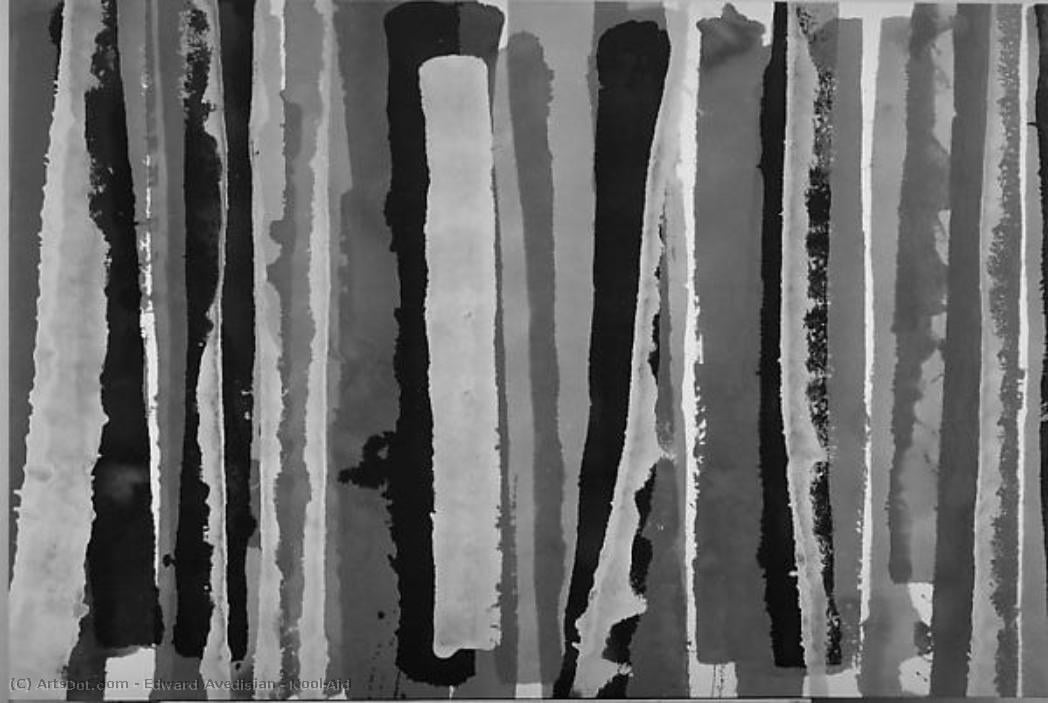
Kool-Aid

  • Fecha de creación1969
  • Dimensiones192.0 x 286.0 cm

Explora el arte abstracto vibrante de Edward Avedisian (1936-2007). Descubre sus pinturas Color Field y Lyrical Abstraction destacadas en exposiciones del MoMA y el Whitney. Un personaje clave en el arte estadounidense de los años 60.

Reproducción al óleo hecha a mano

Óleo sobre lienzo pintado a mano en el tamaño y marco de su elección, realizado por encargo por nuestros artistas.

Standard
custom
CM
INCH

Elija entre nuestros tamaños predefinidos que respetan las proporciones originales de la obra.

ancho
altura

Puede ingresar sus propias dimensiones para adaptarse a un marco o espacio específico. Si el tamaño seleccionado no coincide con las proporciones de la imagen original, recortaremos la obra o extenderemos la pintura con elementos adicionales pintados a mano. Se le enviará una maqueta digital para su aprobación antes de comenzar la producción.
Tenga en cuenta que la vista previa en pantalla no refleja el recorte o la extensión reales. Solo la maqueta mostrará con precisión la composición final.
Si bien existen tamaños personalizados, recomendamos seleccionar una dimensión de la lista predefinida para preservar las proporciones originales.

Ejemplos de lo que se puede personalizar: Reemplace el rostro con una foto del cliente; Agregue una mascota (por ejemplo, cambie un gato por un perro); Incluya un mensaje oculto en el fondo; Cambie el paisaje o los elementos del fondo.
Tras realizar el pedido, el equipo de WahooArt.com enviará un correo electrónico al cliente para solicitar instrucciones y proporcionarle una vista previa del boceto.

Entrega mundial () en 3-4 semanas en lugar de las 5 semanas estándar. (4 julio). Sin compromisos con la calidad.

why_choose_icon
Envío exprés gratuito a todo el mundo
why_choose_icon
Lienzo de lino de alta calidad
why_choose_icon
Seguro de envío total
why_choose_icon
Garantía de reembolso de impuestos aduaneros
why_choose_icon
Garantía de fidelidad de color
why_choose_icon
Política de devolución de 60 días (solo por defectos)
why_choose_icon
Garantía de devolución del 100% del dinero
why_choose_icon
Descuento por pedido múltiple

Precio total

-

reproduction

Kool-Aid

Técnica de reproducción

Tamaño de la reproducción

-

Precio total final

-

Obras similares


Biografía del artista

Edward Avedisian: Pioneer of Lyrical Abstraction

Edward Avedisian (June 15, 1936 – August 17, 2007) stands as a cornerstone in the narrative of American abstract painting during its formative decades. Born in Lowell, Massachusetts, his artistic trajectory commenced with rigorous training at Boston’s School of the Museum of Fine Arts, firmly anchoring him within the burgeoning currents of Color Field painting—a stylistic paradigm defined by monumental canvases bathed in radiant hues and delicately interwoven tones. Yet, Avedisian swiftly defied this initial categorization, gravitating towards a profoundly emotive style termed lyrical abstraction – an approach that would etch his name indelibly into the annals of artistic achievement as one of the era’s most compelling voices.

Early Artistic Foundations & The Influence of Color Field Painting

The crucible of his formative years resided within Boston's School of Fine Arts, where he cultivated a meticulous understanding of tonal harmony and compositional equilibrium – principles that would serve as guiding beacons throughout his subsequent artistic endeavors. This foundational grounding mirrored the broader ethos of Color Field painting—a movement spearheaded by artists like Mark Rothko and Barnett Newman—which prioritized conveying emotion through expansive fields of color rather than depicting recognizable subjects. The deliberate eschewal of representational imagery, coupled with an unwavering focus on textural richness and luminous intensity, became hallmarks of Avedisian’s artistic vision, reflecting the intellectual and aesthetic debates shaping the art world of the 1950s and 60s.

New York City: Crucible of Innovation & Artistic Dialogue

A decisive relocation to New York City in 1958 catalyzed a transformative period for Avedisian's career, propelling him into the epicenter of artistic dynamism and exposing him to luminaries who actively molded the trajectory of abstract expressionism. Surrounded by fellow innovators—artists experimenting with new techniques and challenging conventional notions of artistic representation—he absorbed the intellectual ferment characteristic of Greenwich Village and Soho during this pivotal era. This immersive environment fueled his creative explorations, fostering connections with influential critics and curators who championed his distinctive aesthetic sensibilities.

Early Exhibitions & Recognition in The Art World

Between 1958 and 1963, Avedisian garnered considerable acclaim through six solo presentations at prestigious galleries such as Hansa and Tibor de Nagy—establishments that epitomized the burgeoning New York art scene. These inaugural exhibitions underscored his unwavering dedication to interrogating color’s expressive potential—specifically its capacity to evoke mood and emotion—a characteristic that would become inextricably linked with his artistic identity. Notably, his canvases graced the cover of Artforum in 1969, signaling recognition from a respected publication devoted to fostering critical discourse surrounding contemporary art. Furthermore, he was included in “Op Art: The Responsive Eye” at MoMA (1965) and four successive annuals at the Whitney Museum of American Art—affirming his position as a prominent figure within the broader artistic landscape of the time.

Lyrical Abstraction & Its Enduring Legacy

Avedisian’s artistic evolution culminated in the embrace of lyrical abstraction – a style distinguished by swirling brushstrokes, layered textures, and an intentional rejection of figurative depiction. Rejecting the formalism of Color Field painting, he sought to distill intangible feelings and sensations into pigment and form—prioritizing intuition over reasoned analysis. This approach resonated powerfully with audiences captivated by the expressive force of color and gesture, mirroring the broader trends within abstract art during the 1960s – a period marked by experimentation and a fervent desire to transcend traditional artistic conventions. His paintings continue to captivate viewers today, serving as enduring emblems of American artistic heritage and embodying the spirit of innovation that defined an era. He passed away in August 2007, leaving behind his son, Joseph, of Brooklyn, New York—a poignant reminder of the artist’s indelible contribution to the visual arts.
Edward Avedisian

Edward Avedisian

1936 - 2007 , Estados Unidos

Datos clave

  • Artistic Movement Or Style: Abstracción lírica y Color Field
  • Artists Who Influenced This Artist:
    • MoMA
    • Tibor de Nagy
  • Date Of Birth: Junio 15, 1936
  • Date Of Death: Ago. 17, 2007
  • Full Name: Edward Avedisian
  • Nationality: Americano
  • Notable Artworks:
    • Untitled
    • Kool-Aid
  • Place Of Birth: Lowell, Estados Unidos