Acrylic On CanvasWallArtRomantic Historical Painting
 1843
1843 45.0 x 61.0 cm
 Colección Real
Adquiera una imagen digital de alta resolución y optimizada, muy superior a la vista previa en línea.
Cada archivo es preparado meticulosamente por nuestros especialistas internos mediante el uso de herramientas avanzadas y un experto retoque manual. Nos aseguramos de que cada imagen posea una claridad excepcional, una precisión cromática impecable y un detalle minucioso.
El archivo final se entrega por correo electrónico en un plazo de 72 horas, optimizado para su uso inmediato en entornos profesionales, editoriales y de impresión. Esta es la misma calidad en la que confían los estudios de diseño, las editoriales y las galerías de primer nivel.
Descarga un archivo de alta resolución para exhibición personal, impresión y proyectos creativos. ( Comprar impresión Comprar pintura hecha a mano)
Al elegir WahooArt.com, no solo está adquiriendo una imagen; está recibiendo una obra de arte digital mejorada profesionalmente, elaborada con precisión y respaldada por una garantía de satisfacción. Esto es todo lo que incluye su pedido, automáticamente:

Recibirá su archivo de imagen digital en alta resolución por correo electrónico en un plazo de 72 horas tras realizar su pedido, listo para su uso inmediato.

Su obra de arte se optimiza profesionalmente mediante herramientas avanzadas de IA y edición manual, garantizando el máximo detalle, claridad y precisión cromática.

¿Has borrado o perdido tu archivo por error? No te preocupes: te lo volveremos a enviar en cualquier momento, sin coste adicional.

Disfrute de su obra de arte al instante sin aduanas, aranceles ni gastos de envío; las descargas digitales siempre están libres de impuestos.

Garantizamos que su imagen digital refleje los colores originales con la mayor fidelidad posible, mediante el uso de herramientas profesionales y gestión del color.

Si no está satisfecho con su imagen digital, la revisaremos o le reembolsaremos el 100% en un plazo de 100 días, sin preguntas.

¿No está satisfecho? Obtenga un reembolso completo dentro de los 100 días posteriores a la recepción de su archivo digital, sin necesidad de explicaciones.

Compra 3 imágenes, ahorra 10% - Compra 5, ahorra 15% - Compra 10+, ahorra 20%. Ideal para proyectos creativos, galerías y agencias.
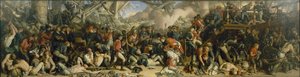
Daniel Maclise's “A Scene from ‘Undine’,” painted in 1843, is more than a mere depiction of a fairy tale; it’s a meticulously crafted tableau brimming with Romantic ideals, symbolic weight, and the burgeoning anxieties of Victorian society. This captivating work, now housed within the Royal Gallery at the Palace of Westminster, transports us to a shadowed forest glen, where a young knight, Huldbrand, confronts the elemental forces embodied by Undine, a water spirit yearning for a soul. Maclise’s masterful handling of light, color, and composition creates an atmosphere both alluring and subtly unsettling, reflecting the complex interplay between beauty, danger, and the eternal quest for redemption.
The painting is deeply rooted in Friedrich de la Motte Fouqué's 1819 novella of the same name – a story that resonated powerfully with Victorian audiences. The narrative centers on Undine’s desire to transcend her watery existence and attain a human soul through marriage. Maclise doesn’t simply illustrate the plot; he amplifies its themes of transformation, sacrifice, and the struggle between opposing forces. The scene depicted captures a pivotal moment – Huldbrand's resolute defense against Kuhleborn, the malevolent water spirit who seeks to prevent Undine from achieving her goal. This confrontation isn’t merely physical; it represents a battle for the very essence of existence.
Maclise was renowned for his meticulous attention to detail and his ability to render textures with astonishing realism. “A Scene from ‘Undine’” exemplifies this skill, showcasing a rich tapestry of colors and intricate details. The deep greens and browns of the forest floor contrast sharply with the ethereal blues and whites of Undine's watery realm. Notice the careful rendering of the foliage – each leaf, branch, and root meticulously depicted to create a sense of depth and immersion. The figures themselves are rendered with remarkable precision; Huldbrand’s determined expression, Undine’s delicate beauty, and Father Heilmann’s solemnity are all conveyed through subtle shifts in posture and facial expression.
Technically, Maclise employed a combination of oil paints on canvas. He was particularly adept at capturing the effects of light and shadow, creating a dramatic chiaroscuro that emphasizes the scene's emotional intensity. The use of glazing techniques – applying thin layers of translucent paint over dried underlayers – allowed him to build up color gradually, achieving remarkable luminosity and depth. Furthermore, Maclise’s background elements are not merely decorative; they contribute significantly to the overall narrative, hinting at the hidden world of spirits and folklore that underlies the story.
Beyond its surface beauty, “A Scene from ‘Undine’” is laden with symbolism. Undine herself represents a yearning for transcendence – a desire to escape the limitations of her watery existence and achieve something more meaningful. Huldbrand embodies courage and determination, willing to risk his life to protect her. Kuhleborn, the antagonist, symbolizes the destructive forces that threaten to thwart this transformation. The presence of Father Heilmann suggests the influence of Christian morality in guiding the characters towards a virtuous path.
The painting also reflects the anxieties prevalent in Victorian society – particularly those surrounding nature and the supernatural. The Romantic movement had instilled a fascination with the wild, untamed aspects of the natural world, while simultaneously fostering a sense of unease about its potential dangers. Maclise’s depiction of the forest as both alluring and menacing captures this duality perfectly. The inclusion of elves, goblins, and water nymphs further reinforces the painting's connection to folklore and mythology – themes that were experiencing a resurgence during the Victorian era.
“A Scene from ‘Undine’,” completed in 1843, remains a powerful testament to Daniel Maclise’s artistic skill and his ability to capture the spirit of his time. Its enduring appeal lies not only in its technical brilliance but also in its evocative storytelling and profound exploration of universal themes. Today, reproductions of this masterpiece continue to captivate audiences, offering a glimpse into a world where romance, danger, and the eternal quest for redemption converge.
Consider commissioning a high-quality reproduction from WahooArt.com – a faithful recreation that will bring the drama and beauty of Maclise’s “A Scene from ‘Undine’” to your home or office.


1806 - 1870 , Irlanda

 Ver en contexto
 Enviar
 Compartir
 Detalles

 Descargar
 Similares
 Radiografía
 Presentación de diapositivas
 Ver más