Vista previa Vista previa en RA Encargar reproducción pintada a mano Ver versión en imagen digital Compartir
Ver detalles Añadir a favoritos Descargar Ver artículos similares Radiografía Presentación de diapositivas Estadísticas

Calvaria

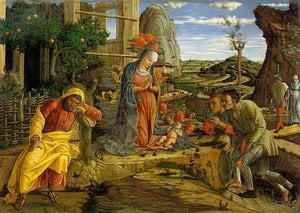
Andrea Mantegna's Calvaria powerfully depicts the crucifixion of Christ with strikingly realistic figures and dramatic perspective, showcasing a key work from the Italian Renaissance period – explore this poignant masterpiece and bring it into your collection.

Andrea Mantegna (1431-1506) fue un pintor del Renacimiento reconocido por su innovador uso de la perspectiva, formas escultóricas y composiciones dramáticas. Explore 'La Lamentación sobre el Cristo' y más en WahooArt! #ArteRenacentista #PinturaItaliana #Per

Giclée / Impresión de arte

Impresiones giclée o en lienzo de calidad de museo con producción rápida y opciones de acabado flexibles. ( Encargar reproducción pintada a mano Ver versión en imagen digital)

P118B $10
P118H $10
P118W $10
P438Z $10
P508JH $12
P508YH $12
P805H $10
P805Z $10
P919BZ $10
P919G $10
P919XJ $10
P959ZH $10
P968JZ $12
W106C $8
W218G $10
W218JH $8
W218Y $10
W307PJ $10
W316G $10
W316PJ $8
W316Y $10
W398PJ $8
W4111J $10
W500HY $15
W500JH $15
W692G $12
W849H $8
W940BG $15
W953PJ $8

Estándar
personalizado
CM
INCH

Elija entre nuestros tamaños predefinidos que respetan las proporciones originales de la obra.

ancho
altura

Puede introducir sus propias dimensiones para adaptarse a un marco o espacio específico. Si el tamaño seleccionado no coincide con las proporciones de la imagen original, recortaremos la obra de arte o extenderemos la imagen con un borde con efecto espejo o de color sólido. Se enviará una maqueta digital para su aprobación antes de que comience la producción.
Tenga en cuenta que la vista previa en pantalla no refleja el recorte o la extensión real. Solo la maqueta mostrará con precisión la composición final.
Aunque existen tamaños personalizados, recomendamos seleccionar una dimensión de la lista predefinida para preservar las proporciones originales.

Envío a todo el mundo () en 2 semanas en lugar de las 4/5 semanas estándar. (18 septiembre)

why_choose_icon
Envío exprés gratuito a todo el mundo
why_choose_icon
Lienzo de lino de alta calidad
why_choose_icon
Seguro de envío completo
why_choose_icon
Garantía de reembolso de impuestos aduaneros
why_choose_icon
Garantía de fidelidad cromática exacta
why_choose_icon
Política de devolución de 100 días (solo por defectos)
why_choose_icon
Garantía de devolución del 100% del dinero
why_choose_icon
Oferta por volumen

Precio total

$ 68

reproduction

Calvaria

Giclée / Impresión de arte

Tamaño de la reproducción

-

Precio total

$ 68

Datos clave

  • Year: 1495-1503
  • Influences: Roman antiquities
  • Movement: Early Renaissance
  • Title: Calvaria
  • Location: Private Collection
  • Subject or theme: Crucifixion of Christ
  • Notable elements: Sculptural forms, perspective

A Monumental Echo of Antiquity: Andrea Mantegna’s *Calvaria*

Andrea Mantegna's Calvaria, a profoundly moving depiction of the crucifixion, isn't merely a religious image; it is a testament to a revolutionary artistic spirit. Born in 1431 near Padua, Mantegna forged his own path through the early Renaissance, rejecting the prevailing trends and instead immersing himself in the tangible remnants of Rome’s glorious past. This dedication to archaeological accuracy – fueled by his formative years under Francesco Squarcione, a man who treated his workshop as an academy for Roman studies – resulted in a work that feels less like a painting and more like a meticulously reconstructed fragment of antiquity brought vividly to life. The sheer physicality of the figures, their sculpted forms echoing the statues Mantegna would have studied, immediately establishes a powerful connection with classical art, yet this isn’t a simple imitation; it's an intensely personal interpretation.

The Dramatic Narrative and Pioneering Perspective

Calvaria is dominated by its unflinching portrayal of Christ’s crucifixion. The scene unfolds with a stark realism, focusing on the central figure suspended from the cross – Jesus himself – surrounded by a carefully rendered group of onlookers. Mantegna's mastery of perspective is immediately apparent; he employs a dramatic foreshortening that draws the viewer into the heart of the event, creating an almost overwhelming sense of immediacy. The inclusion of at least thirteen figures, including disciples and mourners, adds to the scene’s emotional weight and underscores the scale of this pivotal moment in Christian history. The artist's deliberate arrangement isn't simply a depiction of a biblical event; it’s a carefully constructed narrative designed to evoke profound contemplation.

Symbolism Rooted in Roman Antiquity

Beyond its religious subject matter, Calvaria is rich with symbolic meaning deeply rooted in the artistic and intellectual currents of Mantegna's time. The mountainous landscape behind the scene isn’t a naturalistic backdrop but a deliberate reference to the Roman world – specifically, the Appian Way, a major thoroughfare that served as a stage for countless processions and public spectacles. This association elevates the crucifixion to a grand, almost theatrical event, reminiscent of Roman triumphal processions. The figures themselves are rendered with a classical dignity, reflecting Mantegna’s belief in the enduring relevance of ancient virtues and ideals. The use of muted colors – predominantly earth tones – further reinforces this connection to antiquity, creating a sense of timelessness and solemnity.

A Legacy of Sculptural Realism and Emotional Intensity

Mantegna's technique is characterized by its meticulous attention to detail and his ability to convey both physical realism and profound emotional intensity. The artist’s use of *terrazzo* – a technique involving the layering of colored plaster – creates a remarkable sense of depth and texture, further enhancing the sculptural quality of the figures. The faces of the mourners are particularly expressive, conveying a range of emotions from grief to concern. Calvaria remains a powerful testament to Mantegna’s artistic genius and his unwavering commitment to reviving the spirit of antiquity. Its enduring impact lies not only in its technical brilliance but also in its ability to evoke a deeply felt sense of human tragedy and spiritual reflection.


Biografía del artista

vida temprana y carrera

Andrea Mantegna, un innovador pintor e estudioso de la arqueología romana italiano, nació en Italia en 1431. Su vida está marcada por una desviación significativa de las formas suaves de su tiempo, favoreciendo un tratamiento audaz y voluminoso del espacio y la forma.

contribución a la perspectiva

La obra de Mantegna fue fundamental para explorar la perspectiva, utilizando técnicas como ajustar la línea del horizonte para impartir una escala más grandiosa y gravedad a sus obras. Este enfoque marcó una desviación significativa de las formas suaves de su tiempo, mostrando su estilo único.

obras notables y asociaciones

* Las pinturas de Mantegna son reconocidas por su calidad robusta y escultórica, exhibiendo paisajes y figuras duras y reflectantes que revelan su sensibilidad como escultor a la forma y la textura. * Su asociación con la familia Bellini a través del matrimonio es notable, ya que refleja la interconexión de las familias artísticas durante el Renacimiento.

legado en la historia del arte

La influencia de Mantegna en el desarrollo del arte en Italia y más allá es innegable. Su enfoque audaz de la perspectiva y la forma ha inspirado a generaciones de artistas. Como se ve en su colección en WahooArt, sus obras continúan cautivando al público con su grandeza e innovación.
  • Movimientos artísticos clave: Renacimiento, perspectiva temprana.
  • Obras notables: incluyen "El lamento sobre el Cristo muerto" y "San Jorge".
  • Museos que exhiben su obra: la Galería Nacional de Londres y la Pinacoteca Brera en Milán, entre otros.

lectura adicional y exploración

* Para más información sobre la vida y las obras de Mantegna, consulte la colección Palumbo-Fossati (Venecia, Italia), que presenta una breve reseña de la colección y sus piezas notables. * Explore la historia del arte en Italia con la cultura de Italia en Wikipedia.
Andrea Mantegna

Andrea Mantegna

1431 - 1506 , Italia

Datos clave

  • Artistas Influenciados:
    • Rafael
    • Miguel Ángel
  • Artistas Que Influyeron:
    • Donatello
    • Jacopo Bellini
  • Fecha De Muerte: 1506
  • Fecha De Nacimiento: 1431
  • Lugar De Nacimiento: Carturo, Italia
  • Movimiento Artístico: Renacimiento Temprano
  • Nacionalidad: Italiana
  • Nombre Completo: Andrea Mantegna
  • Obras Notables:
    • El Lamento sobre el Cristo muerto
    • San Jorge y el dragón
    • Camera degli Sposi
    • Los Triunfos de César
Explore obras de arte organizadas por temas, estilos y características.