Adquiera una imagen digital de alta resolución y optimizada, muy superior a la vista previa en línea.
Cada archivo es preparado meticulosamente por nuestros especialistas internos mediante el uso de herramientas avanzadas y un experto retoque manual. Nos aseguramos de que cada imagen posea una claridad excepcional, una precisión cromática impecable y un detalle minucioso.
El archivo final se entrega por correo electrónico en un plazo de 72 horas, optimizado para su uso inmediato en entornos profesionales, editoriales y de impresión. Esta es la misma calidad en la que confían los estudios de diseño, las editoriales y las galerías de primer nivel.
Descarga un archivo de alta resolución para exhibición personal, impresión y proyectos creativos. ( Cambiar a formato impreso
Encargar reproducción pintada a mano)
Al elegir WahooArt.com, no solo está adquiriendo una imagen; está recibiendo una obra de arte digital mejorada profesionalmente, elaborada con precisión y respaldada por una garantía de satisfacción. Esto es todo lo que incluye su pedido, automáticamente:
Recibirá su archivo de imagen digital en alta resolución por correo electrónico en un plazo de 72 horas tras realizar su pedido, listo para su uso inmediato.
Su obra de arte se optimiza profesionalmente mediante herramientas avanzadas de IA y edición manual, garantizando el máximo detalle, claridad y precisión cromática.
¿Has borrado o perdido tu archivo por error? No te preocupes: te lo volveremos a enviar en cualquier momento, sin coste adicional.
Disfrute de su obra de arte al instante sin aduanas, aranceles ni gastos de envío; las descargas digitales siempre están libres de impuestos.
Garantizamos que su imagen digital refleje los colores originales con la mayor fidelidad posible, mediante el uso de herramientas profesionales y gestión del color.
Si no está satisfecho con su imagen digital, la revisaremos o le reembolsaremos el 100% en un plazo de 100 días, sin preguntas.
¿No está satisfecho? Obtenga un reembolso completo dentro de los 100 días posteriores a la recepción de su archivo digital, sin preguntas.
Compra 3 imágenes, ahorra 10% - Compra 5, ahorra 15% - Compra 10+, ahorra 20%. Ideal para proyectos creativos, galerías y agencias.
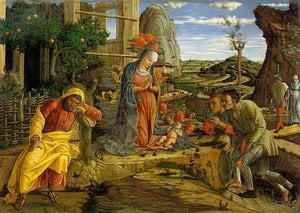
Andrea Mantegna's Calvaria, a profoundly moving depiction of the crucifixion, isn't merely a religious image; it is a testament to a revolutionary artistic spirit. Born in 1431 near Padua, Mantegna forged his own path through the early Renaissance, rejecting the prevailing trends and instead immersing himself in the tangible remnants of Rome’s glorious past. This dedication to archaeological accuracy – fueled by his formative years under Francesco Squarcione, a man who treated his workshop as an academy for Roman studies – resulted in a work that feels less like a painting and more like a meticulously reconstructed fragment of antiquity brought vividly to life. The sheer physicality of the figures, their sculpted forms echoing the statues Mantegna would have studied, immediately establishes a powerful connection with classical art, yet this isn’t a simple imitation; it's an intensely personal interpretation.
Calvaria is dominated by its unflinching portrayal of Christ’s crucifixion. The scene unfolds with a stark realism, focusing on the central figure suspended from the cross – Jesus himself – surrounded by a carefully rendered group of onlookers. Mantegna's mastery of perspective is immediately apparent; he employs a dramatic foreshortening that draws the viewer into the heart of the event, creating an almost overwhelming sense of immediacy. The inclusion of at least thirteen figures, including disciples and mourners, adds to the scene’s emotional weight and underscores the scale of this pivotal moment in Christian history. The artist's deliberate arrangement isn't simply a depiction of a biblical event; it’s a carefully constructed narrative designed to evoke profound contemplation.
Beyond its religious subject matter, Calvaria is rich with symbolic meaning deeply rooted in the artistic and intellectual currents of Mantegna's time. The mountainous landscape behind the scene isn’t a naturalistic backdrop but a deliberate reference to the Roman world – specifically, the Appian Way, a major thoroughfare that served as a stage for countless processions and public spectacles. This association elevates the crucifixion to a grand, almost theatrical event, reminiscent of Roman triumphal processions. The figures themselves are rendered with a classical dignity, reflecting Mantegna’s belief in the enduring relevance of ancient virtues and ideals. The use of muted colors – predominantly earth tones – further reinforces this connection to antiquity, creating a sense of timelessness and solemnity.
Mantegna's technique is characterized by its meticulous attention to detail and his ability to convey both physical realism and profound emotional intensity. The artist’s use of *terrazzo* – a technique involving the layering of colored plaster – creates a remarkable sense of depth and texture, further enhancing the sculptural quality of the figures. The faces of the mourners are particularly expressive, conveying a range of emotions from grief to concern. Calvaria remains a powerful testament to Mantegna’s artistic genius and his unwavering commitment to reviving the spirit of antiquity. Its enduring impact lies not only in its technical brilliance but also in its ability to evoke a deeply felt sense of human tragedy and spiritual reflection.
1431 - 1506 , Italia