


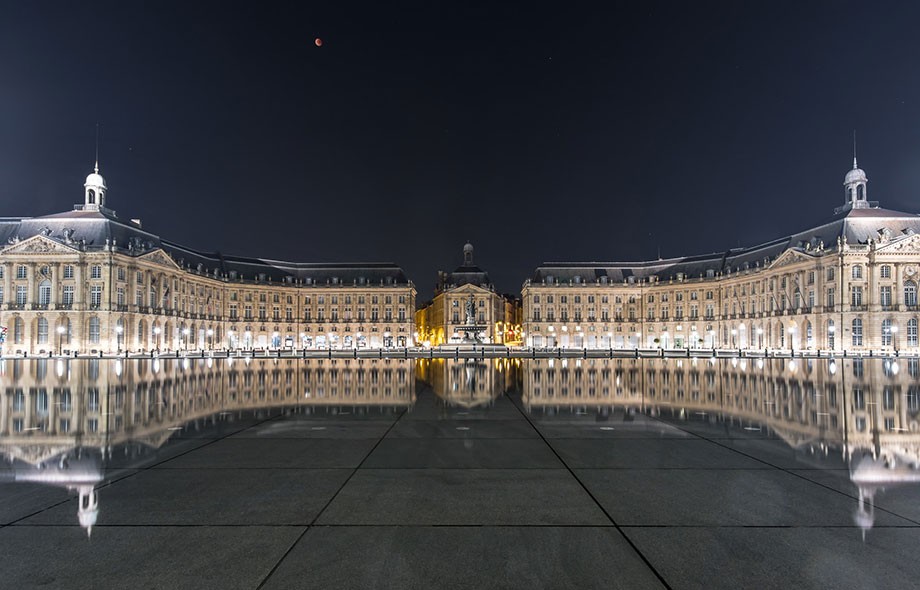


A Symphony of Stone and Water: The Place Royale
The heart of Bordeaux beats with a profound sense of permanence within the Place de la Bourse, a space that transcends its function as a mere urban square to become a living embodiment of civic pride and architectural grace. Originally conceived as the Place Royale in 1730, this UNESCO World Heritage site stands as a monumental testament to the ambition of 18th-century urban planning. It holds the distinction of being France’s first purposefully designed open public space, a visionary project brought to life through the masterful hands of architects Jacques Gabriel and his son, Ange-Jacques Gabriel—the same luminaries who lent their genius to the splendor of Versailles. Once, this expanse served as a powerful stage for an equestrian statue honoring King Louis XV, a symbol of royal authority that was tragically lost during the fervor of the French Revolution, yet the square’s regal essence remains untouched by time.
The enduring allure of this architectural masterpiece lies in its exquisite symmetry, a hallmark of neoclassical design that creates a wonderful sense of profound equilibrium. Flanking the open expanse are two magnificent pavilions that define the space: the Palais de la Bourse and the Hôtel des Douanes. The Palais de la Bourse, which currently houses the Chamber of Commerce and Industry, exudes an air of regal authority through its meticulously crafted façade, where sculptural details like the representation of Minerve protecting the arts and Mercury favoring commerce subtly reinforce Bordeaux’s historical dedication to both culture and trade. Opposite this stands the Hôtel des Douanes, a structure steeped in maritime history; today, it houses the National Museum of Customs, offering a fascinating glimpse into the city’s prosperous commercial past. These buildings do not merely stand side by side; they engage in a harmonious dialogue, their proportions and intricate embellishments carefully considered to create a sense of balanced grandeur.
The Mirror of Modernity
While the square is deeply rooted in history, it is far from a relic frozen in time. In 2006, the landscape architect Michel Corajoud introduced the Miroir d'eau (Water Mirror), a groundbreaking contemporary addition that has captivated the global imagination. This innovative reflecting pool does more than simply mirror the surrounding architecture; it actively engages with the sky and the stone, creating an illusion of seamless continuity between the majestic facades and the heavens above. The shallow water invites a tactile interaction where the boundaries between art and life blur—children splash playfully in its shallows while adults pause to witness their own reflections merging with the neoclassical monuments. This contemporary intervention serves as a masterclass in how modern design can enhance historical beauty without disrupting its soul.
For the art lover, the collector, or the interior designer, the Place de la Bourse offers an inexhaustible source of inspiration. It is a place where one can witness the principles of proportion and symmetry brought to life on a grand scale, making it a premier destination for those who appreciate the power of architectural detail. Beyond its visual splendor, the square serves as a gateway to the broader cultural richness of Bordeaux, from the historical insights found within the National Museum of Customs to the nearby vibrant culinary scene. To wander through this magnificent space is to feel the weight of history beneath one's feet and to marvel at the enduring power of a vision that successfully marries the prosperity of the 18th century with the innovative spirit of the modern age.





