




A Venetian Tapestry of Power and Art
Rising majestically from the edge of St. Mark’s Square, the Palazzo Ducale, or Doge’s Palace, is far more than a mere monument of stone and Istrian marble; it is an immersive chronicle of a vanished empire. To step through its gates is to enter a living testament to the enduring legacy of Venetian republicanism, where every soaring arch and intricate carving whispers tales of political intrigue, maritime dominance, and unparalleled artistic genius. The palace serves as a tangible echo of Venice’s extraordinary past, a place where the shadows of justice mingle with the vibrant, sun-drenched hues of Renaissance masterpieces. Its very foundations tell a story of transformation, evolving from a 9th-century fortified stronghold—built to repel Slavic raids—into the opulent, sprawling seat of the Doge, reflecting the city's journey from a vulnerable outpost to a global maritime superpower.
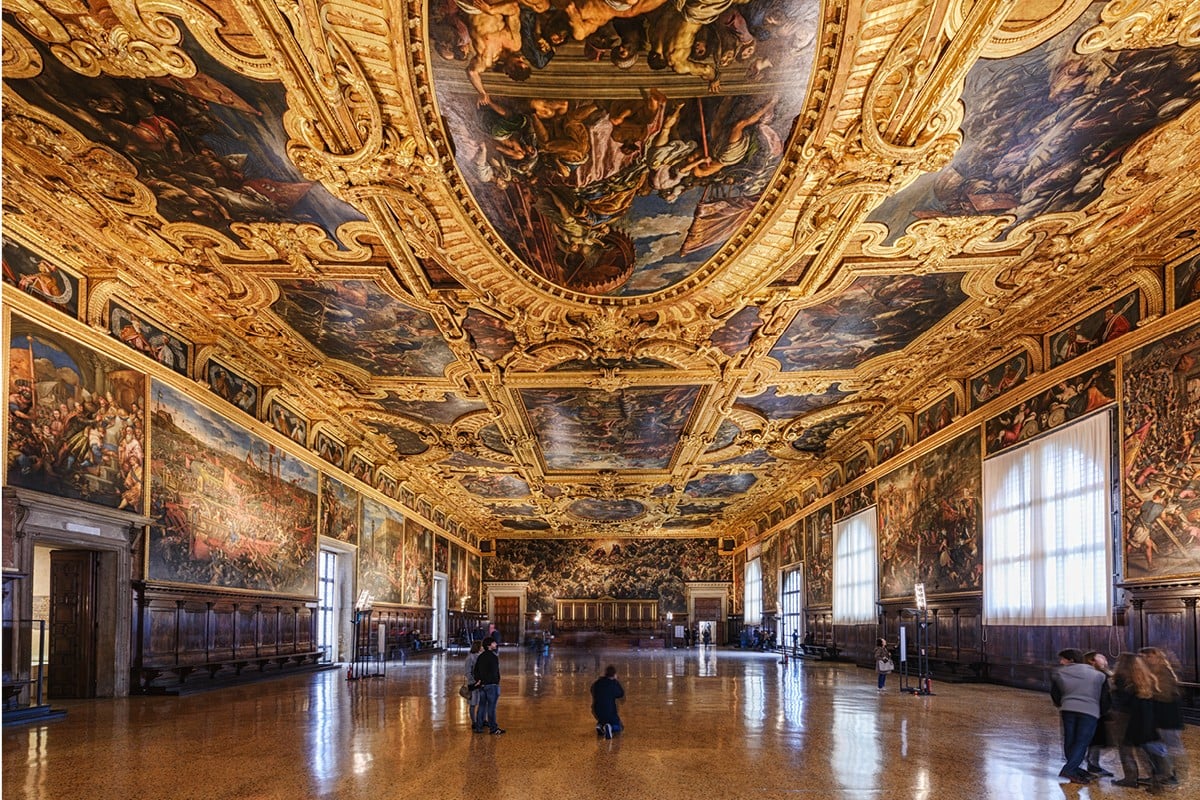
The architecture of the palace is a breathtaking dialogue between styles, embodying a unique fusion that mirrors Venice’s position as the crossroads of the East and West. The exterior façade, with its rhythmic interplay of delicate Gothic tracery and heavy, solid masonry, draws profound inspiration from Byzantine precedents, most notably the nearby Basilica di San Marco. This architectural innovation represents a conscious departure from traditional fortress-like structures, opting instead for an aesthetic of lightness and dynamism. Inside, the grandeur intensifies within spaces like the Sala del Maggior Consiglio. Here, the sheer scale of the Hall of the Great Council overwhelms the senses, dominated by Tintoretto’s monumental Paradise . This breathtaking canvas, stretching over 120 feet in length, serves as a powerful visual manifesto of Venice's commitment to civic virtue and divine favor, casting a celestial glow over the very heart of Venetian governance.
For the discerning collector and lover of fine detail, the palace offers a treasure trove of decorative splendor that transcends mere ornamentation. The halls are adorned with Veronese’s Triumph of Venice , a feast of color and opulent detail that celebrates the Republic's maritime prowess. Beyond these large-scale canvases, one finds the delicate soul of Venetian craftsmanship in intricate tapestries depicting biblical narratives and exquisite glasswork that once defined the city's economic heartbeat. The museum also invites exploration into the more enigmatic corners of history through its specialized tours, such as the Secret Itinerary , which reveals hidden chambers and passages that once held the state's most guarded secrets. Whether admiring the masterful light of a Titian or tracing the cartographic precision of the Lafreri School, visitors find themselves enveloped in an atmosphere where art and authority are inextricably entwined.
Today, the Palazzo Ducale remains a vibrant cultural epicenter, continuously evolving through exhibitions that bridge the gap between ancient tradition and modern perspective. Recent showcases have delved into the delicate artistry of Venetian glassmaking and the profound influence of Byzantine mosaics, ensuring that the palace's narrative remains as dynamic as the sea that once protected it. For interior designers and art enthusiasts seeking inspiration, the palace stands as the ultimate reference for luxury, scale, and the harmonious integration of architecture and fine art. It is a place where history is not merely studied but felt—a magnificent, enduring masterpiece that continues to captivate the world with its unparalleled beauty and storied past.





