Origins and History of the Fogg Art Museum
Established in 1895, the Fogg Art Museum is the oldest and largest component of the Harvard Art Museums. Its foundation was rooted in a specific purpose: fostering a deeper understanding of visual arts through teaching and scholarly research. Rather than functioning solely as a repository for objects, the institution was designed to support the academic study of art history within the university setting.
The museum's early history is tied to its original physical presence. It was first housed within a building designed by Richard Morris Hunt. This structure provided the initial setting for a collection that has since expanded to include over 250,000 objects. The institution's development reflects a long-standing commitment to the technical study of art and the preservation of its materials.
The museum's identity is defined by its integration into the broader Harvard University academic framework. It remains a center for both the exhibition of works and the rigorous investigation of artistic evolution. This dual focus on public engagement and scholarly inquiry has shaped its trajectory from its nineteenth-century origins to its current role within the Harvard Art Museums.
The Architecture of the Fogg Museum
The physical presence of the Fogg Museum has undergone significant transformation. The original structure, an Italian Renaissance-style building designed by Richard Morris Hunt, was demolished in 1974 to facilitate the construction of new student housing. While the original building is gone, its legacy persists through the remaining façade, a graceful example of Beaux-Arts architecture featuring intricate detailing and a sense of grandeur.
The current facility is the result of a transformative renovation project designed by Renzo Piano. Opened in 2014, the building integrates modern elements with the museum's historic roots. The design prioritizes the influx of natural light through an expansive glass roof. This feature provides views of the surrounding campus and creates a light-filled environment for the galleries below. The architecture seeks to maximize gallery space while maintaining a connection to the site's historical character.
The Italian Renaissance Collection
The Fogg Art Museum holds significant works from the Italian Renaissance. The collection includes paintings and drawings that reflect the technical developments of the era. Among these are works by Raphael and Michelangelo. The museum also maintains exceptional drawings by Leonardo da Vinci, which provide insight into his preparatory processes and anatomical studies.
The holdings extend back to the 13th century, with Italian Medieval Paintings forming the foundation of this period in the collection. These earlier works precede the Renaissance, establishing the stylistic lineage that led to the later developments in humanism and perspective. The transition from these medieval traditions to the Renaissance is visible through the evolution of form and light in the museum's various holdings.
- Male Nude, Seen from the Rear (recto), about 1503 - Michelangelo Buonarroti
British Pre-Raphaelite and French Art
A significant portion of the collection is devoted to British Pre-Raphaelite art. This movement is represented by works from Dante Gabriel Rossetti and John Everett Millais. These pieces emphasize meticulous detail and often employ symbolic imagery to convey their subjects.
The museum also houses an impressive array of French 19th-century paintings. This collection provides a bridge to the burgeoning Impressionist movement through the works of Delacroix, Manet, and Degas. These paintings offer a study in the development of light and color during a transformative period in French art history.
- La Donna Della Finestra, 1879 - Dante Gabriel Rossetti
- Il Ramoscello, 1865 - Dante Gabriel Rossetti
- My Lady Greensleeves, 1863 - Dante Gabriel Rossetti
- Giotto Painting the Portrait of Dante, 1852 - Dante Gabriel Rossetti
American and Modern Art Collections
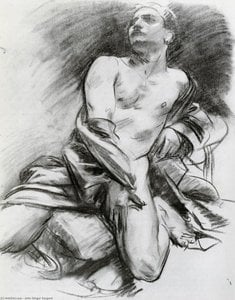
The American collection focuses on the development of North American visual language through 19th- and 20th-century paintings and drawings. The holdings include significant works by Winslow Homer and John Singer Sargent. These pieces provide a record of the evolving aesthetic and technical approaches used by American artists during these periods.
The Maurice Wertheim Collection expands the museum's scope into the foundations of modernism. This group includes works by Paul Cézanne, Edgar Degas, Édouard Manet, Henri Matisse, Pablo Picasso, and Vincent van Gogh. These acquisitions allow for a direct study of the shifts in style and form that defined the late 19th and early 20th centuries. The museum also maintains works by Max Beckmann within its modern holdings.
- Sailboat and Fourth of July Fireworks, 1880 - Winslow Homer
- Interior of a Bath House, 1891 - John Singer Sargent
- The actors, 1942 - Max Beckmann
Masterpieces of the Fogg Collection
The collection contains significant works that define specific movements in Western art. Botticelli’s ethereal “Birth of Venus” is a central presence, embodying the Renaissance fascination with classical mythology and idealized beauty. This work is held alongside other significant pieces that trace the evolution of European painting and drawing.
Impressionist and Post-Impressionist works are also present. Claude Monet’s “Red Boats, Argenteuil” is part of this selection. Nearby, Pierre-Auguste Renoir’s “Self-Portrait at the Age of Thirty Five” offers a direct look at the artist. The museum also holds James Abbott McNeill Whistler’s “Harmony in Grey and Peach Colour,” a work that demonstrates his specific approach to color and composition.
- “Three Pair of Shoes”, about 1886 - Vincent Willem Van Gogh
- “Mardi Gras on the Boulevards”, 1897 - Camille Pissarro
- “Sailboat and Fourth of July Fireworks”, 1880 - Winslow Homer
Exhibitions and Scholarly Research
The museum hosts regular temporary exhibitions designed to examine specific themes. Recent programming has investigated the influence of Japanese prints on Western art. These curated displays allow for a focused study of how cross-cultural exchanges shaped visual traditions.
Scholarly activity is central to the institution's mission. The museum's research centers include the Center for the Technical Study of Modern Art. This facility supports the ongoing investigation of materials and techniques used by artists. Alongside these technical studies, the museum maintains an extensive archive of drawings and prints, providing a foundation for academic inquiry and the preservation of works on paper.
Visiting the Harvard Art Museums
The Fogg Museum is located in Cambridge, Massachusetts. It is situated just steps away from Harvard Square. Admission is free to all visitors every day. To assist with the exploration of the galleries, visitors may use the Bloomberg Connects digital guide.
The institution is part of the Harvard Art Museums. The physical space includes the Calderwood Courtyard on the first floor and Jenny's Cafe. For those visiting on the last Thursday evening of each month, the museum hosts Harvard Art Museums at Night, which offers free admission alongside music, food, and drink. Visitors are encouraged to check in at the Visitor Services desk upon arrival to receive information regarding special exhibitions and gallery tours.