
A Sun King’s Echo: Unveiling the Majesty of Versailles
The Château de Versailles isn't merely a building; it’s an experience, a portal into a world meticulously crafted by ambition and artistry. Rising from the verdant plains west of Paris, this former royal residence stands as a testament to Louis XIV’s vision – a declaration of power, a celebration of beauty, and a profound influence on European aesthetics. More than just walls and rooms, Versailles embodies an entire era, a carefully constructed illusion of divine right and unparalleled luxury that continues to captivate visitors centuries later. Its story is interwoven with the rise and fall of dynasties, the blossoming of artistic movements, and the very definition of courtly life. The palace’s enduring appeal lies not just in its opulent grandeur but also in the layers of history it holds – a tangible link to France's most transformative period.
The genesis of Versailles began with a simple desire: Louis XIII sought a hunting lodge, a respite from the constraints of Parisian court life. However, his son, Louis XIV, transformed this modest beginning into something extraordinary. Driven by an insatiable need to assert his authority and establish France as the dominant force in Europe, he embarked on a decades-long campaign of expansion and embellishment. This wasn’t simply about building a palace; it was about constructing a symbol – a visible manifestation of absolute power. The sheer scale of the undertaking is breathtaking: a labyrinthine complex of state apartments, private residences, meticulously manicured gardens, and cascading fountains—each element designed to impress, to inspire awe, and to reinforce the Sun King’s unchallenged reign. The initial design by architect Louis Le Vau was radically altered under Jules Hardouin-Mansart, resulting in the iconic form we recognize today – a harmonious blend of classical restraint and extravagant display.
Hall of Mirrors: Reflections of Majesty
Undoubtedly the most iconic space within Versailles, this vast hall is a dazzling spectacle of light and reflection. Seventeen mirrored arches, meticulously crafted and strategically positioned, capture the sunlight streaming in from the gardens below, creating an ethereal glow that seems to stretch endlessly into the distance. The paintings adorning the walls – triumphant scenes depicting French victories—further amplify the sense of grandeur and reinforce France’s military prowess. Notice the subtle use of perspective; the mirrors don't simply reflect the room but also create the illusion of infinite space, mirroring the perceived power of the monarchy. André Le Nôtre’s architectural design ensured that every ray of sunlight illuminated the hall, enhancing its visual impact and symbolizing Louis XIV’s dominion over nature. The Hall of Mirrors wasn’t just a decorative feature; it was a carefully calculated tool for projecting an image of limitless wealth and strategic brilliance. It served as a stage for diplomatic receptions, elaborate balls, and theatrical performances, solidifying Versailles's role as the center of European diplomacy.
State Apartments: Portraits of Power
Each suite within the palace tells a story of royal life, reflecting the status and tastes of its occupant. From the opulent Grand Apartment, designed to impress foreign dignitaries, to the more intimate Queen’s Apartment, embodying elegance and refinement, these spaces offer a fascinating glimpse into the daily rituals and social dynamics of the court. Pay particular attention to the details – the tapestries depicting mythological scenes, the elaborate furniture crafted from precious woods, and the meticulously arranged porcelain collections—all contribute to the overall impression of wealth and sophistication. The furnishings were chosen with meticulous care, reflecting Louis XIV’s penchant for sumptuousness and demonstrating France's mastery of craftsmanship. Narrative artistry played a crucial role; tapestries and paintings served as visual narratives, conveying themes of royal authority and celebrating the glories of French history. The collection includes exquisite examples of 17th-century furniture design, showcasing the skill of renowned artisans like André Charles Boulle, whose marquetry work is particularly celebrated. The Queen’s Apartments, in particular, offer a poignant contrast to the grandeur of the King's apartments, revealing a more intimate and personal space for Marie Antoinette.
Beyond Walls: The Gardens of Versailles
Beyond the palace walls, André Le Nôtre’s meticulously planned gardens represent a triumph of human control over nature—a deliberate mirroring of Louis XIV’s ambition to impose order on both his kingdom and the natural world. These aren’t simply decorative landscapes; they are carefully orchestrated works of art, designed to evoke feelings of grandeur, perspective, and divine harmony. The geometric precision of the parterres – intricate patterns of clipped hedges and flowerbeds—contrasts beautifully with the more organic forms of the trees and shrubs, creating a dynamic balance between artifice and nature. The fountains served as powerful symbols of royal authority, reinforcing the themes of divine right and absolute power. The gardens themselves are a living history book, reflecting evolving tastes and horticultural techniques over centuries. A visit to Versailles is incomplete without experiencing the serenity and scale of these magnificent grounds – a testament to the Sun King’s vision of a perfectly ordered world.
A Legacy Preserved: Art & Architecture
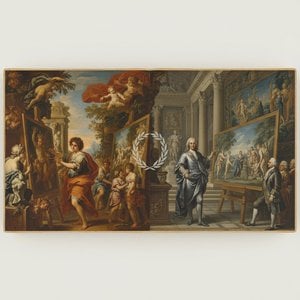
Today, the Château de Versailles continues to captivate visitors with its unparalleled beauty and historical significance. The museum houses an extensive collection of paintings by masters such as Jean-Baptiste Adolphe Lafosse and Jean-Victor Schnetz – works that offer a glimpse into the artistic tastes of the French court. Portraits of kings and queens adorn the walls, while allegorical scenes celebrate the glory of France. Sculptures, furniture, and decorative arts further enhance the palace’s opulent interiors, providing a comprehensive overview of 17th and 18th-century French art. Notable exhibitions regularly highlight specific aspects of Versailles' history or showcase newly discovered artifacts. The museum also maintains a dedicated research center, actively engaged in preserving and interpreting the palace’s vast collection for future generations. A visit to Versailles is not just a journey through time; it’s an immersion into a world of unparalleled artistry and royal ambition.