

Luca Giordano is the best-known artist with works in Uppark; next come Pompeo Batoni, Joseph Vernet, Francesco Zuccarelli and Peter Tillemans.
Our catalogue lists 66 works of Uppark by 24 artists; the 13 best known are ranked below, each with the works the museum holds.
The ranking
For each artist: dates and place of birth, movement, the number of works the museum holds in our catalogue, a note from the biography, and the best-known of those works.
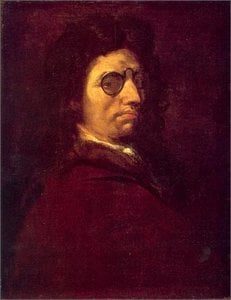
Baroque
1634–1705 Born in Naples, Italy Baroque 6 works in Uppark
Giordano’s movement across the Italian peninsula is a series of rapid shifts. In 1667, he is active in Venice, absorbing the local light and color. The pace of his career is dictated by the demand for his speed; he moves from city to city as commissions arise, never remaining static for long.
In Uppark

Neoclassicism
1708–1787 Born in Lucca, Italy Neoclassicism 11 works in Uppark
Lucca, Italy (1708) Died: 1787 Pompeo Batoni moved to Rome in 1727. His first independent commission came as a result of rains that struck Rome in April 1732. Batoni became a highly fashionable painter in Rome after his rival, Anton Raphael Mengs, departed for Spain in 1761.
In Uppark

Rococo
1714–1789 Born in Avignon, France Rococo 6 works in Uppark
Claude-Joseph Vernet, born in Bordeaux in 1714, wasn’t initially destined for the grand landscapes and dramatic seascapes that would define his legacy. Vernet’s formal training began under his father, Antoine Vernet, a decorative painter, and Nicolas- Bernard Lépicié, providing him with a solid academic foundation before he ventured towards the artistic heart of Europe: Rome. Vernet’s time in Rome wasn't merely about replicating existing styles; it was an immersive study of light, atmosphere, and the interplay between humanity and nature.
In Uppark

Rococo
1702–1788 Born in Pitigliano, Italy Rococo 4 works in Uppark
Pitigliano, Italy (1702) Died: 1788 Movement: Late Baroque / Rococo Giacomo Francesco Zuccarelli, known primarily as Francesco Zuccarelli, was a pivotal Italian artist renowned for his idyllic landscapes and Arcadian scenes. Born in Pitigliano, Tuscany, in 1702, he emerged as the most significant landscape painter from Venice during the mid-18th century. In 1768, he became a founding member of the Royal Academy of Arts in London, solidifying his reputation on an international stage.
In Uppark
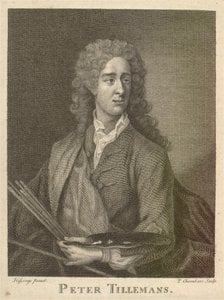
Baroque
1684–1734 Born in Antwerp, Belgium Baroque 2 works in Uppark
Born around 1684 in the illustrious artistic hub of Antwerp, Belgium, Tillemans emerged from a lineage of craftsmanship as the son of a diamond cutter. While his roots were firmly planted in the Flemish tradition, his spirit was drawn toward the burgeoning art scene of London, a move prompted in 1708 by the influential picture-dealer Turner.
In Uppark

Baroque
1659–1743 Born in Stockholm, Sweden Baroque 2 works in Uppark
Born in Stockholm around 1659 – sources vary slightly between 1658 and 1659 – Dahl’s trajectory wasn't one confined by national borders but rather defined by an ambitious pursuit of artistic mastery that led him across Europe and ultimately established him as a leading portraitist in England.
In Uppark

Neoclassicism
1735–1811 Born in Kingdom of Great Britain, Kingdom of Great Britain Neoclassicism 3 works in Uppark
Dance's artistic prowess was formally recognized in 1768 when he became a founding member of the Royal Academy, solidifying his position within the established art world. In 1790, at the height of his artistic career, he made a surprising transition into politics, successfully contesting the parliamentary seat for East Grinstead in Sussex.
In Uppark

Neoclassicism
1712–1787 Born in Preston, United Kingdom Neoclassicism 8 works in Uppark
Arthur William Devis (19 February 1712 – 25 July 1787) was an English painter whose father, Anthony, was progenitor of what became a family dynasty of painters and writers. Unable to adapt to later fashionable artistic currents, his commissions declined and his work was largely forgotten after his death until the 20th century revival of interest in the conversation piece.
In Uppark

1700–1779 Born in Marseille, France 3 works in Uppark
charles francois lacroix de marseille | wahoart jean clouet's "jean de la barre" | wahoart wildo museum | wahoart
Charles François Grenier de Lacroix: biography and all 40 works

1689–1740 Born in Vienna, Austria 2 works in Uppark
Born in Vienna, Austria, he was the son of the history painter Adam Pankraz Ferg, who provided his initial artistic foundation. By the time he settled in London around 1724, he had become a versatile creator, capable of producing oil paintings, etchings, and engravings that captured both the grandeur of nature and the intimacy of human interaction.
In Uppark
The ranking, continued

1714–1784 · born in Antwerp, Belgium · 2 works in Uppark

1954–1760 · born in Spain · 4 works in Uppark

born in Kingdom of Great Britain · 2 works in Uppark
By the numbers
The artists with the most works in Uppark (our catalogue)
Artists with two works or more, by century of birth
Artists with two works or more, by country of birth
Artists with two works or more, by movement
Questions & answers
Click a question to read the answer.
Luca Giordano, with 6 works at Uppark in our catalogue (The Parable of the Prodigal Son Driven out by His Former Companions, The Parable of the Prodigal Son Receiving his Portion and The Parable of the Prodigal Son The Penitent Swineherd); then Pompeo Batoni and Joseph Vernet.
By fame: Luca Giordano (6), Pompeo Batoni (11), Joseph Vernet (6), Francesco Zuccarelli (4), Peter Tillemans (2), Michael Dahl (2), Nathaniel Dance-Holland (3), Arthur Devis (8), Charles François Grenier de Lacroix (3) and Franz de Paula Ferg (2).
Our catalogue holds 11 works by Pompeo Batoni at Uppark; next come Arthur Devis (8), Luca Giordano (6) and Joseph Vernet (6).
24 artists have at least one work of Uppark in our catalogue; 13 have two or more. They were born between 1634 and 1954, in 8 countries.
Our catalogue lists 6 works by Luca Giordano at Uppark, among them The Parable of the Prodigal Son Driven out by His Former Companions (1680), The Parable of the Prodigal Son Receiving his Portion (1680) and The Parable of the Prodigal Son The Penitent Swineherd (1680).
Our catalogue lists 11 works by Pompeo Batoni at Uppark, among them Lascelles Raymond Iremonger (1718/19–1793) with Wreaths of Corn and Roses (1751), The Reverend Utrick Fetherstonhaugh (1717/18-1788) as Apollo (1751), Katherine Durnford (1751) and Sir Matthew Fetherstonhaugh (1751).
Our catalogue lists 6 works by Joseph Vernet at Uppark, among them Night Rocky Inlet with Fisherfolk Setting Their Nets (1751), Midday A Ship Offshore, Foundering in a Storm (1751), Evening Habour Scene with Boats Being Unloaded and Spectators (1751) and A River Landscape with a Town above (1751).
No: Uppark holds no work by Leonardo da Vinci in our catalogue.
No: Uppark holds no work by Pablo Picasso in our catalogue.
Counting the artists with two works or more, Uppark holds painters born mostly in Italy (3), France (2), Belgium (2), Kingdom of Great Britain (2) and Sweden (1).
The 18th century leads with 6 artists born then. In this ranking, Luca Giordano (1634–1705) is the earliest born and Tommaso Ruiz (1954–1760) the latest.
By recognition — Wikipedia articles in the most languages, page visits and our manual ranking — over the artists with two works or more of Uppark in our catalogue. One entry per work; details, studies and copies are left out.
The museum
Uppark emerged in 1690 as a 17th-century house situated in the South Downs of West Sussex, England. It was built for the duplicitous Lord Grey, who required a sophisticated method of pumping water to great heights to supply the home atop its hilltop position. The red brick structure, designed in the Dutch style, has remained a constant presence in the landscape of South Harting for centuries. The estate underwent a significant transition in 1747 when Sir Matthew Fetherstonhaugh and his wife, Sarah Lethieullier, purchased the house and its surrounding lands. Their tenure involved extensive travel through France, Italy, and Austria, which informed the acquisition of various antiquities for the residence. Later, in 1780, the house became the site of a notable social scandal when Sir Henry Fetherstonhaugh took Emma Hamilton as a mistress, providing her with a cottage on the estate. The lineage of the property continued through various heirs, including the Bullock family, until it passed to the National Trust in 1954.
This Grade I listed building is a red brick home designed in the Dutch style. It is thought to have been built by William Talman. The structure occupies a hilltop position in the South Downs, a location that required an ingenious method of pumping water to great heights to supply the house. In the attic, a telescope remains as a quiet presence. The grounds and exterior have been shaped by the hand of Humphry Repton, who was commissioned to add a pillared portico, a dairy, and a landscaped garden. These additions integrate the house into its surroundings. During the 19th century, the estate expanded with the addition of separate buildings for the stables and kitchens, which are connected to the main house by tunnels intended for the use of servants.
Famous paintings in UpparkUppark: history, collection and all 66 works
The artists with at least two works of Uppark in our catalogue are ordered by how widely each one is known: the number of Wikipedia language editions with an article on the artist, the monthly visits of their WahooArt.com page, and a review by our editors. The number of works is counted in our catalogue (one entry per work, no details, studies or copies), not in the museum's own inventory. Dates, places of birth and movements come from each artist's record; the notes are taken from their biography.
Keep exploring


