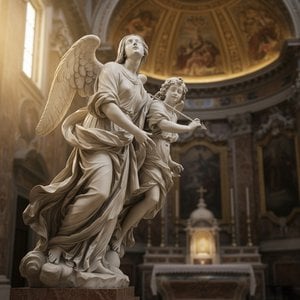
Viktor Oskar Tilgner: Sculptor of the Ringstrasse
Viktor Oskar Tilgner (1844-1896) stands as a pivotal figure in late 19th-century Austrian sculpture, inextricably linked to the grandeur and ambition of Vienna’s Ringstrasse. Born in Pressburg (modern Bratislava), his early life was marked by a move to Vienna, a city that would become both his home and the canvas upon which he etched his enduring legacy. Tilgner's career unfolded during a period of immense civic renewal, fueled by Emperor Franz Joseph I’s vision for transforming Vienna into a modern imperial capital – a project powerfully shaped by monumental sculpture. His work embodies this era, seamlessly blending academic training with an increasingly expressive and dynamic style, ultimately becoming one of the foremost sculptors associated with the Ringstrasse's iconic buildings.
Early Life and Artistic Training
Tilgner’s artistic journey began under the tutelage of Franz Schönthaler, a respected sculptor who recognized his prodigious talent early on. This initial mentorship laid the foundation for a rigorous training at the Vienna Academy of Fine Arts, where he further honed his skills under the guidance of Franz Bauer and Josef Gasser. Notably, Tilgner’s artistic sensibilities were profoundly influenced by the work of Hans Makart, whose “realistic academicism” – characterized by its emphasis on historical subjects, dramatic poses, and a sense of heroic grandeur – resonated deeply with the imperial aspirations of Vienna. A pivotal trip to Italy in 1874 provided him with invaluable exposure to Italian Renaissance sculpture, further enriching his artistic vocabulary. His later work also shows traces of French sculptor Gustave Deloye’s influence, particularly in its dynamic compositions and attention to detail.
The Mozart Monument: A Defining Achievement
Perhaps the most celebrated achievement of Viktor Tilgner's career is undoubtedly the monumental statue of Wolfgang Amadeus Mozart that graces the courtyard of Vienna Castle Garden. Completed shortly before his death, this sculpture represents a culmination of his artistic development and embodies the spirit of the Ringstrasse project. The monument’s dynamic composition—featuring a youthful Mozart surrounded by allegorical figures representing music, poetry, and drama—captures both the composer's genius and the celebratory atmosphere of imperial Vienna. The statue’s intricate detailing, particularly in the depiction of Mozart’s gestures and facial expression, showcases Tilgner’s technical mastery. It is often noted that he worked tirelessly on this piece until his final days, driven by a desire to deliver a masterpiece for the city.
Sculptural Contributions to Vienna's Ringstrasse
Beyond the Mozart monument, Tilgner played a crucial role in shaping the sculptural landscape of Vienna’s Ringstrasse. He was commissioned to create numerous works adorning prominent buildings, including the Burgtheater (Parliament), the Kunsthistorisches Museum, and the Naturhistorisches Museum. His sculptures for these structures—ranging from depictions of historical figures like Archimedes and Marcus Terentius Varro to allegorical representations of science and art—contributed significantly to the overall aesthetic coherence of the Ringstrasse’s monumental architecture. His work on the Telfair Academy building, featuring statues of Phidias, Raphael, and Rembrandt, further solidified his reputation as a leading sculptor of his time.
Legacy and Influence
Viktor Oskar Tilgner's legacy extends beyond his individual works; he represents a key figure in the development of Austrian sculpture during the late 19th century. His ability to synthesize academic training with expressive dynamism, coupled with his deep engagement with the civic ambitions of Vienna, established him as a prominent voice within the artistic community. His influence can be seen in subsequent generations of sculptors who continued to explore themes of historical grandeur and public commemoration. Today, Tilgner’s sculptures remain integral components of Vienna's cultural heritage, offering a tangible connection to the city’s imperial past. His work is preserved at the Bratislava City Gallery, ensuring that his artistic contributions are accessible for future generations to appreciate and study.