

early life and training
uemura shōen, known by her real name uemura tsune, was a pioneering artist in meiji, taishō, and early shōwa period japanese painting. born on april 23, 1875, in shimogyō-ku, kyoto, she grew up in an all-female household after her father's passing. her mother's tea shop attracted refined clientele for the art of japanese tea ceremony, exposing uemura to a cultured environment from an early age.artistic career
by 12, uemura tsune demonstrated considerable skill in drawing human figures. at 15, she began exhibiting her work and winning awards in official art contests, as well as receiving private commissions. her mother supported her decision to pursue an artistic career, which was unusual for the time.- key achievements:
- first female recipient of the order of culture award
- hired as the imperial household's official artist
- produced numerous works on historical themes and traditional subjects, especially bijin-ga (paintings of beautiful women) in the nihonga style
- notable works:
- 花がたみ (129 x 219 cm, shohaku art museum, paper)
- 鼓の音 (95 x 77 cm, shohaku art museum, silk)
- 夕暮 (95 x 187 cm, shohaku art museum, paper)
- museums and collections:
- shohaku art museum (nara, japan)
legacy and influence
uemura tsune's success paved the way for future generations of female artists in japan. her work can be seen as a bridge between traditional japanese art forms and the evolving role of women in society during the taisho era.- related art movements:
- further reading:
conclusion
uemura tsune's remarkable career, marked by her trailblazing achievements and dedication to traditional japanese art forms, continues to inspire artists and art enthusiasts alike. her legacy serves as a testament to the evolving role of women in japanese society and the enduring power of art to transcend time and culture.Questions & Answers
Is there a 3D virtual tour of Uemura Tsune's works?
The 3D Museum of Uemura Tsune is a page that displays the artist's artworks in a virtual three-dimensional gallery.
What aliases or alternate names does Uemura Tsune have?
Uemura Tsune is also known as Uemura Shōen.
How can I see every artwork made by Uemura Tsune?
Every work by Uemura Tsune on this website can be browsed from the artist's All Artworks page.
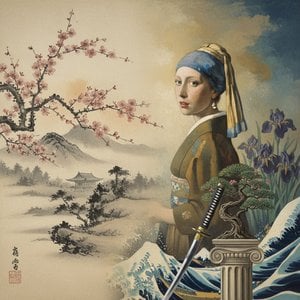


![Bijin Eika [beauty Poem] — Uemura Tsune](/media/artworks/images-thumb/46/9c/469cd8d72636f40f3a39b537751a674b.jpg)


