Ivan Kramskoi, 1837 – 1887

Ivan Kramskoi Paintings: The 100 Most Famous Works, Ranked

Ivan Kramskoi's most famous painting is Portrait of a Woman, in the Tretyakov Gallery, Moscow. With Christ in the Desert and Christ in the Wilderness, it completes the three works everyone recognises. Our catalogue lists 109 works by Ivan Kramskoi; the 100 below are the ones the world looks at most, each with its year, the museum that holds it and why it matters.

Ranked by our popularity score, which combines the searches, visits and orders for each work. Updated October 2026. Every masterpiece on this page can be ordered as a museum-quality, hand-painted oil reproduction or a fine art print, at the size you choose.

Portrait of Ivan Kramskoi
Ivan Kramskoi · 1837 – 1887
Born · died
1837 – 1887, Ostrogozhsk
Movement
Realism
Works in our catalogue
109
Most famous
Portrait of a Woman
Most works at
Tretyakov Gallery

The 10 most famous Ivan Kramskoi paintings

Portrait of a Woman by Ivan Kramskoi
1

Portrait of a Woman

Oil On Canvas · Tretyakov Gallery, Moscow

The Portrait of a Woman by Ivan Kramskoi presents a quiet, introspective encounter with a young woman. This work, dated about 1885, captures a singular moment of stillness. The subject gazes out with a sense of internal reflection, her presence filling the space with a heavy, thoughtful energy. It is a study of character and gaze, where the individual's inner life seems to press against the surface of the canvas.

Christ in the Desert by Ivan Kramskoi
2

Christ in the Desert

· Tretyakov Gallery, Moscow

Introduction Ivan Nikolaevich Kramskoy was a prominent Russian artist known for his religious paintings. One of his most famous works is 'Christ in the Desert,' which depicts Jesus Christ during His 40-day fast in the wilderness. In this article, we will explore the artist's background, the painting's title, description, and interpretation. Artist: Ivan Nikolaevich Kramskoy Ivan Nikolaevich Kramskoy (1837-1887) was a Russian painter and art critic who played a significant…

Christ in the Wilderness by Ivan Kramskoi
3

Christ in the Wilderness

Oil On Canvas

The heavy silence of the desert hangs over Christ in the Wilderness, a profound religious painting that captures a moment of profound spiritual isolation. Created by the Russian artist Ivan Kramskoi, the work emerges from the year 1872. It presents a scene of deep contemplation, where the weight of the divine meets the stark reality of the physical world. The figure of Christ sits amidst a desolate landscape, caught in…

Portrait of a Woman (1885) by Ivan Kramskoi
4

Portrait of a Woman

1885 · Oil On Canvas · Tretyakov Gallery, Moscow

The gaze of the sitter in Portrait of a Woman meets the viewer with a quiet, unsettling strength. Painted by the Russian artist Ivan Kramskoi, this work captures a moment of profound stillness. Though the title suggests a specific person, she remains a mystery to history. She is widely recognized as an unknown subject, a woman whose identity remains veiled by time and the artist's own silence. This sense of…

Portrait of Empress Maria Feodorovna (1881) by Ivan Kramskoi
5

Portrait of Empress Maria Feodorovna

1881 · Oil On Canvas · Hermitage Museum, Saint Petersburg

The Empress Maria Feodorovna sits in a quiet, commanding stillness, her figure emerging from a dark, indistinct background that pushes her presence into the immediate space of the viewer. She is draped in a gown of luminous whites and creams, the fabric heavy with the weight of silk and the delicate, intricate textures of fine lace. A deep crimson sash cuts across her torso, providing a sharp, singular contrast to…

Portrait of a Girl (1870) by Ivan Kramskoi
6

Portrait of a Girl

1870 · Oil On Canvas

In the realm of nineteenth-century Russian Realism, few works capture the delicate intersection of innocence and burgeoning intellect as poignantly as Ivan Nikolaevich Kramskoy’s Portrait of a Girl. Painted in 1870, this masterpiece transcends a mere physical likeness, offering instead a window into a soul caught in the quiet transition of childhood. The subject, presented within an elegant oval frame that evokes the intimacy of a cherished heirloom, sits with…

Portrait of the Banker Yevgeny Lamansky (1886) by Ivan Kramskoi
7

Portrait of the Banker Yevgeny Lamansky

1886 · Oil On Canvas · Hermitage Museum, Saint Petersburg

The oil portrait depicts Yevgeny Lamansky, an elderly man seated in a three-quarter length pose. He is positioned slightly off-center within a room defined by a desk and leather-bound books. The subject possesses prominent white mutton-chop whiskers and a smooth silk waistcoat beneath a heavy, dark suit. His hands are positioned near a desk, holding a pen and papers. The lighting originates from the upper left, casting shadows that define…

Portrait of Princess Catherine Alekseevny Vasilchikova (1867) by Ivan Kramskoi
9

Portrait of Princess Catherine Alekseevny Vasilchikova

1867 · Oil On Canvas · Perm State Arts Gallery, Perm

In the quiet, commanding presence of Ivan Nikolaevich Kramskoy’s Portrait of Princess Catherine Alekseevny Vasilchikova, we encounter more than just a likeness; we enter a moment of frozen dignity from the heart of 1867 Russia. The painting serves as a masterful window into the mid-19th century, capturing the essence of a noblewoman whose very posture speaks of an era defined by rigid social hierarchies and refined elegance. As the viewer…

Portrait of the writer Y.F. Samarin (1878) by Ivan Kramskoi
10

Portrait of the writer Y.F. Samarin

1878 · Oil On Canvas · Tretyakov Gallery, Moscow

A dignified and somber realist portrait, this work captures a middle-aged man in a moment of quiet introspection. Positioned in a three-quarter length composition, the subject faces the viewer's right, yet his gaze meets the observer with a steady, penetrating clarity. The lighting is low-key, emerging from a shadowy, indistinct background to illuminate the face and a crisp white collar. This chiaroscuro effect creates a profound sense of three-dimensionality, pulling…

Ivan Kramskoi, paintings 11 to 100

Portrait of Pavel Tretyakov (1876) by Ivan Kramskoi
#14

Portrait of Pavel Tretyakov

1876 · Tretyakov Gallery

The Portrait of Pavel Tretyakov is a painting by the artist Ivan Kramskoi. Created in 1876, this work captures the likeness of Pavel Mikhailovich Tretyakov. The oil on…

Order a reproduction →
Herodias (1885) by Ivan Kramskoi
#33

Herodias

1885 · Tretyakov Gallery

A somber psychological tension defines this oil on canvas, capturing the grim aftermath of a biblical execution. The composition centers on a seated woman, her gaze cast downward…

Order a reproduction →
Sergey Botkin (1881) by Ivan Kramskoi
#34

Sergey Botkin

1881 · Tretyakov Gallery

This realistic portrait of Sergey Botkin was painted by Ivan Kramskoi in 1881. It presents the subject in a three-quarter length view, capturing a sense of quiet authority…

Commission a hand-painted copy →
Arkhip Kuindzhi (1872) by Ivan Kramskoi
#35

Arkhip Kuindzhi

1872 · Tretyakov Gallery

This oil portrait by Ivan Kramskoi depicts the artist Arkhip Kuindzhi. Created in 1872, the work presents a bust-length view of the subject. The composition positions Kuindzhi slightly…

Bring it home →
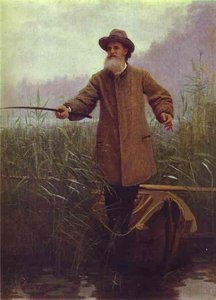
Poet Apollon Maikov Fishing by Ivan Kramskoi
#47

Poet Apollon Maikov Fishing

In the quiet intersection of nature and intellect, Ivan Nikolaevich Kramskoy’s Poet Apollon Maikov Fishing offers a profound window into the contemplative spirit of the nineteenth century. This…

Bring it home →
Bouquet of Flowers. Phlox (1884) by Ivan Kramskoi
#50

Bouquet of Flowers. Phlox

1884 · Tretyakov Gallery

In this quiet arrangement, we find Bouquet of Flowers. Phlox, a work created by the Russian artist Ivan Kramskoi. Painted in 1884, the piece offers a moment of…

Order a reproduction →
Self­Portrait 1 by Ivan Kramskoi
#51

Self­Portrait 1

In the quiet intensity of Self-Portrait 1, we are not merely looking at a likeness, but peering into the very psyche of Ivan Nikolaevich Kramskoy, one of the…

Bring it home →
Water Nymphs (1871) by Ivan Kramskoi
#56

Water Nymphs

1871 · Tretyakov Gallery

The Water Nymphs painting by Ivan Nikolaevich Kramskoy is a captivating piece of art that showcases the artist's skill in capturing the beauty of nature and the human…

Bring it home →

Ivan Kramskoi's paintings by period

The subjects Ivan Kramskoi painted most

The four subjects that return most often among these masterpieces, with the finest example of each.

Where to see Ivan Kramskoi's paintings

The 8 museums that hold the most of the paintings on this page.

Museum City Works by Ivan Kramskoi Paintings from this list
Tretyakov Gallery, MoscowTretyakov Gallery Moscow 38 Portrait of a Woman, Christ in the Desert, Portrait of a Woman
Hermitage Museum, Saint PetersburgHermitage Museum Saint Petersburg 6 Portrait of Empress Maria Feodorovna, Portrait of the Banker Yevgeny Lamansky, Portrait of Count Frederick Maurice van Heiden
Kramskoy Museum of Fine Arts, VoronezhKramskoy Museum of Fine Arts Voronezh 5 In the country. Siverskaya, Portrait of the Artist Konstantin Savitsky, Suburb of Paris. The Bois de Boulogne
The State Russian Museum, St. PetersburgThe State Russian Museum St. Petersburg 5 Portrait of the Publisher and Publicist Alexey Suvorin, Portrait of V. S. Solovyov, Mina Moiseyev
Perm State Arts Gallery, PermPerm State Arts Gallery Perm 2 Portrait of Princess Catherine Alekseevny Vasilchikova, Portrait of Roftopulo O.A.
Kiev National Picture Gallery, KyivKiev National Picture Gallery Kyiv 2 Mina moiseev
Yekaterinburg Museum of Fine Arts, YekaterinburgYekaterinburg Museum of Fine Arts Yekaterinburg 1 Portrait of a Woman
Feodosia National Gallery I. K. Aivazovsky, FeodosiiaFeodosia National Gallery I. K. Aivazovsky Feodosiia 1 Portrait of I.K. Aivazovsky

Ivan Kramskoi's most famous painting of each decade

  1. 1860s
    Portrait of Princess Catherine Alekseevny Vasilchikova (1867) by Ivan Kramskoi
    No. 9 of 100

    Portrait of Princess Catherine Alekseevny Vasilchikova

    Age 23 – 32 · Perm State Arts Gallery

    In the quiet, commanding presence of Ivan Nikolaevich Kramskoy’s Portrait of Princess Catherine Alekseevny Vasilchikova, we encounter more than just a likeness; we enter a moment of frozen…

  2. 1870s
    Portrait of a Girl (1870) by Ivan Kramskoi
    Rank 6 / 100

    Portrait of a Girl

    Age 33 – 42

    In the realm of nineteenth-century Russian Realism, few works capture the delicate intersection of innocence and burgeoning intellect as poignantly as Ivan Nikolaevich Kramskoy’s Portrait of a Girl.…

  3. 1880s
    Portrait of a Woman (1885) by Ivan Kramskoi
    #4 of 100

    Portrait of a Woman

    Age 43 – 50 · Tretyakov Gallery

    The gaze of the sitter in Portrait of a Woman meets the viewer with a quiet, unsettling strength. Painted by the Russian artist Ivan Kramskoi, this work captures…

Questions about Ivan Kramskoi's paintings

What is Ivan Kramskoi's most famous painting?Show the answer

Portrait of a Woman, Tretyakov Gallery, Moscow. Next come Christ in the Desert and Christ in the Wilderness.

What are the top 10 paintings by Ivan Kramskoi?Show the answer

Portrait of a Woman, Christ in the Desert, Christ in the Wilderness, Portrait of a Woman, Portrait of Empress Maria Feodorovna, Portrait of a Girl, Portrait of the Banker Yevgeny Lamansky, Somnambula, Portrait of Princess Catherine Alekseevny Vasilchikova and Portrait of the writer Y.F. Samarin. The ranking above gives the year and the museum of each.

How many paintings did Ivan Kramskoi make?Show the answer

Our catalogue lists 109 works by Ivan Kramskoi, dated from 1866 to 1886.

Where are Ivan Kramskoi's most famous paintings?Show the answer

Most of them are in Tretyakov Gallery (Moscow), Hermitage Museum (Saint Petersburg) and Kramskoy Museum of Fine Arts (Voronezh). The table above lists the museums one by one.

When did Ivan Kramskoi paint the most famous works?Show the answer

In 1870s: 19 of the 100 works on this page date from then, among them Portrait of a Girl.

What are Ivan Kramskoi's earliest and latest famous paintings?Show the answer

The earliest on this page is Portrait of the Artist Nikolai Dmitrievich Dmitriev-Orenburg (1866), the latest Portrait of the Banker Yevgeny Lamansky (1886).

What did Ivan Kramskoi paint most often?Show the answer

Portrait (31), Russian art (15) and Man (14), among the 100 works on this page.

What medium did Ivan Kramskoi use most?Show the answer

Oil On Canvas: 43 of the 100 works on this page.

Which art movement does Ivan Kramskoi belong to?Show the answer

Realism, as the paintings on this page show.

Which Ivan Kramskoi paintings can I see at the Tretyakov Gallery?Show the answer

Portrait of a Woman, Christ in the Desert and Portrait of a Woman are among the 30 works on this page held by the Tretyakov Gallery, Moscow.

Can I buy a reproduction of a Ivan Kramskoi painting?Show the answer

Yes. Every painting on this page can be ordered as a museum-quality, hand-painted oil reproduction or a fine art print, in the size you choose, from the painting's own page.

About Ivan Kramskoi

The Soul of Russian Realism: The Life and Legacy of Ivan Kramskoy

Ivan Nikolaevich Kramskoy, born on May 27, 1837, in the quiet town of Ostrogozhsk, stands as a monumental figure within the landscape of Russian art history. His life was defined by an intellectual fervor and an unwavering dedication to artistic principles rooted in social realism, leaving an indelible imprint on both his contemporaries and subsequent generations. Growing up in Voronezh Province, Kramskoy’s early years were shaped by an upbringing steeped in intellectual curiosity and a profound engagement with the burgeoning ideas of Russian revolutionary democracy. Influenced by the radical thinkers of his era, such as Chernyshevsky and Herzen, he embraced the conviction that art possessed a moral obligation—a duty to reflect truthfully upon society and champion its betterment.

This deep-seated belief in the transformative power of art propelled him toward the St. Petersburg Academy of Arts, yet it was there that his rebellious spirit truly ignited. Kramskoy famously spearheaded the “Revolt of Fourteen,” a historic student uprising against the academy’s restrictive and outdated artistic standards. This act of defiance led to his expulsion, but rather than stifling his talent, it solidified his commitment to independent expression. Under the guidance of mentors like Mikhail Borisovich Tulinov, who recognized his burgeoning genius, Kramskoy began to forge a path that would eventually lead him to become a cornerstone of the Peredvizhniki, or the Wanderers movement.

A Visionary of the Peredvizhniki Movement

The formation of the Peredvizhniki movement marked a decisive intersection in Kramskoy’s artistic trajectory. Alongside luminaries like Ilya Repin, he sought to reject official patronage and the didacticism of the Imperial Academy in favor of a more democratic and socially conscious approach to painting. His work became a vessel for social commentary, capturing the psychological depth of the Russian people and the stark realities of their existence. Kramsk_oy was not merely a painter but a profound art critic and leader, shaping the aesthetic discourse of his time through his ability to blend technical mastery with intense emotional resonance.

His repertoire is characterized by a remarkable versatility that ranges from the deeply introspective to the symbolically grand:

  • Self-Portraiture: In works such as Self-Portrait 1, Kramskoy utilizes a somber and introspective Realist style. The profound depth of his gaze invites viewers into a soulful encounter with the artist's own psyche, capturing the weight of his intellectual burdens.
  • Religious and Symbolic Mastery: His masterpiece, Christ in the Desert (1872), serves as a poignant exploration of solitude and faith. Through dramatic lighting and profound symbolism, he depicts the spiritual struggle of Jesus, creating a work that remains a cornerstone of Russian art.
  • Romantic Realism: In Water Nymphs (1871), Kramskoy demonstrates his ability to capture serene figures and nature through rich colors and a softer, more romanticized lens of realism, proving that his social consciousness could coexist with aesthetic beauty.

Historical Significance and Enduring Impact

Kramskoy’s contribution to art extends far beyond the canvas. As an organizer and critic, he provided the intellectual scaffolding upon which Russian Realism was built. He believed that the artist must be a witness to their time, a role he fulfilled with unparalleled integrity. His ability to navigate the complexities of political upheaval while maintaining a focus on the human condition allowed his work to transcend the immediate politics of the 19th century.

The legacy of Ivan Nikolaevich Kramskoy is found in the very fabric of Russian identity. By championing the truth of the common experience and challenging the elitism of academic institutions, he helped democratize art, making it a tool for national reflection. Today, his works continue to captivate audiences worldwide, offering a window into a period of intense spiritual and social transformation. His life remains a testament to the idea that art, when wielded with courage and truth, can serve as a powerful catalyst for change.

All 109 works by Ivan Kramskoi →