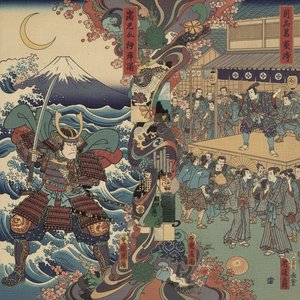
The Quiet Revolution of Takuma Tametō
Takuma Tametō, also known as Takuma Shōga, remains a figure shrouded in the mists of Japanese art history, yet his impact on Buddhist painting during the Heian and Kamakura periods is undeniable. Active around the 12th century in Kyoto, he wasn’t merely a painter; he was a pivotal force in reshaping religious iconography, bridging traditional Japanese aesthetics with the burgeoning influences from Chinese Southern Sung art. Unlike many artists whose lives are documented through extensive biographical detail, Tametō's story is largely gleaned from his work itself – a testament to the power of artistic expression as historical record.
A Family Legacy and the Shingon Sect
Tametō belonged to a distinguished family of professional Buddhist painters—the Takuma clan. This lineage was crucial, providing both training and access to important commissions. However, he wasn’t simply continuing a tradition; he actively innovated within it. A high-ranking priest within the Shingon sect of Buddhism, Tametō's spiritual devotion profoundly shaped his artistic vision. The Shingon school, known for its esoteric practices and emphasis on mandalas—complex diagrams representing the cosmos and deities—provided the thematic foundation for much of his oeuvre. His paintings weren’t just decorative; they were tools for meditation, visualizations intended to guide practitioners towards enlightenment.
The Fusion of Styles: Chinese Influence and Japanese Sensibility
Prior to Tametō, Japanese Buddhist painting often exhibited a certain rigidity in form and vibrant, sometimes overwhelming color palettes. He introduced a new sensibility, heavily influenced by the refined brushwork and subtle coloration of Southern Sung art from China. This wasn’t a wholesale adoption, however. Tametō skillfully integrated these foreign elements with existing Japanese techniques, creating a uniquely balanced style. His work is characterized by pale colors, delicate lines, and an emphasis on graceful contours—a departure that signaled a shift towards greater realism and emotional depth in Buddhist imagery. The influence of Southern Sung art can be seen in the posture of his deities, often depicted standing or in profile, allowing for a more dynamic display of flowing robes and expressive gestures.
The Kontai Butsugajō and Lasting Impact
While many of Tametō’s works have been lost to time, the most celebrated surviving example is the ‘Album of Buddhist Deities from the Diamond World and Womb World Mandalas’, known as the Kontai Butsugajō. This collection showcases his mastery of Buddhist iconography, depicting a pantheon of deities with remarkable precision and spiritual resonance. The painting of Daishōjin Bosatsu (Bodhisattva of Great Compassion) exemplifies his style—a figure imbued with serene dignity and compassion. The Los Angeles County Museum of Art houses this important piece, offering a glimpse into the artist’s profound understanding of Buddhist philosophy and artistic technique.
A Legacy Etched in Brushstrokes
Takuma Tametō's influence extended far beyond his own lifetime. He established the Takuma school as a leading force in Buddhist painting, and his stylistic innovations continued to shape Japanese art for generations. His emphasis on brushwork, subtle coloration, and graceful forms became hallmarks of the Kamakura period aesthetic. Though biographical details remain scarce, Tametō’s legacy is indelibly etched in the brushstrokes of countless paintings—a quiet revolution that transformed religious art and left an enduring mark on the cultural landscape of Japan. His work continues to inspire awe and reverence, a testament to the power of artistic vision to transcend time and connect us with the spiritual heart of a bygone era.