Sydney Elmer Schofield (1901-1983): Echoes of Impressionism in Cornish Landscapes
Sydney Elmer Schofield, born in Pennsylvania around 1901, was a British painter who achieved considerable renown during his lifetime and continues to be appreciated for his distinctive style—a harmonious blend of Impressionistic principles and the rugged beauty of Cornwall. His artistic lineage stretches back to Walter Schofield, an American Impressionist whose dedication to capturing fleeting moments of light and color profoundly impacted Sydney’s formative years. Growing up amidst the vibrant hues of Pennsylvania landscapes instilled in him a deep understanding of plein air painting techniques and a lifelong fascination with portraying nature's dynamism.
Schofield’s artistic journey truly blossomed when he relocated to St Ives, Cornwall—a haven for British Impressionists during the early 20th century. Situated on the southwestern coast of England, St Ives became synonymous with artistic innovation and collaboration, attracting luminaries like Alfred Munnings, Stanhope Forbes, and Frank Cormack. Schofield embraced this stimulating environment wholeheartedly, immersing himself in the camaraderie of fellow artists and absorbing the inspiration of the Cornish coastline—its dramatic cliffs, turquoise waters, and ever-changing skies.
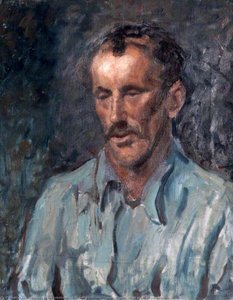
His oeuvre is characterized by a remarkable sensitivity to tonal variations and brushwork—traits directly inherited from his father’s artistic vision. Schofield meticulously observed the subtleties of light as it cascaded across the landscape, translating these observations into canvases imbued with palpable atmosphere. Unlike many Impressionists who favored idealized depictions, Schofield's portraits often captured subjects in candid poses, revealing glimpses of their inner lives alongside external appearances. He skillfully employed loose brushstrokes and muted palettes to convey not merely what he saw but also how he felt—a profound connection to the natural world and a desire to communicate emotion through visual form.
Schofield’s artistic output encompassed both landscapes and portraits, predominantly focusing on depictions of St Ives fishermen and their surroundings. His canvases resonate with an enduring spirit of observation and empathy, reflecting his unwavering commitment to portraying human experience within its broader context. Notable works include “The Fisherman” (circa 1930), a masterful rendering of a Cornish fisherman gazing out at the turbulent sea—a testament to Schofield’s ability to distill complex emotions into simple visual elements. Similarly, "Portrait of an Unknown Man" exemplifies his meticulous attention to detail and psychological insight.
Schofield's legacy extends beyond his individual paintings; he fostered a collaborative spirit within St Ives’ artistic community and championed the pursuit of authentic expression—a cornerstone of Impressionistic ideals. Although overshadowed by some of his contemporaries during his lifetime, Schofield’s work has gained renewed appreciation in recent decades as scholars revisit his oeuvre with fresh eyes. His canvases continue to inspire artists and viewers alike, reminding us that true beauty resides not merely in visual perfection but also in the conveyance of profound emotion—a timeless achievement rooted in the enduring influence of Impressionism and the transformative power of artistic observation.