A Brush with Delicacy: The Life and Art of Sheng Mao
The name Sheng Mao whispers across the centuries, a testament to the enduring power of landscape painting in Yuan Dynasty China (1271–1368). Though shrouded in some mystery—the precise dates of his birth and death remain unknown—Sheng Mao’s artistic legacy is vividly preserved through surviving works that exude a refined sensibility and masterful technique. Born in Jiaxing, Zhejiang province, Sheng Mao emerged as a significant figure during a period of dynamic cultural exchange and evolving aesthetic ideals. He wasn't merely a painter; he was a conduit for the literati tradition, skillfully blending technical prowess with poetic expression.
Early Training and Artistic Lineage
Sheng Mao’s artistic journey began under the tutelage of Chen Lin, a respected painter of his time. This foundational training undoubtedly instilled in him a solid understanding of traditional brushwork and compositional principles. However, it was his subsequent mentorship with Zhao Mengfu that proved particularly transformative. Zhao Mengfu, a scholar-official and renowned calligrapher and painter, championed a revival of classical styles and emphasized the importance of imbuing art with intellectual depth. He encouraged Sheng Mao to look beyond mere representation and infuse his landscapes with personal feeling and poetic nuance. This influence is readily apparent in Sheng Mao’s delicate handling of color and form, and his ability to capture the subtle moods of nature.
The Essence of Yuan Landscape Painting
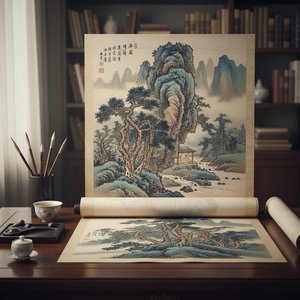
Sheng Mao's paintings are characterized by a distinctive style that prioritizes elegance and refinement. He favored landscapes populated with human figures—often reclusive scholars or fishermen—engaged in quiet contemplation amidst serene natural settings. His brushwork is remarkably precise, yet never feels rigid; instead, it conveys a sense of fluidity and grace. He employed a beautiful color palette, often utilizing soft washes and subtle gradations to create atmospheric depth and evoke a feeling of tranquility. Unlike some of his contemporaries who embraced bolder, more dramatic compositions, Sheng Mao’s work is defined by its restraint and harmony. He wasn't interested in overwhelming the viewer with spectacle but rather inviting them into a world of quiet beauty and contemplative solitude.
Themes and Symbolism
The landscapes created by Sheng Mao are not simply depictions of physical places; they are imbued with symbolic meaning rooted in Chinese philosophical traditions. The reclusive figures that populate his paintings often represent the scholar-official who has withdrawn from public life to pursue a more spiritual existence. Mountains, rivers, and trees were not merely natural elements but metaphors for resilience, longevity, and harmony. The act of painting itself was considered a meditative practice, a way to connect with nature and express one’s inner state. His work often reflects the Daoist ideals of living in accordance with the natural order and finding peace through simplicity.
Legacy and Historical Significance
While Sheng Mao may not be as widely recognized as some other Yuan Dynasty masters, his contribution to Chinese landscape painting is significant. He represents a continuation of the literati tradition, skillfully blending technical expertise with poetic sensibility. His paintings offer a glimpse into the aesthetic values of the period—a preference for refinement, harmony, and intellectual depth. His delicate style influenced subsequent generations of painters, particularly those who sought to capture the subtle beauty of the natural world. Today, Sheng Mao’s works are treasured for their exquisite craftsmanship and evocative power, serving as a reminder of the enduring legacy of Yuan Dynasty art.