
1
Portrait of Alexandrine Strübe (1859-1920) as a Child
Hand-painted oil reproduction from $181 28 × 36 cm
Same size as the original $304 63 × 81 cm Order at original size →

Portrait of Alexandrine Strübe (1859-1920) as a Child (1862) is the most famous painting by Rudolf Epp, held by the Augustiner Museum in Freiburg. painting (1875) and Interieur with girl sleeping (1879) are the next two works the world knows best. From the 37 works of Rudolf Epp in our catalogue, here are the 16 that collectors and museum visitors look at most, with the year, the museum and the story of each.
Ranked by our popularity score, which combines the searches, visits and orders for each work. Updated November 2026. Every masterpiece on this page can be ordered as a museum-quality, hand-painted oil reproduction or a fine art print, at the size you choose.


The 3 museums that hold the most of the paintings on this page.
| Museum | City | Works by Rudolf Epp | Paintings from this list |
|---|---|---|---|
 Augustiner Museum |
Freiburg | 1 | Portrait of Alexandrine Strübe (1859-1920) as a Child |
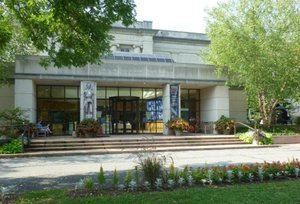 Reading Public Museum |
Reading | 1 | painting |
 Bavarian State Painting Collections |
Munich | 1 | Still Life with Apple |


Portrait of Alexandrine Strübe (1859-1920) as a Child (1862), Augustiner Museum, Freiburg. Next come painting (1875) and Interieur with girl sleeping (1879).
28 years old: Portrait of Alexandrine Strübe (1859-1920) as a Child dates from 1862 and Rudolf Epp was born in 1834.
Portrait of Alexandrine Strübe (1859-1920) as a Child, painting, Interieur with girl sleeping, Bathing Mother with Child in Forest Pond / Bathing at Forest Pond, In the Tavern, Peasant -Interior. 6 figures: the bride - crown, The Little Sharpener, The Hall of Fame in Munich, Bavaria, Boy with a Crawfish and Still Life with Apple. The ranking above gives the year and the museum of each.
Our catalogue lists 37 works by Rudolf Epp, dated from 1862 to 1901.
Most of them are in Augustiner Museum (Freiburg), Reading Public Museum (Reading) and Bavarian State Painting Collections (Munich). The table above lists the museums one by one.
In 1870s: 3 of the 16 works on this page date from then, among them painting.
The earliest on this page is Portrait of Alexandrine Strübe (1859-1920) as a Child (1862), the latest The Hall of Fame in Munich, Bavaria (1901).
Yes. Every painting on this page can be ordered as a museum-quality, hand-painted oil reproduction or a fine art print, in the size you choose, from the painting's own page.
Born in Eberbach, Grand Duchy of Baden, Rudolf Epp was the son of a decorative painter. His early artistic training began under the landscape painter Karl Ludwig Seeger, followed by studies at the Grand Ducal Art School in Karlsruhe under Johann Wilhelm Schirmer and Ludwig Des Coudres, and later at the Art Academy in Düsseldorf. Due to his talent, he was granted leave from military service by the Regent Friedrich I of Baden. This allowed him to undertake a study trip to the Black Forest, where around 1859, he produced numerous landscape studies in the regions of Freiburg im Breisgau and Landstuhl.
In 1863, Epp moved to Munich, which served as a major center for art. During his time there, he established a reputation as a sought-after painter. He was married to Katharina Steibl in 1862, and they had three children: a son, Franz Ritter von Epp, and two daughters, Helene and Augusta Anna. Augusta Anna frequently served as a model for his various portraits and figurative works. Epp remained an active painter until his death in Munich.
Rudolf Epp is associated with the Munich School and is recognized as a painter of Realism. His body of work consists of hundreds of paintings, many of which were repeated in various motifs. His oeuvre is characterized by:
His paintings gained international appreciation, with many works sold to the USA during his lifetime. His motifs were also featured in early illustrated publications and color lithographs. His work is held in various public collections, including the Neue Pinakothek in Munich and the Kunsthalle Mannheim.


