Robert Dudley: A Victorian Master of Light and Detail
Robert Dudley (1826-1909) emerges from the bustling artistic landscape of 19th-century Britain as a remarkably versatile artist, a quiet yet significant contributor to both the decorative arts and the burgeoning field of mapmaking. While he may not command the immediate recognition afforded to some of his contemporaries, a closer examination reveals a meticulous craftsman whose seascapes, book illustrations, and detailed maps offer a compelling glimpse into Victorian sensibilities and technological advancements. Born in Greater London, Dudley’s artistic journey was shaped by a confluence of influences – a keen interest in the natural world, an appreciation for classical design, and a growing fascination with the possibilities presented by chromolithography.
Dudley's early life remains somewhat shrouded in mystery, though he was part of a family connected to the prominent Earl of Leicester. This lineage undoubtedly instilled within him a sense of refinement and an understanding of courtly aesthetics. However, it was his dedication to mastering various artistic techniques that truly defined his career. He began as a watercolourist, quickly developing a distinctive style characterized by delicate washes, precise detailing, and a remarkable ability to capture the subtle nuances of light and atmosphere. This foundational skill would later inform his work in lithography, where he could achieve an astonishing level of precision and tonal control.
The Sea and the City: Dudley’s Seascapes and Book Illustrations
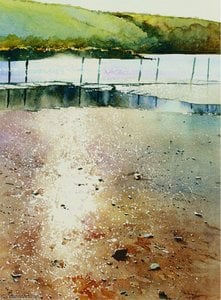
Dudley's most celebrated works are undoubtedly his seascapes. These paintings aren’t merely depictions of maritime scenes; they are imbued with a profound sense of observation and an almost scientific approach to rendering light, water, and atmosphere. He meticulously studied the effects of weather on the sea – the shimmering surface under a sunbeam, the turbulent waves during a storm, the hazy stillness after a rain shower. His compositions often feature small boats or figures, subtly placed within the vastness of the ocean, emphasizing both the scale of nature and the vulnerability of human existence.
Beyond seascapes, Dudley’s talent extended to book illustration. He was frequently commissioned to create images for various publications, including atlases and travel guides. His illustrations for maps were particularly noteworthy – not simply reproductions of existing charts but carefully crafted artistic interpretations that conveyed a sense of adventure and discovery. He skillfully combined topographical accuracy with an elegant aesthetic sensibility, creating visually engaging representations of distant lands.
The Atlantic Telegraph: A Technological Pioneer
Perhaps the most significant chapter in Dudley’s career involved his work on the Atlantic Telegraph project. In the mid-19th century, the ambitious undertaking to lay a telegraph cable across the Atlantic captivated the world. Dudley was entrusted with illustrating this monumental endeavor, producing detailed drawings and maps that documented every stage of the process – from the construction of the cables in England to their deployment in Newfoundland and Ireland. These illustrations weren’t just technical diagrams; they were carefully rendered images that captured the excitement and technological marvel of the project. His work played a crucial role in popularizing the telegraph and shaping public perception of this groundbreaking innovation.
Chromolithography and Artistic Innovation
Dudley's mastery of chromolithography – a technique for producing multi-colored images using stone plates – was particularly remarkable. This process allowed him to achieve an unprecedented level of tonal subtlety and detail, surpassing the capabilities of traditional engraving. He employed chromolithography extensively in his book illustrations and maps, creating vibrant and visually arresting images that showcased the full potential of this innovative medium. His use of color was often restrained and elegant, reflecting a Victorian preference for muted tones and harmonious palettes.
Legacy and Historical Significance
Robert Dudley’s contribution to 19th-century art is often understated, yet his work reflects the spirit of an era defined by technological progress, scientific inquiry, and a growing appreciation for the beauty of the natural world. His seascapes offer a poignant meditation on humanity's relationship with the ocean, while his book illustrations and maps demonstrate his remarkable technical skill and artistic sensibility. As a key figure in the development of chromolithography, Dudley’s legacy extends beyond his individual works to encompass a broader shift in artistic practices. Today, his paintings and prints are treasured examples of Victorian art, offering valuable insights into the cultural and technological landscape of a transformative period.