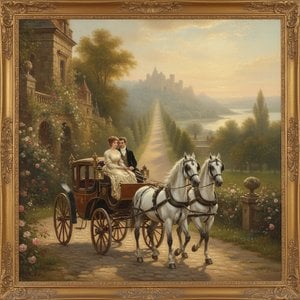
René Princeteau (1843 – 1914): A Master of Equestrian Art
René Pierre Charles Princeteau (18 July 1843 – 31 January 1914) stands as a singular figure in late nineteenth-century French art, renowned primarily for his captivating depictions of horses and rural landscapes—a testament to his unwavering dedication to capturing the beauty of the natural world through meticulous observation and masterful technique. Born deaf and mute from infancy into a noble family residing in Libourne, Princeteau’s formative years were marked by intellectual challenges that paradoxically fueled his artistic ambition. Recognizing his innate talent for sculpture, he pursued formal training under Auguste Dumont at the École nationale supérieure des Beaux-Arts in Paris, establishing himself as a student of Dumont's renowned sculptural prowess. This early exposure to classical art would profoundly influence his stylistic sensibilities and contribute to his enduring legacy.
- Early Life & Artistic Training: Princeteau’s deafness instilled within him an acute sensitivity to visual perception, shaping his artistic approach in ways that transcended conventional methods of instruction. He honed his skills alongside Dominique Fortuné Maggesi, mastering the intricacies of sculpting and gaining invaluable insight into artistic expression.
- The École Nationale Supérieure des Beaux-Arts & Influences: Dumont’s guidance at the École nationale supérieure des Beaux-Arts cemented Princeteau's commitment to academic realism—a stylistic choice that prioritized accuracy and detail in representing subjects. The École fostered a tradition of meticulous observation and compositional balance, principles that would permeate Princeteau’s oeuvre.
- Military Service & Artistic Inspiration: During the Franco-Prussian War (1870–1871), Princeteau enlisted in the artillery, immersing himself in the atmosphere of military life—a period that served as a catalyst for artistic innovation. Sketches and compositions from this era reveal his fascination with equine subjects and his ability to convey dynamism and emotion through visual storytelling.
Princeteau’s artistic breakthrough arrived in 1885, coinciding with the burgeoning interest in plein air painting—a movement championed by artists like Jules Bastien-Lepage and Frédéric Bazille. He embraced this revolutionary approach, venturing outdoors to capture the grandeur of rural landscapes and the spirited energy of equestrian pursuits. His canvases pulsate with life, infused with vibrant colors and rendered with remarkable precision—a hallmark of his distinctive style. The artist’s fascination with horses extended beyond mere representation; he sought to convey their inherent nobility and grace, capturing fleeting moments of movement and emotion with breathtaking artistry.
- Notable Paintings: Among Princeteau's most celebrated works are “Promenade de chevaux au bord de mer à Dieppe ou L’Orage” (Horse Promenade by the Sea at Dieppe), a dramatic depiction of horses galloping along the shoreline under stormy skies—a masterful demonstration of his ability to convey atmospheric conditions and equine movement. Similarly, "L'Amazone" showcases Princeteau's skill in portraying equestrian portraits with sensitivity and nuance.
- Collaboration with Toulouse-Lautrec: Princeteau’s friendship with Henri de Toulouse-Lautrec proved formative, influencing the young artist’s artistic development and fostering a shared appreciation for Impressionistic techniques. Toulouse-Lautrec recognized Princeteau's talent and sought his guidance—a relationship that exemplifies the collaborative spirit of the Parisian art scene.
His oeuvre encompasses numerous hunting scenes featuring hounds and riders, racing events brimming with energy, and serene landscapes bathed in golden light—each piece reflecting Princeteau’s unwavering dedication to capturing the essence of rural life. He skillfully employed a palette of rich hues and meticulous brushwork to convey texture and luminosity, achieving an unparalleled level of realism that captivated audiences during his lifetime. René Princeteau's legacy endures as a testament to artistic perseverance and the transformative power of observation—a true master of equestrian art who continues to inspire admiration for his evocative depictions of the natural world and the noble animal spirit.