Percival De Luce: A Quiet Master of Dutch Impressionism
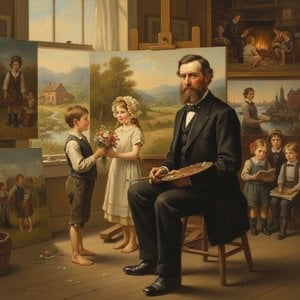
Percival De Luce (1847-1914) emerged from the bustling artistic landscape of New York City, establishing himself as a distinctive voice within American genre and still life painting. His canvases captured moments of everyday life—domestic interiors bathed in soft light—infused with an undeniable influence from the Barbizon school and the Dutch Impressionists, reflecting a profound appreciation for tonal harmony and atmospheric perspective. Studying at the Antwerp Academy and Brussels instilled in him a meticulous approach to technique, mirroring the disciplined observation championed by luminaries like Maximilien Luce and Ridgway Knight.
- Early Influences: De Luce’s artistic trajectory was shaped by mentors who prioritized realism and tonal gradation. Artists such as Jean Texcier and Albert Dagnaux fostered a dedication to capturing the subtleties of light and shadow, mirroring the stylistic ideals prevalent in Belgian art circles during his formative years.
- Salon Exhibitions & Recognition: De Luce’s commitment to artistic excellence was validated through consistent participation in prestigious salons like the Salon des Indépendants. Critics lauded his ability to convey emotion through understated compositions and masterful brushwork, securing him a place among the leading artists of his era—figures such as Apollinaire, André Warnod, and Roger Allard recognized his talent.
- A Soldier’s Duty: During World War I, De Luce bravely volunteered for military service, sustaining serious injuries that nevertheless fueled his artistic fervor. Despite physical challenges, he persevered in creating art, demonstrating resilience and unwavering passion for his craft.
His oeuvre comprises a captivating collection of portraits and landscapes—often rendered with remarkable sensitivity to detail and imbued with a palpable sense of tranquility. De Luce’s paintings are characterized by their muted palettes—primarily ochres, browns, and greys—which skillfully evoke the mood of winter mornings or cozy domestic spaces. The artist's meticulous attention to texture and surface treatment contributes to the immersive quality of his works, transporting viewers into scenes reminiscent of Dutch masters like Rembrandt and Vermeer.
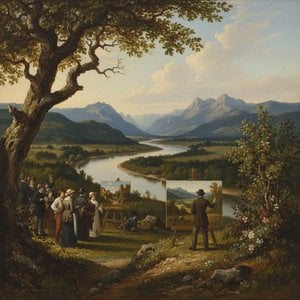
- Notable Achievements: De Luce’s artistic legacy resides in his ability to distill complex emotions into deceptively simple compositions. His landscapes—particularly those depicting snow-covered fields—are celebrated for their evocative beauty and masterful rendering of atmospheric conditions.
- Community Involvement: Beyond his artistic pursuits, De Luce actively engaged in civic life, serving as a deputy mayor of Rolleboise, Yvelines, and a borough councilor of Bonnières-sur-Seine—demonstrating a commitment to enriching the cultural fabric of his hometown.
Percival De Luce’s contribution to American art history extends beyond mere stylistic imitation; he embodies a humanist spirit rooted in observation and contemplation. His paintings stand as testament to the enduring power of quiet beauty and the profound capacity for artistic expression to illuminate the human experience—a legacy that continues to inspire admiration and scholarly interest today.