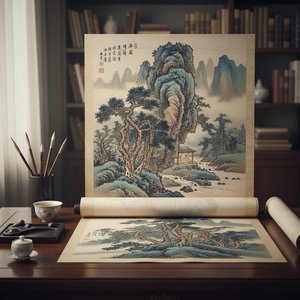
Peng Chap–ming (1908–2002): A Legacy of Landscape and Tradition
Peng Chap–ming, born in Shanghai in 1908, was a pivotal figure in twentieth-century Chinese painting, embodying the spirit of resilience and artistic innovation amidst turbulent historical periods. His life’s journey mirrored the broader narrative of modern China—from formative years steeped in Western influences to unwavering dedication to preserving and reimagining classical Chinese aesthetics. He graduated from Shanghai Art Academy, establishing himself as a respected artist who skillfully blended Eastern philosophy with meticulous observation of nature.
- Early Life & Education: Peng Chap–ming’s upbringing instilled in him a deep appreciation for both Western scholarship and the rich artistic heritage of China. This dual influence shaped his artistic sensibilities and fueled his lifelong pursuit of mastering traditional techniques.
- Shanghai Years & Artistic Development: Shanghai served as Peng Chap–ming's creative home for decades, providing access to influential art collections and fostering collaborations with fellow artists. During this time, he honed his skills in ink painting, experimenting with innovative approaches while honoring the legacy of masters like Dong Yuan and Juran.
The Essence of Landscape Painting
Peng Chap–ming’s artistic vision centered on capturing the sublime beauty of Chinese landscapes—a tradition dating back centuries. He believed that true artistry resided in understanding the underlying principles of nature and translating them into expressive brushstrokes. His paintings frequently depict mountainous vistas bathed in mist, reflecting Dong Yuan's and Juran's profound insight into the relationship between man and environment. These artists’ techniques – particularly “strokes of earth”—were meticulously studied and incorporated into Peng Chap–ming’s own work.
- Technique & Style: Peng Chap–ming employed a distinctive style characterized by layered brushwork, subtle tonal variations, and masterful use of negative space. He skillfully blended realism with symbolic representation, conveying not merely visual impressions but also deeper philosophical concepts.
- Notable Works: Among his most celebrated paintings are *Scenery of Lantau Island*, which exemplifies his dedication to observing natural phenomena and interpreting them through the lens of classical landscape painting. This piece showcases Peng Chap–ming’s ability to distill the essence of Dong Yuan's and Juran's artistic legacy into a stunning visual experience.
Influences & Historical Context
Peng Chap–ming’s artistic trajectory was profoundly shaped by the socio-political upheavals of his era—the Sino-Japanese War and subsequent communist revolution. Despite facing challenges, he remained steadfast in upholding traditional Chinese values and artistic traditions. His commitment to preserving cultural heritage served as an inspiration for generations of artists who followed him.
- Dong Yuan & Juran: Peng Chap–ming’s reverence for Dong Yuan and Juran—renowned landscape masters—was central to his artistic philosophy. He recognized their mastery of “strokes of earth,” which involved utilizing hempfiber strokes to depict the textures of mountains and vegetation.
- Legacy & Significance: Peng Chap–ming's enduring influence extends beyond his individual paintings; he championed the importance of blending Eastern wisdom with Western knowledge, fostering a dialogue between tradition and modernity. His work continues to resonate with audiences today as a testament to the power of art to convey beauty, contemplation, and cultural continuity.
Conclusion
Peng Chap–ming’s artistic legacy transcends mere visual representation—it embodies a profound engagement with Chinese culture and history. Through his meticulous observation of nature and unwavering devotion to classical techniques, he secured his place as one of the most important landscape painters of the twentieth century, ensuring that the spirit of Dong Yuan and Juran would continue to inspire artists for years to come.