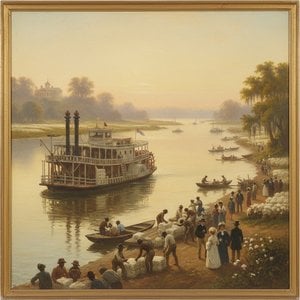
A Legacy of Line and Light
Panchapakesa Krishnamoorthy was a versatile visionary whose creative spirit bridged the worlds of fine art, theatre, and cinema. Born in Poompuhar, India, his artistic journey was deeply rooted in the regional aesthetics of South India, particularly through his formative years at the Government College of Fine Arts, Chennai. His early explorations were characterized by a profound connection to the earth, often utilizing natural colors and tempera to evoke a sense of organic warmth and soil-like charm. This deep-seated appreciation for materiality allowed him to develop a signature style where fluid, dynamic lines—inspired by the graceful dance postures found in South Indian temple sculptures—could breathe life into his compositions.
His artistic development was marked by an extraordinary ability to translate the delicate nuances of painting into larger, more immersive environments. As he matured, Krishnamoorthy carried the rhythmic elegance of his lines and the earthy palette of his early works into new realms, including sari design and the grand backdrops of motion pictures. This seamless transition from the canvas to the screen demonstrated a rare mastery over scale and atmosphere, as he utilized his painterly sensibilities to shape the visual identity of various cinematic landscapes.
Cinematic Vision and Artistry
Beyond the confines of traditional painting, Krishnamoorthy achieved significant renown as an art director, production designer, and costume designer. His career was defined by a remarkable ability to create evocative worlds that felt both historically grounded and aesthetically transcendent. Working predominantly in South Indian cinema, his contributions spanned multiple languages, including Kannada, Tamil, and Malayalam. He found particular inspiration in the works of celebrated directors, and his collaboration with figures such as G.V. Iyer allowed him to bring a sophisticated, painterly depth to films like Hamsageethe, Adi Shankarar, Ramanujar, and Madhvacharya.
His work in the film industry was not merely decorative but served as a vital narrative component. Through his meticulous attention to production design and costume, he could evoke specific eras and emotional tones, making the setting an active participant in the storytelling. His mastery of the medium earned him prestigious accolades, including:
- National Film Award for Best Production Design
- National Film Award for Best Costume Design
- Tamil Nadu State Film Award for Best Art Director
- Tamil Nadu State Film Award for Best Costume Designer
- Kerala State Film Award for Best Art Director
Through this intersection of fine art and cinematic design, Panchapakesa Krishnamoorthy left an indelible mark on the visual culture of India, proving that the soul of a painter can illuminate even the largest of stages.
Questions & Answers
How can I see every artwork made by Panchapakesa Krishnamoorthy?
Every work by Panchapakesa Krishnamoorthy on this website can be browsed from the artist's All Artworks page.
What are the birthplace and birth year of Panchapakesa Krishnamoorthy?
Panchapakesa Krishnamoorthy was born in Poompuhar in 1943.
Where can I see Panchapakesa Krishnamoorthy's artworks in a 3D gallery?
The 3D Museum of Panchapakesa Krishnamoorthy is a page that displays the artist's artworks in a virtual three-dimensional gallery.