Nicolaas Riegen: A Dutch Master of Maritime Drama
Nicolaas Riegen (1827-1889), a name perhaps less familiar than some of his contemporaries, nevertheless stands as a significant figure in 19th-century Dutch art. Born in Amsterdam, Riegen dedicated his life to capturing the raw beauty and inherent drama of the North Sea – its turbulent waters, resilient sailors, and the ever-present threat of the elements. His work, primarily focused on maritime scenes, offers a compelling glimpse into a bygone era of seafaring adventure and the vital role these vessels played in Dutch commerce and culture.
Riegen’s artistic journey began during a period of immense change for the Netherlands. The nation was grappling with industrialization and shifting economic landscapes, yet the sea remained a constant – a source of livelihood, exploration, and national identity. This duality profoundly influenced his art. He wasn't simply depicting ships; he was portraying the human connection to the ocean, the struggle against its power, and the enduring spirit of those who dared to navigate it. His style is often categorized as Romantic Realism, blending the emotional intensity characteristic of the Romantic movement with a meticulous attention to detail and accurate representation of maritime life.
The Influence of Romanticism and Dutch Tradition
Riegen’s artistic sensibilities were undoubtedly shaped by the prevailing currents of Romanticism. The emphasis on dramatic landscapes, intense emotions, and the sublime power of nature resonated deeply within his work. However, he skillfully integrated these influences with a strong grounding in traditional Dutch maritime painting. Artists like Jacob van Ruisdael, known for his atmospheric depictions of coastal scenes, served as an early inspiration, demonstrating the importance of capturing light and atmosphere. Furthermore, the established conventions of Dutch marine art – the focus on ship handling, rigging details, and the depiction of weather conditions – provided a framework within which Riegen could develop his unique voice.
The artist’s training is somewhat undocumented, suggesting he likely honed his skills through apprenticeships and independent study. He was particularly influenced by the works of contemporary artists who were exploring similar themes, including depictions of naval battles and heroic rescues at sea. This exposure to a range of styles helped him refine his technique and develop a distinctive approach to portraying maritime subjects.
Key Works and Artistic Techniques
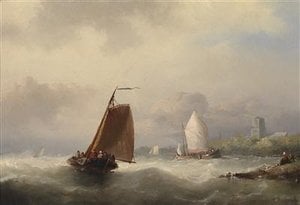
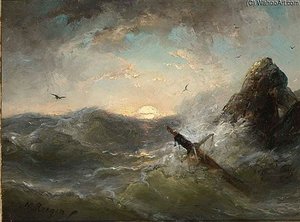
Riegen’s most celebrated paintings often depict scenes of dramatic rescue operations and perilous voyages. “Sailing Vessels Off The Shore” (available for reproduction on WahooArt.com) exemplifies this, showcasing a turbulent sea with a ship in distress – a scene brimming with suspense and highlighting the vulnerability of human life against the forces of nature. Similarly, "Off The Coast Of Marken" vividly illustrates a chaotic maritime encounter, capturing the resilience of sailors battling fierce winds and waves. “Shipping On Choppy Waters” further demonstrates his ability to convey both the beauty and the danger inherent in seafaring life.
Riegen’s technical skill is evident in his meticulous attention to detail. He masterfully rendered the textures of sails, the reflections on water, and the weathered appearance of ships. His use of color – often dominated by cool blues and grays – effectively conveys the mood and atmosphere of each scene. The artist's brushwork is detailed yet fluid, creating a sense of movement and dynamism that brings his paintings to life. He skillfully employed light and shadow to create depth and drama, further enhancing the visual impact of his work.
Legacy and Historical Significance
Despite not achieving widespread fame during his lifetime, Nicolaas Riegen’s contribution to Dutch maritime art is now recognized as significant. His paintings offer a valuable record of 19th-century seafaring practices, reflecting the realities of life at sea and the enduring relationship between the Dutch people and the ocean. His works are housed in several museums across the Netherlands, testament to their artistic merit and historical importance.
Riegen’s legacy lies not only in his individual paintings but also in his ability to capture the spirit of a bygone era – an era defined by exploration, adventure, and the unwavering determination of those who braved the unpredictable forces of the sea. Reproductions of his works, available through WahooArt.com, allow viewers today to experience the drama and beauty of these captivating scenes firsthand.