Mauro Gandolfi: Bolognese Elegance and Venetian Echoes
Mauro Gandolfi (18 September 1764 – 4 January 1834) stands as a pivotal figure in the Bolognese School of painting, embodying its neoclassical ideals intertwined with subtle Venetian artistic traditions. Born into an artist’s family—his father Gaetano Gandolfi and uncle Ubaldo Gandolfi were themselves celebrated painters—Mauro inherited a legacy of artistic excellence that would define his own prolific career.
- Early Life & Training: From Bologna, he embarked on a journey fueled by ambition and familial influence. His father instilled in him the meticulous observation skills crucial for capturing human anatomy and form, mirroring the Bolognese School’s dedication to realism. At just 16, Gandolfi enlisted in the French army, broadening his horizons and exposing him to diverse artistic styles during his military service.
- Academic Recognition & Artistic Collaborations: Gandolfi's formal education commenced at the Accademia Clementina in Bologna where he honed his skills alongside fellow artists, notably collaborating closely with his father on numerous projects. This partnership cemented his understanding of Bolognese artistic conventions and established him as a respected voice within the academic community.
- Marriage & Family: In 1792, Gandolfi married Laura Zanetti, forming a stable domestic life that nurtured two children—Clementina and Raphael—who would themselves pursue artistic endeavors. His family’s commitment to art served as an ongoing source of inspiration throughout his life.
- Engraving & Parisian Influence: Recognizing the potential for wider dissemination of artistic ideas, Gandolfi transitioned into engraving in 1801, relocating to Paris where he undertook commissions replicating masterpieces from prominent French museums. This experience exposed him to innovative techniques and broadened his artistic repertoire.
Gandolfi’s oeuvre spanned a remarkable range of subjects—portraits capturing the dignity of noble families, landscapes reflecting the beauty of the Emilia region, and mythological scenes imbued with classical grandeur. His distinctive style combined meticulous detail with an understated elegance, drawing inspiration from Venetian painters like Giovanni Battista Tiepolo who championed illusionistic painting techniques.
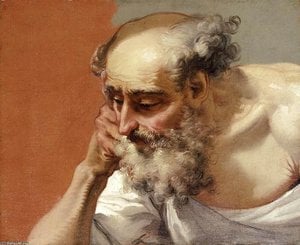
- Notable Works: Among his most celebrated paintings are “Head Study of an Elderly Bearded Man,” a masterful depiction of human anatomy executed with remarkable precision—a testament to Gandolfi’s unwavering commitment to anatomical accuracy. Furthermore, "Mauro Gandolfi" showcases his self-portrait in which he portrays himself as a man of intellect and artistic conviction.
- American Travels & Artistic Legacy: Gandolfi's journey to New York City and Philadelphia in 1816 yielded captivating illustrations documenting the landscapes and architectural marvels of these burgeoning American cities. His autobiography, published in Milan in 1833, meticulously catalogued his artistic output between 1786 and 1796—a period marked by unparalleled productivity and artistic innovation.
Mauro Gandolfi’s contribution to the Bolognese School of painting remains significant. He upheld the traditions of anatomical realism while subtly incorporating Venetian influences, securing his place as one of the foremost artists of his time and ensuring that his legacy continues to inspire admiration for generations.