The Vibrant Legacy of Maria Lula Cardoso Ayres
In the heart of Pernambuco, where the rhythms of Brazilian culture pulse with an unmistakable vitality, the name Maria Lula Cardoso Ayres resonates as a symbol of artistic innovation and cultural preservation. Born in Recife in 1932, Ayres emerged not merely as a creator of objects, but as a weaver of identities. Her life’s work served as a bridge between the ancestral echoes of Brazil and the sophisticated movements of European modernism. Guided by the early mentorship of the German stained-glass artist Heinrich Moser, she developed an aesthetic sensibility that honored regional traditions while fearlessly embracing the avant-garde. This unique duality allowed her to transform everyday mediums into profound explorations of color, form, and national spirit.
The trajectory of Ayres’s career was marked by a restless, brilliant curiosity. Her formative years were shaped by exposure to Surrealism and Expressionism during her studies abroad, experiences that infused her work with a complex layer of psychological depth and structural experimentation. Yet, despite the allure of international trends, her heart remained anchored in the soil of Brazil. This commitment was most tangibly realized through her establishment of the ‘Escola de Belas Artes do Recife.’ Through this institution, she sought to nurture a new generation of artists, ensuring that the creative pulse of Pernambuco would continue to beat with strength and autonomy long after her own brush had rested.
A Tapestry of Color and Form
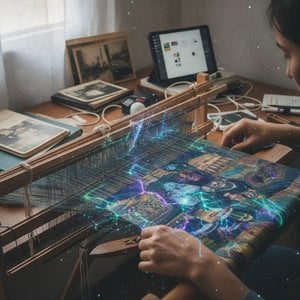
Perhaps the most enchanting chapter of Ayres’s legacy lies in her revolutionary approach to textile art. She possessed a singular ability to treat fabric as a canvas for high art, most notably through her iconic short dresses. These garments were far more than mere fashion; they were wearable compositions that utilized bold geometric patterns and kaleidoscopic hues to dance across the body. In these textiles, one finds a masterful application of color theory, where each thread and pattern serves to explore the tension between abstraction and figuration. Her designs captured a sense of movement and joy, reflecting a deep fascination with how visual rhythm can mirror the lively spirit of Brazilian life.
Beyond the tactile intimacy of her textiles, Ayres commanded much larger scales through her monumental mural paintings. These works functioned as visual chronicles of Pernambuco’s identity, capturing the essence of the landscape and its people in sweeping, impactful strokes. Her murals were not merely decorations for walls but were profound architectural interventions that brought art into the public consciousness. Whether working with the delicate intricacies of fabric or the expansive surfaces of a wall, her technique remained rooted in a deliberate exploration of visual composition, making her a true pioneer of multidisciplinary expression.
Historical Significance and Enduring Influence
The historical importance of Maria Lula Cardoso Ayres extends far beyond the boundaries of her physical creations. She stood at a pivotal moment in Brazilian art history, navigating the complex tensions between regional identity and national recognition. Her ability to synthesize the local—the folk, the traditional, and the cultural—with the global—the abstract and the modern—helped redefine what it meant to be a Brazilian artist in a rapidly changing world. She challenged the notion that regional art was merely "folklore," proving instead that it could be a sophisticated vehicle for profound artistic discourse.
Today, her influence can be felt in the continued vibrancy of the Pernambucan art scene and in the enduring legacy of the school she helped found. Her life remains a testament to the power of artistic devotion:
- Cultural Preservation: A lifelong dedication to honoring and elevating Brazilian regional traditions.
- Interdisciplinary Mastery: The seamless blending of textile design, mural painting, and educational leadership.
- Aesthetic Innovation: The introduction of bold, geometric abstraction into the realm of wearable art and public spaces.