The Luminous Legacy of Manuel Benedito Vives
Manuel Benedito Vives (1875-1963) stands as a prominent figure in Valencian art history, celebrated for his luminous landscapes and exquisitely rendered portraits that captured the spirit of his era. Born in Valencia on Christmas Day 1875, his artistic journey began amidst humble beginnings—his father was a taxidermist, fostering an early appreciation for meticulous observation and detail. These foundational skills, rooted in the careful study of form and texture, would later be refined within the prestigious San Carlos School of Fine Arts. Graduating six years after enrollment, Benedito’s formative years were spent under the tutelage of Joaquín Sorolla, arguably Valencia's most beloved painter. This mentorship cemented his connection to Impressionistic principles and instilled in him a profound understanding of capturing fleeting moments of natural beauty through light and atmosphere.
Sorolla’s influence extended far beyond mere technique; it instilled in Benedito a dedication to portraying emotion alongside visual accuracy. This ethos is palpable throughout his oeuvre, particularly evident in his evocative depictions of the Valencian countryside—scenes bathed in golden light, brimming with vibrant flora and fauna. His ability to manipulate color and tone allowed him to create works that felt alive with movement and warmth. For instance, Carros En La Playa serves as a vibrant impressionistic scene of Spanish life, showcasing a dynamic energy and a warm palette that invites the viewer into a sun-drenched moment of coastal existence. Whether capturing the chaotic, expressive energy of a Symbolist masterpiece like El Infierno or the serene beauty of a landscape, Benedito’s brushwork remained deeply connected to the sensory experience of the world around him.
Mastery of Portraiture and Character
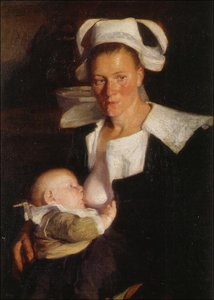
While his landscapes captured the soul of the Spanish terrain, Benedito’s true brilliance shone brightest in the realm of portraiture. He possessed an uncanny ability to distill character into paint—capturing not merely a physical likeness but also an inner feeling—resulting in portraits that remain remarkably perceptive and emotionally resonant. His work often bridged the gap between academic realism and a more modern, psychological depth. In pieces such as Pastora Imperio, one can witness his ability to capture elegance and grace through rich details and a timeless sense of beauty, rendering the subject with a dignity that transcends the canvas.
His talent for capturing the human gaze and the subtle nuances of expression earned him significant recognition within academic circles. This skill led to prestigious positions, including serving as a teacher at the School of San Fernando, where he passed on his mastery of light and form to the next generation of artists. His portraits were not merely studies of faces but narratives of identity, often reflecting the social strata and the refined aesthetics of the Spanish upper classes. Through his meticulous application of oil paint, he could convey the texture of silk, the softness of skin, and the weight of a person's presence, making him a favorite among collectors and even members of the Spanish Royal Family.
Artistic Evolution and Historical Significance
The trajectory of Benedito Vives' career reflects a steady progression from a student of Impressionism to a master of diverse styles, including Realism and Symbolism. His work serves as a vital historical record of the changing social and aesthetic landscapes of Spain during the late 19th and early 20th centuries. By blending the light-filled techniques of his mentor Sorolla with a more structured, academic approach to composition, he created a unique visual language that was both modern and deeply rooted in tradition.
Today, the significance of Manuel Benedito Vives lies in his ability to harmonize the technical rigors of classical painting with the emotional fluidity of the modern era. His contributions to Valencian art remain indispensable, offering a window into a world of:
- Luminous Landscapes: Capturing the unique Mediterranean light and the vibrant flora of the Spanish coast.
- Psychological Portraiture: Creating enduring images that capture the grace, dignity, and inner essence of his subjects.
- Cultural Documentation: Preserving the atmosphere, fashion, and social dynamics of his time through masterful oil paintings.
Questions & Answers
How many artworks by Manuel Benedito Vives are available to browse?
You can browse 165 artworks by Manuel Benedito Vives on the All Artworks page.
In which historical period did Manuel Benedito Vives work?
Manuel Benedito Vives worked in the Modern period. The period situates the artist's activity in history.
Where is Manuel Benedito Vives from?
Manuel Benedito Vives was born in Spain.