Leslie Arthur Wilcox: A Master of the Maritime Canvas
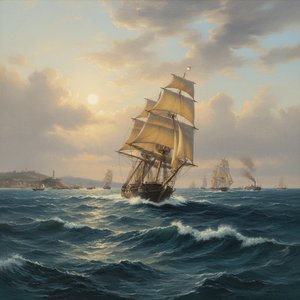
Leslie Arthur Wilcox (1904-1982) stands as a significant figure in British marine art, renowned for his meticulously detailed and evocative oil and watercolour paintings that capture the drama and grandeur of naval history and the boundless beauty of the sea. Born in Fulham, London, into a working-class family profoundly shaped by the loss of two brothers during World War I – an event that undoubtedly fueled his artistic drive – Wilcox’s journey from a young street artist to a respected member of the Royal Society of Marine Artists and a recipient of accolades within the Royal Collection is a testament to his dedication and skill. His work, characterized by a remarkable blend of realism and romanticism, offers viewers a captivating glimpse into a bygone era of seafaring adventure and maritime power.
Early Years and Artistic Beginnings
Wilcox’s early life was far removed from the world of fine art. He began his career not in a studio but on the streets of London, honing his skills as an illustrator for advertising agencies and children's comics. This formative period instilled within him a practical understanding of visual communication and commercial artistry – skills that would later inform his approach to painting. A pivotal moment arrived when he won a national newspaper art competition with a watercolour depicting an aircraft, catapulting him into the attention of influential figures in the art world. This initial success led to opportunities at a studio in Holborn, where he learned the intricacies of commercial illustration and began to develop his own distinctive style. The shadow of his brothers’ wartime deaths undoubtedly contributed to a contemplative nature, reflected perhaps in the solemnity and historical weight often present in his subjects.
Royal Recognition and Artistic Development
Wilcox's transition into a professional marine artist was marked by a series of significant milestones. His election to the Royal Society of Marine Artists in 1947 signaled recognition of his talent and established him within a respected circle of fellow artists. A commission from Trinity House to paint the triumphant return of Queen Mary II from the Commonwealth Tour in 1953 proved to be a watershed moment, culminating in a painting that now resides in Fortnum & Mason’s store in Piccadilly – a testament to his skill and enduring appeal. Throughout the 1960s and 70s, Wilcox continued to produce large-scale works for prominent patrons including Aristotle Onassis and the Union-Castle Line, solidifying his reputation as a leading figure in maritime art. His work frequently depicted historical naval engagements, showcasing meticulous research and an impressive understanding of ship design and nautical history.
Key Works and Historical Context
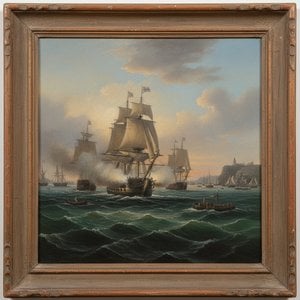
Wilcox’s oeuvre is rich with iconic images that capture the spirit of the age. “Jeannette, Trafalgar 1805,” a monumental depiction of the HMS *Jeannette* during the Battle of Trafalgar, stands as perhaps his most celebrated work, now housed in the National Maritime Museum and later acquired by Mr. Garfield Weston for display at Fortnum & Mason. Other notable paintings include “The Mayflower and Speedwell at Dartmouth” (now held by the Pilgrim Hall Museum in Plymouth), and "HRH Prince of Wales Leaving Plymouth, 1861," commissioned by Mr Stuart Liberty and displayed in Liberty department store. His meticulous attention to detail—from the rigging and sails to the expressions on the faces of the sailors—transported viewers back to a time when naval power dominated the world stage. Wilcox’s work is deeply rooted in British maritime history, reflecting a fascination with exploration, trade, and the challenges faced by those who braved the open sea.
Legacy and Influence
Leslie Arthur Wilcox left an indelible mark on the landscape of British marine art. His dedication to historical accuracy combined with his artistic flair ensured that his paintings continue to resonate with collectors and enthusiasts alike. His membership in the Wapping Group of Artists, a collective known for its commitment to traditional techniques and shared exhibitions, further cemented his place within the broader artistic community. Wilcox’s legacy extends beyond his individual works; he served as an honorary secretary for the Royal Society of Marine Artists, mentoring younger artists and contributing to the preservation of maritime art traditions. His two books, *Mr Pepys' Navy* and *Anson's Voyage*, stand as valuable historical documents alongside his artistic creations, offering a comprehensive insight into the world of 18th-century naval life. Leslie Arthur Wilcox’s paintings remain powerful reminders of Britain’s rich maritime heritage, showcasing both the drama of naval history and the enduring beauty of the sea.