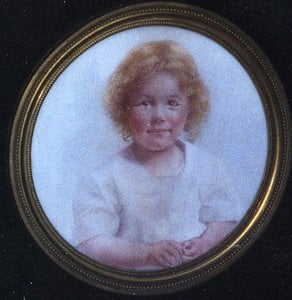
A Victorian Vision: The Delicate Artistry of Katherine Beatrice McNaughton Mowry
In the heart of Philadelphia, amidst the burgeoning cultural landscape of the mid-19th century, Katherine Beatrice McNaughton Mowry was born in 1846. Her life and work would eventually become a testament to the quiet power of observation and the enduring elegance of the Victorian era. As a watercolorist, Mowry possessed a rare ability to translate the ephemeral beauty of the natural world into permanent, luminous compositions. Her artistic journey was not merely one of personal expression but a disciplined pursuit of capturing the subtle nuances of light, texture, and life itself.
The foundation of her mastery can be traced back to her formal training under the esteemed Charles Frederick Potter at the Pratt Institute. A celebrated instructor, Potter instilled in Mowry a rigorous devotion to precise technique and careful composition. Under his guidance, she learned the delicate art of tonal blending, a skill that allowed her to manipulate translucent washes to create depth and atmosphere. This pedagogical influence is evident throughout her oeuvre, where a restrained palette meets an uncompromising attention to detail, ensuring that every petal and every shadow serves a greater, harmonious purpose.
Botanical Grace and the Language of Flowers
Mowry’s artistic output was deeply rooted in her profound connection to the natural world. She found particular inspiration in botanical subjects, most notably the rose, which she rendered with an astonishing level of accuracy. To Mowry, a rose was more than a mere subject; it was a vessel for symbolism, representing purity and a fleeting, exquisite beauty. Her ability to capture the velvety texture of petals and the intricate structure of stems through delicate watercolor washes allowed her floral studies to breathe with a life of their own.
Beyond her botanical explorations, Mowry’s talent extended into the realm of portraiture, where she sought to capture the grace and dignity of her subjects. Her portraits of women are characterized by soft tonal gradations and subtle modeling techniques that achieve a remarkable likeness while maintaining an ethereal quality. This sensitivity was perhaps most poignantly expressed in her personal works, specifically the two paintings featuring her daughter, Phebe McDoual Mowry. In these pieces, the technical precision learned from Potter merges with a tender, maternal intimacy, showcasing her ability to portray familial bonds with profound emotional depth.
Legacy of a Master Watercolorist
The significance of Katherine Beatrice McNaughton Mowry lies in her role as a prominent female voice during an era when women’s access to formal artistic training was often limited. Through her disciplined practice and her ability to navigate the complexities of light and form, she secured her place among the accomplished painters of the late Victorian period. Her work remains a window into a bygone era, offering contemporary viewers a serene encounter with the meticulous beauty of 19th-century American art.
Her contributions can be summarized through several key artistic pillars:
- Technical Mastery: The seamless integration of Potter’s disciplined training with her own intuitive understanding of light and color.
- Botanical Precision: A celebrated ability to use translucent watercolor washes to render flora, particularly roses, with scientific accuracy and poetic beauty.
- Emotional Depth: The capacity to move between the objective observation of nature and the subjective tenderness of portraiture and familial study.
- Historical Resonance: Representing the sophisticated aesthetic values of the Victorian era through a lens of meticulous naturalism.