A Life in Exile: The Artistic Journey of Marcus Gheeraerts the Elder
Marcus Gheeraerts the Elder, born in Bruges, Flanders, in 1521, was a figure inextricably linked to the turbulent religious and political landscape of 16th-century Europe. His life wasn’t one of settled artistic development within a single court or tradition, but rather a compelling narrative of exile, adaptation, and innovation. Initially trained in the Flemish style—a world steeped in meticulous detail and Northern Renaissance realism—Gheeraerts found his path dramatically altered by the escalating religious persecutions under Spanish rule. The Alvan edicts, imposing strict Catholic orthodoxy, forced him to flee Flanders in 1568, seeking refuge in England with his son, Marcus Gheeraerts the Younger. This relocation proved pivotal, embedding him within the orbit of Queen Elizabeth I’s court and shaping the trajectory of his artistic career.
From Bruges to Whitehall: Establishing a New Artistic Identity
The move to England wasn't merely a geographical shift; it was a complete reinvention. Gheeraerts quickly integrated himself into London’s artistic circles, leveraging existing skills while responding to the distinct tastes of his new patrons. His marriage to Sussanah de Critz, connected to John de Critz—the Queen’s serjeant-painter—further solidified his position. While he continued painting portraits, it was as a printmaker that Gheeraerts truly distinguished himself. He spent at least nine years in London, and possibly returned to Flanders around 1577, maintaining ties with England throughout. His son, Marcus the Younger, remained enrolled in the painters’ guild, and his daughter Sarah married Isaac Oliver, another prominent limner, demonstrating a sustained network of artistic connections. This period saw Gheeraerts navigate between Flemish traditions and emerging English styles, creating a unique hybrid aesthetic that appealed to the courtly sensibilities of Elizabeth I's reign.
The Innovator in Print: Etching and the Revival of Aesop
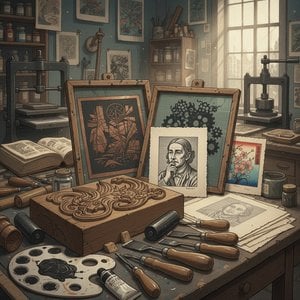
Gheeraerts’ most enduring legacy lies in his pioneering work as an etcher. In an era dominated by woodcut and engraving, he embraced etching with remarkable enthusiasm, experimenting with its possibilities and pushing the boundaries of the technique. His 1562 birds-eye view of Bruges stands as a testament to this innovation—a monumental map created on ten separate plates, measuring an impressive one meter by eighteen meters. This ambitious project showcased his technical prowess and artistic vision. However, it was his illustrated edition of Aesop’s Fables, published in 1567, that cemented his reputation. De warachtighe fabulen der dieren, as the Dutch title reads, wasn't simply a retelling of classic tales; it was a vibrant reimagining brought to life through Gheeraerts’ detailed and expressive etchings. He collaborated with Edewaerd de Dene, who penned the fables in Flemish verse, creating a cohesive artistic work that resonated with contemporary audiences.
Style and Influences: Bruegel and Beyond
Gheeraerts' style reveals a clear debt to Pieter Bruegel the Elder, particularly in his depictions of everyday life and landscapes. He shared Bruegel’s keen eye for detail and ability to capture the nuances of human behavior. However, Gheeraerts infused his work with a distinct naturalism, especially evident in his renderings of birds and animals—a skill that proved invaluable given the limited demand for religious art during the Reformation. The fables provided an ideal outlet for this talent, allowing him to showcase his observational skills within a secular context. He didn’t merely copy existing imagery; he adapted woodcuts by Virgil Solis and Bernard Salomon, imbuing them with greater realism and vitality. His subjects are not simply illustrative but possess a lively energy that sets them apart. The subsequent French and Latin editions of the fables further demonstrate his adaptability and commitment to reaching a wider audience.
Historical Significance: A Bridge Between Traditions
Marcus Gheeraerts the Elder occupies a unique position in art history as a transitional figure, bridging the gap between Flemish Renaissance traditions and the emerging artistic landscape of Elizabethan England. His innovative use of etching not only expanded the possibilities of printmaking but also contributed to the dissemination of humanist ideas through accessible imagery. While his portraits catered to the tastes of the English court, it was his work on Aesop’s Fables that revealed his true artistic depth—a testament to his observational skills, technical mastery, and ability to adapt to changing cultural contexts. He left a lasting mark not only through his own creations but also through the legacy of his son, Marcus Gheeraerts the Younger, who continued to flourish as a portrait painter in England. His story is one of resilience, adaptation, and artistic innovation—a compelling reminder of the power of art to transcend political boundaries and cultural upheaval.