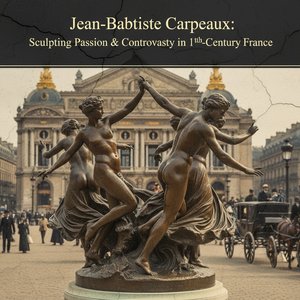
Jean Richard Goubie: Bridging Breton Tradition and Modern Artistic Vision
Jean Richard Goubie (1842 – 1899) stands as a fascinating figure in late nineteenth-century French art, embodying the confluence of Breton cultural heritage and burgeoning modernist sensibilities. Born in Rennes, Brittany, Goubie’s artistic journey was marked by an early fascination with sculpture and a profound engagement with the landscapes of his homeland—a connection that would permeate his oeuvre and solidify his reputation as one of the foremost Breton sculptors of his time.- Early Life & Training: Goubie's formative years were spent immersed in the traditions of Breton craftsmanship, particularly stone carving – a skill he honed under the tutelage of his father, who was himself a respected sculptor. This grounding in artisanal techniques would prove invaluable as he pursued formal artistic training at the École Supérieure des Beaux-Arts in Paris.
- Parisian Influences & Artistic Style: Despite his Breton roots, Goubie’s Parisian education exposed him to the stylistic innovations of Impressionism and Art Deco. He absorbed the techniques championed by artists like Auguste Rodin and Camille Claudel, adapting them to express his own distinctive vision—characterized by meticulous detail, tonal subtlety, and a palpable sense of atmosphere.
Sculptural Achievements & Breton Landscape Representation
Goubie’s sculptural output is notable for its exploration of Breton topography and folklore. He meticulously recreated the rugged coastline of Brittany, capturing the dramatic interplay of light and shadow on granite cliffs—a testament to his dedication to portraying the region's natural beauty with uncompromising realism. His monumental sculptures, notably “Jean,” a striking depiction of Saint John the Baptist, exemplify his mastery of form and texture, reflecting Breton religious iconography alongside broader artistic trends.- Notable Works: Among Goubie’s most celebrated pieces are "Partie de campagne," depicting a pastoral scene imbued with Romantic idealism; “Rendez-Vous At The Meet,” capturing the dynamism of equestrian pursuits; and “Richard Parkes Bonington: A Brief but Brilliant Career” – an homage to Bonington's landscapes. Each sculpture demonstrates Goubie’s ability to convey emotion and narrative through sculptural form.
- Technique & Material Considerations: Goubie favored granite as his primary medium, recognizing its inherent strength and suitability for capturing the grandeur of Breton scenery. He employed a painstaking process of carving and polishing, achieving surfaces that shimmered with luminosity—a deliberate stylistic choice reflecting the influence of Impressionist painters.
Legacy & Influence Beyond Brittany
Goubie’s artistic legacy extends beyond his regional contributions; he gained recognition internationally through exhibitions in Paris and London. His work influenced subsequent generations of sculptors, particularly those interested in exploring the relationship between art and nature—a preoccupation that aligns with the broader ethos of Modernism. Furthermore, Goubie's dedication to preserving Breton cultural heritage cemented his place as a champion of regional identity within the evolving artistic landscape of the late nineteenth century.- Museum Collections: His sculptures are housed in prominent museums across Europe, including Dorich House Museum and Musée Richard Anacréon, ensuring that Goubie’s vision continues to inspire audiences worldwide.
Concluding Reflections: A Harmonious Synthesis
Jean Richard Goubie's artistic career represents a remarkable synthesis of Breton tradition and modernist innovation. He skillfully blended meticulous craftsmanship with stylistic experimentation—resulting in sculptures that resonate with both emotional depth and visual splendor. By capturing the spirit of Brittany’s landscapes and folklore, Goubie achieved an enduring accomplishment, securing his place as one of France’s most significant sculptors of his era.Questions & Answers
Which artworks by Jean Richard Goubie are the most viewed?
The Stats page of Jean Richard Goubie presents statistics computed from the artist's artworks listed on this website.
Where are Jean Richard Goubie's artworks grouped by keywords?
To find works by Jean Richard Goubie on a specific theme, use the artist's By Keywords page, which groups the artworks by keyword.
What moods do Jean Richard Goubie's artworks express?
The artist's Mood Room page shows Jean Richard Goubie's artworks arranged by their atmosphere.