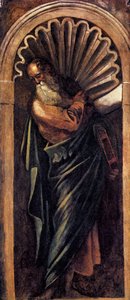
Jacopo Tintoretto: The Furious Master of Venetian Light
Jacopo Robusti, better known as Tintoretto (from the Italian word *tintore*, meaning dyer, a reference to his father’s profession), emerged in 16th-century Venice as one of the most innovative and influential figures of the Renaissance. Born around 1518, likely late September or early October, his life was a whirlwind of artistic creation, marked by both prodigious talent and a fiercely independent spirit that often clashed with established norms. Unlike many artists of his time who meticulously documented their training, Tintoretto’s early years remain shrouded in some mystery. Tradition holds he apprenticed briefly under Titian, though this is debated; what's undeniable is that he quickly forged his own path, absorbing the lessons of Venetian masters like Giorgione and Giovanni Bellini while simultaneously pushing beyond their conventions with a dynamism all his own. His nickname, *il Furioso* ("the Furious"), speaks to the intensity of his working style – a rapid, almost frenzied approach that produced an astonishing volume of work in a relatively short career, ending with his death on May 31, 1594.
A Revolution in Composition and Light
Tintoretto’s genius lay not just in his technical skill but also in his revolutionary approach to composition and the use of light. He rejected the static, balanced arrangements favored by earlier Renaissance painters, opting instead for dramatic diagonals, dynamic movement, and a sense of theatricality that foreshadowed Baroque art. His figures are often caught in moments of intense action, their bodies contorted with emotion, their gestures expansive and expressive. But it was his mastery of light that truly set him apart. Unlike the soft, diffused lighting of Raphael or the carefully controlled chiaroscuro of Caravaggio, Tintoretto employed a bold, almost theatrical use of illumination. Beams of light would slash across canvases, highlighting key figures while plunging others into deep shadow, creating an atmosphere of heightened drama and spiritual intensity. This innovative approach is brilliantly exemplified in works like "The Miracle of Saint Mark," where the saint appears bathed in divine light amidst a swirling vortex of action, or his numerous depictions of “The Last Supper,” each exploring different perspectives and emotional nuances with remarkable freedom. He wasn't afraid to experiment with perspective, often employing dramatic foreshortening and unusual viewpoints to create a sense of immediacy and involvement for the viewer.
Major Works and Patronage
Tintoretto’s career flourished under the patronage of Venice’s powerful institutions, particularly the Scuola Grande di San Marco and the Doge's Palace. The Scuola Grande commissions, especially the cycle of paintings depicting the life of Saint Mark, are considered among his greatest achievements, showcasing his ability to combine narrative clarity with breathtaking visual drama. These monumental canvases filled the walls of the *Scuola*, immersing viewers in scenes of miracles, processions, and moments of profound spiritual significance. His work for the Doge's Palace included vast historical paintings that celebrated Venetian power and military triumphs, demonstrating his versatility as an artist capable of tackling both religious and secular subjects with equal skill. Beyond these major commissions, Tintoretto produced countless altarpieces, portraits, and smaller works for private patrons, solidifying his reputation as the leading painter in Venice during a period of intense artistic competition. His son, Domenico Tintoretto, also became a painter, working alongside his father and continuing the family’s legacy after Jacopo's death.
Influence and Legacy
Tintoretto’s impact on subsequent generations of artists was profound. He paved the way for the Baroque movement with his dramatic compositions, dynamic figures, and theatrical use of light. Artists like Rubens and Rembrandt were deeply influenced by his innovative approach to painting, adopting his techniques and adapting them to their own styles. His emphasis on emotional intensity and psychological realism also anticipated later developments in art history. While contemporaries sometimes criticized his rapid working style and unconventional methods, today Tintoretto is recognized as a pivotal figure in the transition from Renaissance to Baroque art—a visionary artist who transformed the landscape of Venetian painting and left an indelible mark on Western art history. His ability to infuse religious narratives with such palpable human emotion and dramatic visual power continues to captivate audiences centuries after his death, ensuring his place among the giants of artistic innovation.