A Life Immersed in Light and Word: The World of Jacobus van Looy
Jacobus (Jac) van Looy, born September 12th, 1855, in Haarlem, Netherlands, was an artist who embodied the interwoven spirit of painting and literature during a pivotal era. His life, marked by early hardship and profound sensitivity, shaped a unique artistic vision that captured both the outward appearance of everyday existence and the delicate nuances of the human soul. Van Looy’s journey began under difficult circumstances; his father, a carpenter, lost his eyesight, leading to financial instability, and the loss of his mother at the tender age of five was followed by his father's passing soon after. This early experience led him to the Haarlem municipal orphanage, an institution that would later hold symbolic resonance in his life and work. Though initially trained as a house painter, Van Looy’s innate artistic talent propelled him towards drawing classes at the Rijksacademie van Beeldende Kunsten in Amsterdam from 1877 onwards.
The Wanderer's Eye: Travel, Training, and Early Influences
A turning point arrived in 1884 with Van Looy’s receipt of the prestigious Prix de Rome, an award that unlocked a period of transformative travel. The years 1885-86 saw him journey through Italy, Spain, and Morocco – experiences that would indelibly shape his artistic sensibility. These travels weren't merely geographical explorations; they were immersions into different cultures, light conditions, and ways of life. He studied under the guidance of August Allebé, Jan Jacob Goteling Vinnis, Dirk Jan Hendrik Joosten, and Hendrik Jacobus Scholten, absorbing their techniques while simultaneously forging his own distinct path. During this period, he meticulously documented his observations in two volumes of sketches, a testament to his keen eye for detail and burgeoning artistic voice. These early works reveal a fascination with capturing the essence of place – the vibrant colors of Moroccan markets, the sun-drenched landscapes of Spain, and the historical grandeur of Italy.
The Movement of Eighty and Beyond: Literary Pursuits and Artistic Identity
Upon returning to Amsterdam in 1894 after marrying Titia van Gelder, Van Looy became deeply involved with *De Nieuwe Gids* (The New Guide), a prominent literary monthly. He quickly established himself as one of the leading figures of *De Beweging van Tachtig* (The Movement of the Eighties), a Dutch artistic and literary movement characterized by realism, individualism, and a rejection of traditional norms. His writing, often described as epic in scope with tender humanity, explored themes of everyday life with an imaginative flair. He possessed a particular reverence for words, especially within his travel narratives, crafting prose that was both evocative and deeply personal. This dual identity – painter and writer – became central to Van Looy’s artistic persona. A second sojourn to Spain and Morocco in 1901 further enriched his creative palette.
A Return to Haarlem: Legacy and Lasting Impression
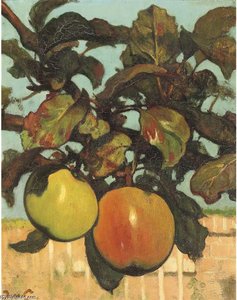
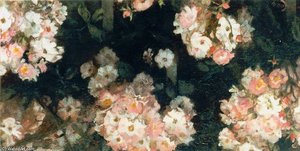
In 1913, Van Looy returned to Haarlem, a city that held deep personal significance due to his childhood experiences at the orphanage, which had been converted into the Frans Hals Museum. He settled in a house near the Haarlemmerhout park, becoming a familiar figure strolling through its grounds – an inspiration for writers like Godfried Bomans. After his death in 1930, his home was briefly transformed into a museum dedicated to his work, though it now exists only as a building marked by a commemorative plaque. His pupils included Charlotte Bouten, Chris Huidekooper, Ella Pauw, Johan Vlaanderen, and Jan Vogelaar, ensuring the continuation of his artistic legacy. Van Looy’s paintings, often characterized by loose brushstrokes, rich colors, and an impressionistic sensibility, continue to captivate audiences with their ability to evoke atmosphere and emotion. He was a master of capturing light and texture, imbuing even the simplest subjects – pears on a table, potato harvesters in a field, blooming irises – with a sense of life and vitality. His work stands as a testament to the power of observation, imagination, and the enduring connection between art and literature.