Jacob Kainen: A Life in Art and Scholarship
- Born: Waterbury, United States of America (1909)
- Died: 2002
Jacob Kainen was a multifaceted American artist, renowned as a painter, printmaker, art historian, and collector. His career spanned decades, marked by stylistic evolution, intellectual curiosity, and significant contributions to the art world both through his own creations and his scholarly endeavors.
Early Life and Artistic Beginnings
- Family Background: Born to Russian immigrant parents in Waterbury, Connecticut, Kainen’s upbringing fostered a deep appreciation for culture. His father's inventive spirit and his mother's love of music and literature nurtured his artistic inclinations from an early age.
- Early Studies: Moving to New York City in 1918 provided access to institutions like the Metropolitan Museum of Art and the New York Public Library, fueling his passion for art history. He studied at the Art Students League, where Kimon Nicolaides emphasized freedom and confidence in artistic expression.
- Early Rebellions: Despite showing promise at Pratt Institute, Kainen’s independent spirit led to expulsion three weeks before graduation due to disagreements with the institution's conservative curriculum. This event proved pivotal, pushing him towards avant-garde movements.
Evolution of Style and Artistic Influences
- Early Influences: Initially drawn to Old Masters, Kainen’s artistic trajectory shifted during the 1930s as he embraced German Expressionism and Social Realism. This period saw him engage with artists like Stuart Davis and Arshile Gorky, who encouraged exploration of the unconscious and copying master works.
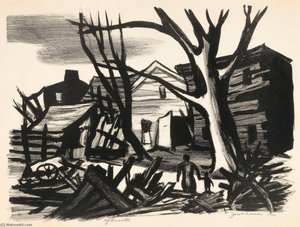
- WPA Years: His involvement in the WPA’s Graphic Arts Program honed his printmaking skills while allowing him to explore social themes through art.
- Abstraction and Beyond: Kainen gradually moved towards abstraction, influenced by figures like Arshile Gorky. However, he never abandoned humanism or historical awareness, seeking to imbue even abstract forms with a sense of experience.
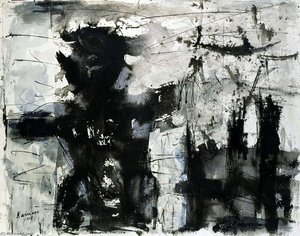
- The Loyalty Investigation & Psychological Impact: A period of intense scrutiny by the Civil Services Loyalty Board in the 1940s, stemming from his past political activities, profoundly impacted Kainen's work, leading to vivid and psychologically charged abstractions like "Exorcist" and "Unmoored #2."
- Return to Figuration: Following clearance from the loyalty board, Kainen shifted back towards figurative art, rejecting Abstract Expressionism in favor of a return to representational forms.
Curatorial Work and Contributions to the Smithsonian
- Smithsonian Curator: From 1942 to 1970, Kainen served as curator of the Division of Graphic Arts at the Smithsonian's U.S. National Museum. He revitalized the collection through exhibitions and acquisitions.
- Influence on Washington Color Field Painting: Kainen played a crucial role in fostering connections within the art community, introducing Morris Louis to Kenneth Noland, contributing to the development of the Washington Color School movement.
- Post-Smithsonian Career: After retiring from the Smithsonian, Kainen dedicated himself fully to painting and printmaking, returning to pure abstraction and continuing his artistic exploration.
Legacy and Historical Significance
- Collector & Philanthropist: Kainen and his wife, Ruth Cole, were avid collectors of German Expressionist art, donating a significant portion of their collection to the National Gallery of Art in 1985.
- Scholarship: Kainen’s contributions as an art historian are notable for his books on John Baptist Jackson and the etchings of Canaletto, demonstrating his deep knowledge and passion for art history.
- Enduring Artistic Vision: Jacob Kainen's legacy rests on a body of work that reflects his intellectual curiosity, artistic evolution, and unwavering commitment to exploring the human condition through diverse mediums. His influence extends beyond his own creations, encompassing his curatorial contributions and his dedication to fostering artistic dialogue.