Early Life and Background
- Name: Henri Eugène Augustin Le Sidaner
- Other Names: Henri Eugene Augustin le Sidaner
- Born: August 7, 1862, Port Louis, Mauritius
- Died: July 14, 1939
- Le Sidaner was born in Port Louis, Mauritius, to Jean Marie Le Sidaner and Amélie Henrietta Robberechts. His father worked as a ship inspector for Lloyd's. The family returned to France in 1872, settling in Dunkerque.
- He displayed an early interest in painting and received support from his parents. He attended the Collège et Lycée Notre Dame des Dunes in Dunkerque.
- A scholarship from the city of Dunkerque enabled him to move to Paris and study at the prestigious École nationale supérieure des beaux-arts.
Artistic Training and Influences
- At the École des Beaux-Arts, Le Sidaner studied under Alexandre Cabanel, a prominent figure in Belle Époque French painting. However, he later resigned due to artistic differences.
- Early influences included Édouard Manet and Claude Monet, as well as the Pointillists. He was drawn to their innovative use of color and light.
- He joined the Colonie artistique d'Étaples, a group of artists working together in Étaples, further developing his skills and artistic vision.
Artistic Style and Development
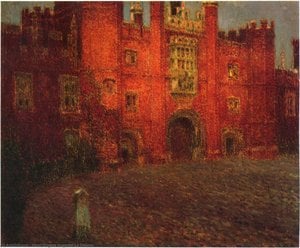
- Le Sidaner’s style is characterized by subdued colors, nuanced greys, and opals applied with uneven, dappled brushstrokes. This technique creates a unique atmosphere and sense of mysticism in his paintings.
- He was particularly skilled at nocturne painting, capturing the subtle nuances of light and shadow during twilight hours.
- His work evolved over time, moving from early influences to a more personal style that blended Impressionistic techniques with Symbolist elements.
- After settling at Gerberoy in the Picardy countryside for over thirty years, he became renowned for his seductive views of the gardens he created within the ruins of a medieval fortress. These paintings often featured dappled sunlight and roses, solidifying his reputation as a unique artist.
Major Works and Recognition
- Notable works include "Still Life and a Window, Gisors," available on WahooArt.com.
- His paintings are exhibited at the Musée des Beaux-Arts Tournai in Belgium, showcasing an impressive collection of French Post-Impressionism.
- Le Sidaner's work was widely collected throughout his career, demonstrating its popularity and artistic merit.
- He received a bronze medal at the Universal Exposition in Paris in 1891.
- In 1905, he exhibited a series of Venice paintings to great acclaim in London and Paris.
- He was created a Chevalier of the Legion of Honour in 1913.
Historical Significance
- Le Sidaner is often considered "the last of the Impressionists," bridging the gap between Impressionism and Post-Impressionism.
- His unique style, combining elements of various movements while maintaining a distinct personal touch, sets him apart from his contemporaries.
- He captured the essence of domestic interiors and quiet street scenes with remarkable sensitivity and skill, offering viewers glimpses into intimate moments and tranquil landscapes.
- His legacy continues to inspire artists and art enthusiasts alike, as evidenced by the ongoing exhibitions and availability of his works on platforms like WahooArt.com.
Questions & Answers
How do I find works by Henri Le Sidaner in a specific palette?
The By Palettes page groups Henri Le Sidaner's artworks by their color palettes.
How can I see every artwork made by Henri Le Sidaner?
Every work by Henri Le Sidaner on this website can be browsed from the artist's All Artworks page.
How many artworks by Henri Le Sidaner are available to browse?
You can browse 201 artworks by Henri Le Sidaner on the All Artworks page.