Heinrich Christoph Kolbe: A Düsseldorf School Icon
Heinrich Christoph Kolbe (April 2, 1771 – January 16, 1836) stands as a prominent figure within the Düsseldorf School of Painting, an artistic movement that profoundly shaped German Romanticism and championed naturalistic observation. Born in Düsseldorf, Kolbe’s formative years were steeped in the intellectual ferment of his time—a period marked by Enlightenment ideals colliding with burgeoning nationalist sentiments. His early education at the Kunstakademie Düsseldorf provided him with a foundational understanding of classical aesthetics, yet it was Paris – where he spent ten crucial years studying under Jean-Auguste Dominique Ingres – that truly ignited his artistic vision and exposed him to the stylistic innovations of Neoclassicism.
- Early Influences & Parisian Training: Kolbe’s Parisian sojourn instilled in him a meticulous attention to detail and a commitment to capturing idealized beauty, mirroring Ingres's celebrated style. This experience would prove invaluable as he returned to Düsseldorf and established himself as the favored portraitist of the Rhineland.
- Return to Düsseldorf & The Rhineland Circle: Upon his return in 1811, Kolbe swiftly ascended to prominence within Düsseldorf’s artistic milieu—specifically the influential Rhineland circle led by Friedrich Schlegel. This group championed literary and philosophical discussions alongside artistic endeavors, fostering a spirit of intellectual curiosity that permeated their creative output.
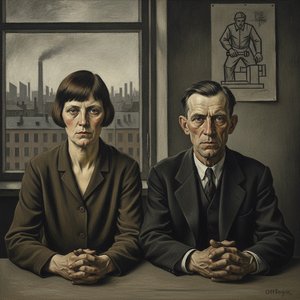
- Portraiture & Weimar Patronage: Kolbe gained renown for his captivating portraits, capturing the likenesses of prominent figures—including Goethe, Charles Augustus, Grand Duke of Saxe-Weimar-Eisenach, and two of Goethe’s mistresses. His commissions from Weimar reflected the artistic dynamism of the era and cemented his reputation as a masterful interpreter of character.
- Academic Career & Artistic Legacy: From 1822 onwards, Kolbe served as Professor at Düsseldorf Art Academy, though he faced considerable friction with Friedrich Wilhelm Schadow, the academy’s new director. Despite this contentious relationship, Kolbe continued to produce significant works and established himself as a respected mentor, shaping generations of artists.
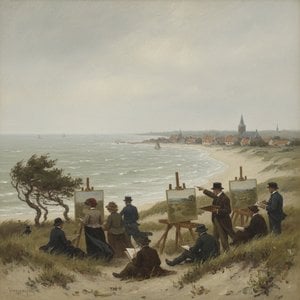
- Notable Works & Artistic Style: Kolbe's oeuvre encompasses landscapes, genre scenes, and portraits alike—demonstrating his versatility as an artist. His distinctive style is characterized by precise draughtsmanship, subtle tonal gradations, and a remarkable ability to convey psychological depth. Pieces like “Männliches Bildnis” exemplify his dedication to capturing the essence of human form with unwavering accuracy.
Kolbe’s artistic legacy extends beyond individual paintings; he embodies the Düsseldorf School's commitment to realism tempered by idealized beauty—a synthesis that profoundly impacted German art history. His meticulous observation and expressive technique continue to inspire admiration, securing his place as one of Düsseldorf’s most celebrated portraitists and a cornerstone of Romantic artistic expression.