A Life Painted by the Sea: The Story of George Stanfield Walters
George Stanfield Walters, born in Liverpool in 1838 and passing away in 1924, was a British artist whose name became synonymous with serene maritime scenes and evocative landscapes. While not as widely celebrated as some of his contemporaries, Walters carved a significant niche for himself during the Victorian era, capturing the beauty and tranquility of coastal life with a delicate hand and keen eye for atmospheric detail. His paintings offer a glimpse into a world where ships were symbols of both commerce and adventure, and rivers flowed as arteries connecting communities and cultures.Family Legacy and Early Influences
Walters’ artistic journey was deeply rooted in family tradition. He wasn't simply an artist *inspired* by the sea; he was born into it. His grandfather, Miles Walters, was a respected ship portraitist, laying the foundation for a lineage of maritime painters. More directly influential was his father, Samuel Walters, who had served in the navy before dedicating himself to marine painting in Liverpool and Bootle. Samuel became George’s first teacher, instilling in him not only technical skills but also a profound appreciation for the nuances of light on water, the anatomy of vessels, and the romantic allure of seafaring life. This early tutelage proved crucial, shaping Walters' distinctive style and subject matter. The family connection provided both encouragement and a solid grounding in the traditions of British marine art.Development and Artistic Style
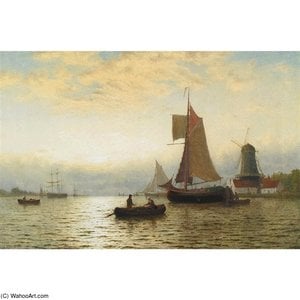
Around 1864, Walters relocated to London, a pivotal move that broadened his artistic horizons. He became an elected member of the Society of British Artists in 1897, signifying recognition from his peers and opening doors to wider exhibition opportunities. Walters’ work is characterized by its realism tempered with impressionistic tendencies. While he meticulously rendered the details of ships, rigging, and coastal architecture, he wasn't solely focused on photographic accuracy. Instead, he prioritized capturing the *feeling* of a scene – the gentle sway of boats in calm waters, the hazy light of a summer afternoon, or the subtle reflections shimmering on a river’s surface. His palette typically favored tranquil hues—soft blues, greens, and ochres—contributing to the overall sense of peace and harmony found in his paintings. He exhibited extensively at prestigious venues like the Royal Academy, the RSW (Royal Scottish Water Colour Society), and the Walker Art Gallery in Liverpool, demonstrating a consistent level of quality and appeal that resonated with Victorian audiences.Subjects and Major Themes
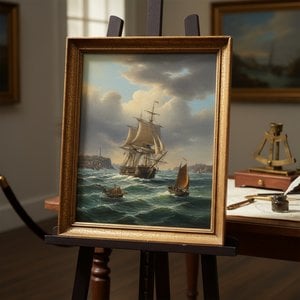
Walters’ oeuvre primarily revolved around maritime themes, but his scope was surprisingly diverse within this realm. He frequently depicted scenes along the Channel coasts, capturing bustling harbors and quiet coves alike. He also found inspiration in inland waterways, particularly the Thames and the rivers of Wales, showcasing barges laden with goods and fishermen tending to their nets. A recurring motif in his work is Dutch life, evidenced by paintings featuring charming Dutch boats and windmills—a testament to a fascination with foreign cultures and perhaps a desire to capture scenes beyond British shores. “Dutch Barges In A Calm”, “Thames Barges Moored”, and “On The Medway, Near Rochester” are prime examples of his ability to imbue everyday scenes with a sense of poetic beauty. These paintings weren’t merely representations of ships and landscapes; they were celebrations of human connection to the natural world and the rhythms of daily life.Historical Significance and Legacy
While George Stanfield Walters may not be a household name today, his work holds an important place in the history of Victorian art. He represents a continuation of the British marine painting tradition, skillfully blending realism with impressionistic sensibilities. His paintings offer valuable insights into the social and economic life of 19th-century Britain, depicting scenes of commerce, leisure, and the enduring relationship between people and the sea. Although detailed biographical information remains scarce, his prolific output and consistent exhibition record attest to his popularity during his lifetime. Today, his works are sought after by collectors who appreciate their delicate beauty, atmospheric charm, and evocative portrayal of a bygone era. His paintings serve as tranquil windows into a world where the gentle lapping of waves and the distant cry of gulls were the soundtrack to everyday life—a legacy that continues to resonate with art lovers today.Questions & Answers
How do I find works by George Stanfield Walters on a specific theme?
To find works by George Stanfield Walters on a specific theme, use the artist's By Keywords page, which groups the artworks by keyword.
How do I find works by George Stanfield Walters in a specific palette?
To find works by George Stanfield Walters in a specific palette, use the artist's By Palettes page.
In which historical period did George Stanfield Walters work?
George Stanfield Walters worked in the 19th-Century period. The period situates the artist's activity in history.