George Elmer Browne (1871–1946): The Quiet Observer of New England
George Elmer Browne (1871–1946) was an American Impressionist painter whose distinctive style captured the serene beauty of New England landscapes and marine scenes. Born in Boston, Massachusetts, Browne’s artistic journey began modestly but blossomed into a celebrated career marked by innovation and unwavering dedication to his craft. He established the West End School of Art in Provincetown, Massachusetts, fostering a vibrant community of artists committed to exploring the expressive possibilities of Impressionism—a movement that championed capturing fleeting moments of light and color. His influence extended beyond Provincetown, shaping the artistic sensibilities of a generation eager to embrace spontaneity and visual truth.
- Early Life & Artistic Beginnings: Browne’s formative years were spent honing his observational skills and experimenting with various mediums before gravitating towards oil painting. Influenced by artists like Claude Monet and Frederic Church, he sought to emulate their masterful depictions of nature—a fascination that would permeate his entire oeuvre.
- The Provincetown School & Impressionist Technique: Browne’s founding of the West End School in 1903 solidified his role as a pivotal figure in American art history. He championed a technique characterized by broken brushstrokes, subtle tonal gradations, and an emphasis on capturing atmospheric conditions—a stylistic approach that distinguished him from more academically oriented painters.
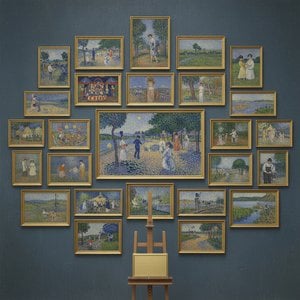
- Notable Landscapes & Marine Paintings: Browne’s artistic output encompassed numerous landscapes depicting quintessential New England vistas—rolling hills dotted with trees ablaze in autumn hues and tranquil lakes reflecting the golden light of summer days. Equally compelling were his marine paintings, which conveyed a palpable sense of movement and luminosity, capturing the drama of crashing waves and the ethereal beauty of twilight skies.
- Recognition & Honors: Browne’s artistic achievements garnered considerable acclaim during his lifetime. He was awarded Chevalier of the Legion of Honor by the French government in 1927—a testament to his enduring reputation as a visionary painter and a champion of Impressionist ideals.
- Legacy & Historical Significance: George Elmer Browne’s contribution to American art extends beyond his individual paintings. He served as an inspiring mentor to countless aspiring artists, fostering a spirit of experimentation and encouraging them to pursue their artistic visions with unwavering conviction. Today, his work continues to resonate with audiences captivated by its understated elegance and profound connection to the natural world—a legacy that secures his place among the most important figures in Impressionist art.
Exploring Browne’s Artistic Vision
Browne's meticulous observation of light and color was central to his artistic process. He painstakingly studied the effects of sunlight on foliage and water surfaces, striving to reproduce these nuances with remarkable accuracy. His canvases often depict scenes bathed in diffused illumination—a deliberate choice that conveyed a sense of tranquility and invited viewers to contemplate the sublime beauty of nature. Furthermore, Browne’s compositions favored asymmetrical arrangements—a stylistic element that added dynamism and visual interest to his landscapes and marine paintings.
- Color Palette & Brushwork: Browne employed a restrained color palette dominated by muted greens, blues, and yellows—colors chosen with careful consideration for their tonal relationships and their ability to evoke specific moods.
- Compositional Strategies: He skillfully utilized compositional techniques—such as leading lines and framing devices—to guide the viewer’s gaze and create a sense of depth within his paintings.
Iconic Works & Artistic Influences
Browne's artistic sensibilities were profoundly shaped by the Impressionist movement, particularly the pioneering efforts of Claude Monet and Frederic Church. Monet’s explorations of light and color—most notably his series depicting Giverny’s Water Lilies—provided Browne with invaluable inspiration for capturing atmospheric conditions and conveying a sense of perceptual immediacy. Similarly, Church's monumental landscapes—such as Niagara Falls—demonstrated the power of painting to evoke awe and wonder—a goal that Browne consistently pursued in his own work.
- Monet’s Impact: Monet’s emphasis on capturing fleeting moments of light and color profoundly influenced Browne’s technique.
- Church's Influence: Church’s grand landscapes instilled in Browne a desire to convey the sublime beauty of nature—a characteristic that permeated his artistic vision.
A Quiet Masterpiece
Browne’s enduring appeal lies not merely in the aesthetic qualities of his paintings but also in their profound emotional resonance. His canvases invite viewers to pause and contemplate the serenity of New England landscapes—to savor the subtle hues of autumn foliage and to immerse themselves in the tranquil reflections of lakes under a summer sky. Through his understated elegance and unwavering devotion to Impressionist ideals, George Elmer Browne achieved a remarkable feat—transforming visual observation into an art form that transcends time and continues to inspire admiration for generations.