Early Life and Training (1774-1801)
- Born: London, United Kingdom, in 1774
- Family Background: His father was an exponent of the Gurney system of shorthand.
- Artistic Education: Studied at the Royal Academy Schools in London. This provided a foundation in classical techniques and artistic principles.
- Early Career: Experienced some success as an artist in Ireland before moving to Madras (Chennai) in 1802.
Life in Asia: India and China (1802-1852)
- Move to India: Sailed to Madras in 1802, establishing himself as a painter within the British community.
- Calcutta Residency: Became the leading artist of the British community in Calcutta (Kolkata). This period marked his most prolific and influential years.
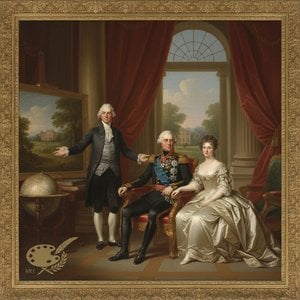
- Portraits of Prominent Figures: Painted portraits of notable individuals, including Colonel James Achilles Kirkpatrick and his family. These works offer insights into colonial society and familial relationships.
- Move to Southern China: Due to mounting debt, he relocated to Macau in 1825.
- Macau Period: Continued painting portraits of European merchants, Chinese residents, and sea captains. His style was closely imitated by the Cantonese artist Lam Qua.
- Hong Kong Visit: Made a six-month visit to Hong Kong in 1846, documenting the newly founded colony through detailed studies.
Artistic Style and Techniques
- Portraiture Focus: Chinnery is best known for his portraits, capturing likenesses with sensitivity and detail.
- Orientalist Influences: His work reflects elements of Orientalism, depicting Asian subjects within a European artistic framework. However, his portrayals often exhibit a degree of empathy and observation beyond simple exoticization.
- Mediums Used: Primarily worked in oil paint and watercolor. He also produced numerous pencil drawings.
- Unique Shorthand Notes: Chinnery used a modified version of the Gurney shorthand system to jot down quick notes on his sketches, providing valuable contextual information about his subjects and observations.
- Influence of Local Artists: His style was influenced by local Chinese artistic traditions, particularly in his landscapes and depictions of everyday life.
Major Achievements and Historical Significance
- Leading Western Artist in South China: Chinnery was the only Western painter resident in southern China between the early and mid-19th century, making him a unique chronicler of the region’s people and landscapes.
- Documenting Colonial Life: His paintings provide valuable historical documentation of British colonial life in India and Macau, as well as the interactions between Europeans and Asians.
- Influence on Chinese Art: Chinnery’s influence extended to local artists like Lam Qua, who adopted his portrait style.
- Depiction of Ordinary People: His works vividly depict the lives of ordinary people, offering a rare glimpse into everyday existence during that period.
- Literary Connection: Served as inspiration for the character Aristotle Quance in James Clavell’s novel Tai-pan.
Death and Legacy (1852 - Present)
- Death: Died in Macau on May 30, 1852, and is buried in the Old Protestant Cemetery.
- Collections: Substantial collections of his drawings are held at the Victoria and Albert Museum and the British Museum (London), Peabody Essex Museum (Salem, Massachusetts), Birmingham Museum & Art Gallery, Hong Kong Museum of Art, Macau Museum, and Macau Museum of Art.
- Ongoing Recognition: Exhibitions of his work have been held internationally, demonstrating continued interest in his art and historical significance.
Questions & Answers
What other names is George Chinnery known by?
George Chinnery appears under the alternate names Qiannali, Geo. Chinnery, Chinnery, Chinnery Geo, ジョージ・チネリ―.
Where can I see George Chinnery's artworks in chronological order?
A timeline of George Chinnery's works exists: the artist's Artwork Timeline page orders the artworks by creation date.
What are the birthplace and birth year of George Chinnery?
George Chinnery was born in Gough Square in 1774.