Eugène Devéria: Bridging History and Observation
Eugène François Marie Joseph Devéria (1805 – 1865) was a French painter whose distinctive style combined meticulous realism with an expressive handling of color, establishing him as one of the foremost chroniclers of his era. Born in Paris to a family steeped in artistic tradition—his father was a sculptor—Devéria’s early life foreshadowed his future vocation, immersing him in the vibrant cultural landscape of Restoration France. While biographical details remain somewhat sparse, scholarly research suggests he honed his skills under Jean-Baptiste Camille Corot and Alexandre Cabanel, absorbing the Impressionist spirit alongside the academic rigor of the École Supérieure des Beaux-Arts.
- Early Influences & Training: Devéria’s formative years coincided with a period of artistic revival following Napoleon's reign. The Romantic movement profoundly impacted his sensibilities, fostering an appreciation for dramatic landscapes and emotionally charged narratives. However, he skillfully balanced these influences with the meticulous observation championed by Corot and Cabanel—artists who prioritized capturing natural light and texture with unparalleled accuracy.
- A Painter of Scenes & Portraits: Devéria’s oeuvre is remarkably diverse, encompassing both monumental historical paintings and intimate portraits. He gained considerable renown for his depictions of Scottish clansmen, meticulously rendered in oils that convey not only physical likeness but also psychological depth—a testament to his ability to distill complex emotions onto canvas.
Notable Works & Artistic Style
Devéria’s artistic style is characterized by a remarkable blend of realism and tonal subtlety. He eschewed the flamboyant brushstrokes favored by some contemporaries, opting instead for smooth, blended surfaces that achieved an astonishing degree of luminosity. This technique—particularly evident in his celebrated canvases depicting Christopher Columbus' arrival in America and The Woodpigeon—allowed him to convey atmospheric conditions with breathtaking precision. Furthermore, Devéria’s palette was restrained yet expressive, utilizing muted hues to create a sense of mood and atmosphere that resonated deeply with viewers.
- Historical Narratives: His monumental canvases like “The Reception Of Christopher Columbus” exemplify his commitment to portraying historical events with unflinching detail. Devéria’s compositions are carefully constructed, guiding the eye across expansive landscapes and capturing fleeting expressions of human emotion—reflecting a humanist sensibility that distinguished him from many artists of his time.
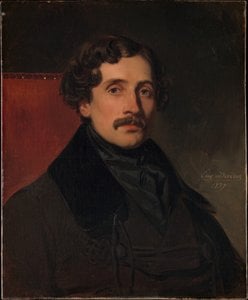
- Portraiture: Devéria's portraits were equally noteworthy for their psychological insight. He skillfully captured the essence of his subjects’ personalities, conveying not merely physical appearance but also inner character through subtle gestures and facial expressions.
Legacy & Historical Significance
Eugène Devéria’s contribution to French art history extends beyond his individual masterpieces. He helped solidify the École Supérieure des Beaux-Arts' reputation for excellence, nurturing a generation of artists who embraced both academic tradition and Impressionist innovation. His paintings continue to inspire admiration for their technical virtuosity and emotional resonance—serving as enduring reminders of a pivotal moment in European artistic culture. Devéria’s meticulous observation and tonal mastery cemented his place among the most influential painters of the mid-19th century, ensuring that his work would be studied and appreciated for decades to come.