Dorothy Larcher: Pioneer of Organic Textile Design
Dorothy Larcher (1884–1952) stands as a remarkable figure in the history of British textile art, celebrated for her collaborative workshops and distinctive approach to block printing that championed organic forms and resonated deeply with the aesthetic sensibilities of the interwar years. Born Eliza Arkell Larcher in St. Pancras, London—the daughter of William Gustavus Francis Larcher—she possessed an innate artistic inclination nurtured by early exposure to art education at Hornsey School of Art, where she would later serve as a teacher. Her formative journey took her to India during the First World War, embarking on a paid companionship and assistant role alongside British artist Christina Herringham, an experience that profoundly shaped her understanding of textile printing techniques—particularly indigo dyeing—and instilled within her a lifelong fascination for natural pigments and botanical inspiration.
- Early Influences & Education: Larcher’s artistic sensibilities were honed during her formative years at Hornsey School of Art, where she immersed herself in the study of drawing and painting alongside fellow artists. This grounding in traditional art practices would prove invaluable as she transitioned into the realm of textile design.
- The Indian Expedition & Indigo Dyeing: Her travels to India during the war provided crucial insight into indigo dyeing—a technique utilizing natural pigments derived from indigo plants—which became a cornerstone of her artistic vocabulary and informed her subsequent designs.
Collaborative Workshops & Hampstead’s Textile Renaissance
- Partnership with Phyllis Barron: Larcher's career gained momentum in 1923 when she joined forces with Phyllis Barron, establishing a textile workshop in Hampstead Road, London. Together, they cultivated an environment of artistic experimentation and innovation, attracting talented apprentices like Enid Marx.
- Geometric vs Organic Prints: Unlike Barron’s preference for geometric patterns, Larcher's designs leaned towards organic forms—drawing inspiration from botanical specimens and reflecting the prevailing aesthetic trends of the era.
Painswick House & The Pursuit of Botanical Inspiration
- Moving to Painswick: Recognizing the importance of cultivating a supportive environment for artistic endeavors, Larcher relocated her workshop to Painswick House in Gloucestershire in 1930—a decision that allowed her to establish a dedicated studio equipped with a large vat for indigo dyeing and utilize the surrounding gardens as a source of botanical inspiration.
- Commissioned Projects & Wartime Contributions: Their workshop produced exquisite linen fabrics commissioned by institutions such as Girton College, Cambridge, and Winchester Cathedral—demonstrating Larcher’s commitment to crafting textiles that served both aesthetic beauty and functional purpose. During World War II, their samples toured museums across the United States as part of a broader British Council exhibition celebrating contemporary craftsmanship.
Floral Studies & Legacy
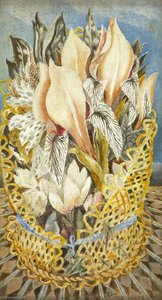
- Painting Beyond Textiles: Following her workshop days, Larcher embarked on a prolific artistic endeavor—creating nearly 40 floral studies that showcased her mastery of botanical representation and solidified her reputation as a gifted painter.
- Robin Tanner’s Collection & Continued Influence: After Barron's passing, their textile samples and collections were entrusted to artist Robin Tanner—ensuring Larcher’s legacy endured and inspiring subsequent generations of textile designers.
Historical Significance
- A Voice for Organic Aesthetics: Dorothy Larcher's unwavering dedication to organic forms in textile design represents a significant contribution to British art history—challenging prevailing geometric conventions and advocating for an aesthetic rooted in the beauty of the natural world.
- The Hampstead-Painswick Duo: Her partnership with Phyllis Barron exemplifies the collaborative spirit that characterized the interwar years—resulting in groundbreaking textile innovations and establishing Painswick House as a beacon of British craftsmanship.