Early Life and Apprenticeship in Liège
Jean Dieudonné Deneux, born around 1749 in the vibrant city of Liège – a region now part of Belgium but then an independent principality – emerged as a significant, though often quietly celebrated, figure in the world of 18th-century flower painting. Details surrounding his early life remain somewhat elusive, yet we know that his artistic journey began under the tutelage of Jean-Georges-Christian Coclers, a prominent artist known for his decorative works and association with the Rococo style. Deneux’s father, Henri Deneux, secured this apprenticeship on August 15th, 1749, marking a formal entry into the atelier that would shape the young painter's aesthetic sensibilities.
Liège itself was a cultural crossroads, fostering a unique blend of Flemish, French, and German artistic traditions. This environment undoubtedly influenced Deneux’s developing style. Coclers’ workshop provided not only technical training but also exposure to the prevailing tastes for lightness, elegance, and ornate detail characteristic of the Rococo period. The three-year apprenticeship was crucial in establishing a foundation in meticulous observation, delicate brushwork, and an appreciation for the ephemeral beauty of nature – qualities that would become hallmarks of Deneux’s oeuvre.
A Flourishing Career: Flower Paintings and Decorative Panels
Deneux quickly distinguished himself as a painter specializing in exquisitely rendered flower paintings. While biographical details are sparse, his surviving works reveal a mastery of botanical accuracy combined with an artistic flair that elevated the genre beyond mere scientific illustration. He wasn’t simply replicating flowers; he was capturing their essence – the velvety texture of petals, the subtle gradations of color, and the delicate interplay of light and shadow.
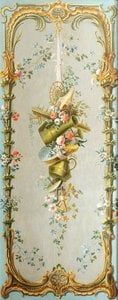
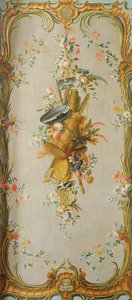
Beyond individual floral studies, Deneux found considerable success creating decorative wall panels adorned with charming depictions of nature and scenes from daily life. These panels were highly sought after by the affluent clientele of the era, adorning the interiors of homes and estates throughout the region. A particularly notable example is a Rococo wall panel dating back to 1768, featuring intricate floral designs interwoven with garden implements rendered in shimmering gold leaf. This piece exemplifies Deneux’s ability to seamlessly blend artistic skill with decorative function, creating works that were both visually stunning and indicative of refined taste.
Influences and Artistic Style
Deneux's work reflects the strong influence of Flemish flower painting traditions, particularly those of Jan van Huysum and Rachel Ruysch. Like these masters, he possessed an exceptional talent for capturing the luminosity and texture of flowers, employing a meticulous technique that involved layering thin glazes of paint to create depth and realism. However, Deneux’s style also bears the hallmarks of the Rococo movement, with its emphasis on grace, elegance, and playful ornamentation.
His compositions often feature asymmetrical arrangements, delicate color palettes, and a sense of airy lightness. The inclusion of garden implements and other everyday objects in his decorative panels suggests an interest in portraying not only the beauty of nature but also the pleasures of domestic life. While he didn’t engage in grand historical or mythological narratives, Deneux found artistic fulfillment in celebrating the small joys and refined aesthetics of his time.
Legacy and Historical Significance
Jean Dieudonné Deneux's career was tragically cut short by his death in 1786. Despite his relatively brief life, he left behind a body of work that offers valuable insights into the artistic tastes and decorative practices of the late Rococo period. His paintings and panels provide a glimpse into the world of affluent households, revealing their appreciation for beauty, elegance, and refined craftsmanship.
Although not as widely recognized as some of his contemporaries, Deneux’s contributions to flower painting and decorative art are increasingly appreciated by scholars and collectors. His meticulous technique, delicate color palettes, and charming compositions continue to captivate viewers today, offering a testament to the enduring power of beauty and artistic skill. His work serves as a reminder that even seemingly modest genres – like flower painting – can achieve remarkable levels of artistry and historical significance.