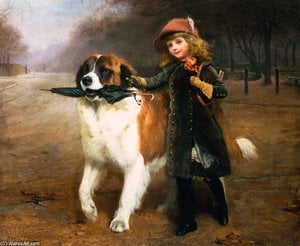
A Life Painted in Sentiment: The World of Charles Burton Barber
Charles Burton Barber, a name synonymous with Victorian sentimentality and heartwarming depictions of domestic life, flourished during a period captivated by the bonds between humans and animals. Born in Great Yarmouth in 1845, Barber’s artistic journey unfolded against the backdrop of a rapidly changing Britain, yet his work consistently offered a comforting glimpse into an idealized world of innocence and affection. While details surrounding his formal training remain somewhat elusive, it is clear that Barber possessed an innate talent nurtured through dedicated practice and keen observation. He first exhibited at the prestigious Royal Academy in 1866, marking a pivotal moment in establishing his career within the London art scene, and continued to showcase his work there consistently until 1893. This sustained presence solidified his reputation and allowed him to cultivate a loyal following among collectors who appreciated his ability to evoke genuine emotion through paint.Capturing Hearts: Style and Themes
Barber’s artistic versatility was notable; he moved with ease between highly detailed, almost photographic realism and more spontaneous, sketch-like compositions. However, it is for his sentimental portrayals of children interacting with their animal companions – particularly dogs – that he remains best known today. His paintings aren't merely representations of scenes but rather carefully constructed narratives brimming with warmth, tenderness, and a palpable sense of emotional connection. He possessed an exceptional skill in capturing the subtle nuances of expression, both human and canine, imbuing his subjects with personality and charm. Suspense, Off to School, and A Special Pleader are prime examples of this ability, each painting telling a silent story that resonates deeply with viewers. The artist’s technique often involved layering glazes to achieve rich colors and textures, enhancing the overall sense of realism and inviting the viewer into the intimate world he created. He wasn't simply painting pets; he was portraying cherished members of the family, capturing the unique relationship between children and their beloved animals.Royal Recognition and a Tragic End
The pinnacle of Barber’s career arrived in 1883 with his election as a member of the Royal Institute of Oil Painters, a testament to his growing stature within the British art world. However, it was a commission received in 1894 that would ultimately define his legacy – and tragically coincide with his untimely death. Queen Victoria, herself a devoted animal lover, requested Barber paint her alongside her grandchildren in her pony-carriage. This prestigious undertaking represented the culmination of years dedicated to perfecting his craft and capturing the essence of Victorian domesticity. Sadly, Barber passed away shortly after completing this significant work in London, at the age of 49. The Queen herself expressed her admiration for Barber’s talent, sending a wreath to his funeral with an inscription acknowledging “a mark of admiration and regard.” This royal patronage underscored the profound impact Barber had made on the artistic landscape of his time.Influences and Lasting Significance
Barber's work is deeply rooted in the Victorian era’s fascination with domesticity, sentimentality, and the idealized portrayal of family life. While pinpointing specific artistic influences proves challenging, his paintings clearly align with broader trends prevalent during that period – particularly Victorian genre painting and *animalier* art. He shared a similar focus on capturing emotional narratives with artists like Arthur Elsley, who would later succeed him as the foremost painter of children and pets. However, Barber’s style possessed a unique quality—a delicate balance between realism and sentimentality that set him apart. Despite some contemporary critics dismissing his work as overly saccharine, Barber's paintings have endured in popularity due to their technical skill and ability to evoke powerful emotions. The widespread reproduction of his artworks through photogravure prints further cemented his accessibility, bringing his charming scenes into countless homes across Britain and beyond. Today, a significant portion of Barber’s oeuvre is housed at the Lady Lever Art Gallery in Port Sunlight, ensuring that his legacy continues to inspire and delight generations to come. His paintings remain a poignant reminder of Victorian values and the enduring power of the human-animal bond.Notable Works
- Suspense (1894): A captivating scene brimming with anticipation, showcasing Barber’s mastery of capturing fleeting emotions.
- Off to School (1883): An idyllic portrayal of childhood innocence and the companionship offered by a loyal canine friend.
- Queen Victoria with John Brown (1894): A historically significant work commissioned by the Queen herself, capturing a unique relationship.
- A Special Pleader (1893): Demonstrates Barber’s skill in portraying animal personality and creating engaging narratives.
- Gellert: A beautiful depiction of a dog, showcasing the artist's talent for animal portraiture.
- The New Keeper: Another charming scene highlighting the bond between children and their pets.