Early Life and Artistic Foundations
Berenice Abbott, born Berenice Alice Abbott on July 17, 1898, in Springfield, Ohio, embarked on a journey that would establish her as a pioneering figure in American photography. Her early life was marked by a restless spirit and a burgeoning artistic sensibility. After briefly attending The Ohio State University in 1918, she gravitated towards the vibrant energy of New York City, seeking to hone her skills in sculpture and painting. This period laid the groundwork for her future endeavors, introducing her to the avant-garde circles that would profoundly shape her aesthetic vision. Connections forged with influential figures like Marcel Duchamp and Man Ray proved pivotal, opening doors to a world of artistic experimentation and challenging conventional norms. It was an environment ripe with possibility, fostering a spirit of innovation that would come to define Abbott’s own unique approach to visual expression.
Parisian Awakening and Photographic Development
A transformative chapter in Abbott's life began in 1921 when she journeyed to Paris. This move proved instrumental in her artistic evolution, leading to an apprenticeship with the renowned photographer Man Ray. Working alongside him, she immersed herself in the intricacies of darkroom techniques and photographic processes, gaining invaluable experience that would become the cornerstone of her practice. It was during this period that Abbott’s distinctive style began to emerge, characterized by a keen eye for detail and a commitment to capturing the essence of her subjects. Her work quickly gained recognition, culminating in an exhibition at Le Sacre du Printemps gallery in 1926, where she showcased portraits of prominent artists and literary figures, including James Joyce and Eugène Atget. Further studies in Berlin refined her skills before returning to Paris and establishing a second studio on the rue Servandoni, solidifying her position within the European artistic landscape.
Documenting a Changing City: New York Transformed
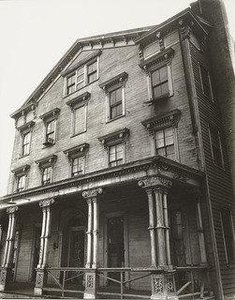
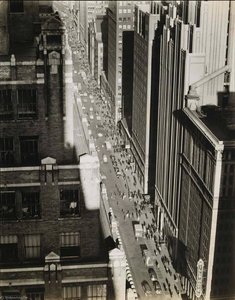
In 1929, Abbott returned to New York City with a dual purpose: to champion the work of Eugène Atget and to document the rapidly changing urban environment that captivated her imagination. Recognizing the city’s photographic potential, she embarked on an ambitious project to capture its architecture and evolving character. Supported by the Works Progress Administration (WPA), this undertaking resulted in “Changing New York,” a comprehensive collection that stands as a landmark achievement in documentary photography. Abbott meticulously documented the city's transformation, contrasting old and new structures, capturing bustling street scenes, and revealing the dynamic energy of a metropolis in constant flux. Her photographs weren’t merely records; they were insightful observations about urban life, progress, and the passage of time. This project cemented her reputation as a visionary artist with a unique ability to capture the spirit of a place.
Legacy and Enduring Influence
Berenice Abbott's legacy extends far beyond her stunning photographs. She is celebrated for pioneering documentary photography, demonstrating an unparalleled ability to convey the essence of urban life through her lens. Her portraits offer intimate glimpses into the lives of influential cultural figures, while her New York City photographs serve as a valuable historical record of the city’s evolution. Crucially, Abbott played a vital role in preserving and promoting the work of Eugène Atget, bringing his artistry to wider recognition and ensuring his place in photographic history. Beyond her artistic practice, she contributed significantly to the field through her writings and illustrations on photographic techniques, furthering its development as an art form. Her photographs are now held in prestigious collections worldwide, including the Smithsonian American Art Museum and the Philadelphia Museum of Art, a testament to their enduring power and significance. Abbott’s influence continues to inspire photographers today, reminding us of the profound ability of the camera to document, interpret, and celebrate the world around us.
Key Influences and Artistic Style
Several key influences shaped Berenice Abbott's artistic vision. Her apprenticeship with Man Ray was foundational, exposing her to avant-garde techniques and introducing her to a network of influential artists. The rediscovery and promotion of Eugène Atget’s work profoundly impacted her approach to documentary photography, inspiring her meticulous documentation of urban environments. Abbott's photographs often reflect the aesthetic sensibilities of the Art Deco Movement, characterized by geometric forms and a sense of modernity. Her style aligned with the principles of “straight photography,” emphasizing sharp focus and unmanipulated images to present a realistic depiction of her subjects, devoid of artificiality or romanticism. This commitment to clarity and authenticity became a hallmark of her work, allowing viewers to connect directly with the scenes she captured and appreciate the beauty inherent in everyday life.