A Vision of Wales: The Life and Art of Benjamin Archibald Lewis
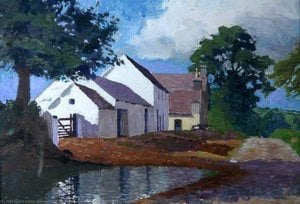
Benjamin Archibald Lewis, born in 1857, remains a captivating figure within the pantheon of 19th-century Welsh landscape painters. Though not as widely celebrated as some of his contemporaries, Lewis’s work offers a particularly poignant and intimate glimpse into the rural beauty of Carmarthenshire and the surrounding Welsh coastline. His paintings are more than mere depictions; they are imbued with a deep affection for the land and a keen sensitivity to its changing moods. While biographical details remain somewhat sparse, the body of his artwork speaks volumes about a life dedicated to capturing the essence of Wales during a period of significant social and industrial change. He wasn’t simply recording what he saw, but translating an emotional connection with the Welsh countryside onto canvas, offering viewers a window into a world increasingly threatened by modernization.
Early Influences and Artistic Development
The precise details of Lewis's artistic training are largely unknown, however, it is reasonable to assume that he benefited from the burgeoning art scene in Wales during his formative years. The mid-19th century witnessed a growing interest in landscape painting, fueled by Romantic ideals and a desire to celebrate national identity.
Artists like David Cox and John Constable, with their emphasis on direct observation and atmospheric effects, undoubtedly influenced Lewis’s approach. His early works demonstrate a meticulous attention to detail, reminiscent of the topographical painters popular at the time. However, he quickly moved beyond mere replication, developing a distinctive style characterized by soft washes of color, delicate brushwork, and a subtle play of light and shadow. He favored watercolor as his primary medium, allowing him to capture the ephemeral qualities of the Welsh weather – the mist rolling over the hills, the shimmering reflections on the rivers, and the dramatic skies that define the region.
Carmarthenshire: A Landscape Embraced
Lewis’s artistic focus centered almost exclusively on Carmarthenshire, a county he clearly held dear. His paintings depict scenes around the town of Carmarthen – bustling quaysides teeming with activity, tranquil stretches of the River Towy winding through verdant meadows, and panoramic views of the surrounding hills and valleys.
The Quay at Carmarthen, one of his most recognizable works, exemplifies his ability to capture both the energy and the serenity of rural life. The painting is not simply a record of commerce; it’s a vibrant tableau of everyday existence, filled with figures engaged in their daily routines. He also frequently depicted coastal scenes, capturing the rugged beauty of the Welsh shoreline and the ever-present power of the sea. His work provides invaluable documentation of these locations during this period, offering insights into the architecture, transportation, and social life of 19th-century Wales.
Technique and Artistic Style
Lewis’s technique is marked by a masterful use of watercolor. He employed a layering approach, building up tones and textures through successive washes of color. This allowed him to create a sense of depth and atmosphere that is particularly striking in his landscape paintings.
- His brushwork is typically loose and fluid, conveying a sense of spontaneity and immediacy.
- He was adept at capturing the subtle nuances of light and shadow, creating a realistic yet evocative depiction of the Welsh countryside.
- A key characteristic of his style is his use of muted colors – soft greens, browns, blues, and grays – which reflect the natural palette of Wales.
While he occasionally incorporated figures into his landscapes, they are rarely the primary focus. Instead, they serve to enhance the sense of scale and provide a human element within the vastness of nature. His paintings aren’t about grand narratives or dramatic events; they're about quiet observation, subtle beauty, and an enduring connection with the land.
Legacy and Historical Significance
Benjamin Archibald Lewis died in 1946, leaving behind a significant body of work that continues to resonate with art lovers today. While he may not be a household name, his paintings offer a unique and valuable perspective on 19th-century Wales.
His work is particularly important for its documentation of Carmarthenshire during a period of rapid change. He captured scenes that have since disappeared, preserving them for posterity. More importantly, Lewis’s paintings embody a deep love for the Welsh countryside – a sentiment that continues to inspire and captivate viewers. His legacy lies in his ability to translate an emotional connection with the land onto canvas, offering a timeless vision of Wales's enduring beauty. He stands as a testament to the power of art to capture not just what is seen, but also what is felt—the spirit of a place and the soul of a nation.