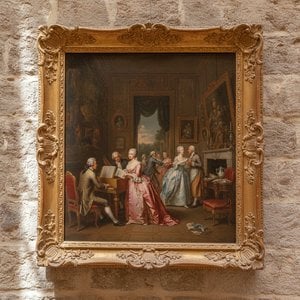
Arthur John Elsley: A Painter of Gentle Idols
Arthur John Elsley (1860-1952) remains a beloved figure in British art, instantly recognizable for his charming and idyllic depictions of Victorian and Edwardian life. More than just a painter of pretty scenes, Elsley captured a specific mood – a nostalgic yearning for simpler times, a celebration of childhood innocence, and the quiet beauty of rural England. His work, frequently found adorning calendars and books, speaks to a deep appreciation for domesticity and the joys of everyday moments, establishing him as one of the most popular genre painters of his era.
Born in London on November 20th, 1860, Elsley’s early life was marked by a significant visual influence. His father, John Elsley, a coachman and amateur artist, instilled in him a love for sketching animals – particularly those encountered at the London Zoo. This fascination with creatures great and small would become a recurring theme throughout Elsley's career, informing his meticulous attention to detail and his ability to convey both their charm and their inherent dignity. A childhood bout of measles left Elsley with permanently impaired eyesight, a challenge he skillfully navigated by developing an exceptional eye for composition and color, relying heavily on memory and observation rather than direct visual perception.
Early Training and Artistic Development
At the age of fourteen, Elsley enrolled at the South Kensington School of Art, later known as the Royal College of Art. Here, he received instruction from influential figures like Frederick Pickersgill, Edward Armitage, John Marshal, and Henry Bowler – artists who shaped his technical skills and artistic sensibilities. The influence of these mentors is evident in Elsley’s early work, which demonstrates a strong grounding in academic painting techniques while also hinting at the burgeoning Impressionistic tendencies that would later inform his style.
His first exhibition at the Royal Academy in 1878 marked a significant milestone, showcasing his talent for capturing fleeting moments of beauty and portraying subjects with remarkable sensitivity. He continued to refine his craft, experimenting with different compositions and techniques, and gradually establishing himself as a respected artist within the established art world. Notably, Elsley’s friendship with George Grenville Manton, another painter of children, fostered a collaborative spirit and provided opportunities for mutual support and artistic exchange.
The Golden Age of Genre Painting
Elsley's career flourished during the late Victorian and Edwardian periods, a time when genre painting – scenes of everyday life – enjoyed immense popularity. The newly wealthy middle class sought out images that reflected their values: domesticity, family life, and an idealized vision of rural England. Elsley perfectly catered to this demand, producing a prolific output of charming paintings featuring children playing with pets in idyllic settings. His works were not merely decorative; they offered a comforting escape from the complexities of modern urban life.
His subjects – rosy-cheeked children, playful dogs and horses, and cozy domestic interiors – resonated deeply with his audience. He achieved considerable success, earning awards at prestigious exhibitions like the Crystal Palace in 1891 and securing commissions from prominent families, including the Benett-Stanford family of politicians. The demand for his work was so high that it frequently appeared in calendars, magazines, and books, cementing his place as a popular artist of his time.
Style and Technique
Elsley’s style is characterized by its gentle warmth, meticulous detail, and a subtle sense of nostalgia. He employed a bright, cheerful palette, dominated by soft greens, blues, and yellows, to create an atmosphere of idyllic tranquility. His brushwork was smooth and refined, conveying a sense of realism while simultaneously softening the edges and creating a dreamlike quality. While often described as “chocolate-boxy,” Elsley’s paintings are far from saccharine; they possess a quiet dignity and emotional resonance that elevates them beyond mere prettiness.
Despite his visual impairment, Elsley maintained an extraordinary ability to capture light and shadow, creating depth and atmosphere in his compositions. He often worked from sketches made during his frequent cycling trips through the countryside, translating these observations into finished paintings with remarkable accuracy. His later work, particularly after the First World War, reflected a shift towards greater intimacy and emotional expression, as he increasingly relied on memory and imagination to create his scenes.
Legacy and Recognition
Arthur John Elsley died in Tunbridge Wells on February 19th, 1952, leaving behind a substantial body of work that continues to delight audiences today. His paintings are treasured for their nostalgic charm, their celebration of childhood innocence, and their evocative portrayal of rural England. Elsley’s enduring popularity is a testament to his skill as an artist and his ability to capture the essence of a bygone era. He remains one of the most recognizable and beloved figures in British genre painting, a painter who successfully translated a vision of idyllic beauty onto canvas for generations to enjoy.
Questions & Answers
Where can I find statistics about Arthur John Elsley's works?
Statistics about Arthur John Elsley's works are available on the artist's Stats page.
Where can I see Arthur John Elsley's artworks arranged by atmosphere?
The Mood Room of Arthur John Elsley is a page that arranges the artist's artworks by mood.
Where can I see Arthur John Elsley's artworks in chronological order?
The artist's Artwork Timeline page presents Arthur John Elsley's works ordered by date, year by year.