A Florentine Master of Movement and Form
Antonio del Pollaiuolo, a name resonating with the dynamism of the Italian Renaissance, emerged in Florence around 1429 as a pivotal figure who redefined artistic expression. Born into a family whose trade – “pollaiuolo” meaning hen coop – belied the soaring heights his artistry would reach, Antonio’s journey began not with brush and canvas, but with the meticulous craft of goldsmithing and metalworking. This early immersion in intricate detail and precise execution profoundly shaped his later endeavors, instilling a dedication to anatomical accuracy and technical mastery that became hallmarks of his style. He wasn't merely an artist; he was a craftsman who seamlessly blended skill with innovation, leaving an indelible mark on Florentine art. His father’s workshop, likely under the tutelage of Bartoluccio di Michele and influenced by Lorenzo Ghiberti, provided the foundational training that would propel him toward artistic greatness.
Collaboration and Anatomical Inquiry
The initial stages of Pollaiuolo's career were inextricably linked with his brother, Piero del Pollaiuolo. Their collaborative spirit fostered a shared aesthetic characterized by a fascination with classical antiquity and an unwavering commitment to understanding the human form. Distinguishing individual contributions within their joint works often proves challenging, yet it’s clear that both brothers possessed a relentless curiosity about anatomy. Legend has it they even engaged in dissections – a daring practice for the time – to deepen their comprehension of musculature and skeletal structure. This dedication to realism wasn't simply academic; it fueled their ability to depict figures with unprecedented dynamism and expressive power. Their combined studio became a crucible where classical ideals were forged anew, infused with a distinctly Renaissance sensibility. The influence of early masters like Andrea del Castagno is also evident in their work, providing a bridge between the traditions of the past and the burgeoning innovations of the era.
Sculpture, Painting, and the Birth of Engraving
Antonio del Pollaiuolo’s artistic output spanned diverse media, each showcasing his unique vision. While celebrated as a painter, he achieved particular renown for his sculptures and engravings. His works frequently depict heroic narratives, often centered around figures from classical mythology like Hercules, embodying strength, struggle, and triumph. The addition of the infant Romulus and Remus to an existing bronze she-wolf sculpture stands as a testament to his skill in metalwork, demonstrating both technical prowess and artistic sensitivity. However, it was in the realm of engraving that Pollaiuolo truly revolutionized Italian art. His Battle of the Nudes (circa 1465–1475) wasn’t merely an image; it was a groundbreaking exploration of form, composition, and expressive potential. This print, celebrated for its dynamic energy, anatomical precision, and dramatic interplay of light and shadow, significantly advanced engraving techniques and profoundly influenced artists like Albrecht Dürer. His paintings, such as the striking Saint Sebastian (1473-1475), are known for their brutal realism, while his female portraits exude a calmness and meticulous attention to detail in fashion.
Roman Commissions and Lasting Legacy
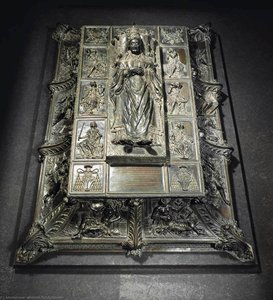
In 1484, Pollaiuolo accepted a prestigious commission that led him to Rome, where he embarked on the monumental task of creating the tomb of Pope Sixtus IV – a project completed in 1493. This undertaking showcased his ability to translate artistic vision into large-scale sculptural form, solidifying his reputation as one of Italy’s leading artists. He later returned to Florence to oversee work on the sacristy of Santo Spirito before ultimately passing away in Rome in 1498. His death marked the end of an era, but his influence continued to resonate through generations of artists. Among his pupils was Sandro Botticelli, who absorbed Pollaiuolo’s emphasis on anatomical accuracy and dynamic composition. The tombs of Sixtus IV and Innocent VIII stand as enduring monuments to his skill, while his innovative engravings continue to inspire awe and admiration. Antonio del Pollaiuolo's contributions were significant; he wasn’t just a painter or sculptor but a true Renaissance polymath who redefined the possibilities of artistic expression.